Friday, 17 July 2026

Wholesale mandi data points to tightening supplies in pulses, stable cereal prices and renewed volatility in horticultural commodities amid uneven monsoon progress
India’s wholesale agricultural markets are entering the heart of the kharif season with sharply contrasting price movements across commodities, highlighting the complex interplay of seasonal arrivals, procurement policies, weather uncertainty and evolving supply-demand dynamics. While pulses continue to command strong premiums amid persistent domestic shortages, oilseeds remain below the government’s Minimum Support Price (MSP), cereals have largely stabilized, and vegetables are witnessing fresh bouts of volatility.
Data from Agmarknet for the week ending July 10, 2026, shows that mandi prices continue to reflect structural imbalances rather than a broad-based inflationary trend. The divergence underscores the challenges facing policymakers as they seek to balance farmer remuneration with consumer affordability.
Cereals remain largely stable despite slower kharif sowing
India’s staple cereals have remained remarkably resilient despite delayed kharif sowing in several states. Paddy (Common) traded at an all-India average of Rs 2,373 per quintal, marginally above its MSP of Rs 2,369. Although prices softened 5.5 per cent from the previous week, they remain 5.84 per cent higher than a month ago and 9.15 per cent above last year’s level, reflecting firm market sentiment. Paddy arrivals stood at 21,587 metric tonnes. Wheat continued to trade below its MSP of Rs 2,585, averaging Rs 2,490 per quintal. Prices remained broadly stable, declining just 0.64 per cent week-on-week while rising 3.36 per cent over the past month. Wheat also recorded the highest arrivals among cereals at 65,352 metric tonnes, indicating comfortable market availability.
Maize remained under pressure at Rs 1,966 per quintal, well below its MSP of Rs 2,400. Prices slipped marginally during the week but remained 7.37 per cent higher than a month earlier. With arrivals of 40,842 metric tonnes, abundant supplies continue to weigh on market prices.
Pulses continue to outperform as supply remains tight
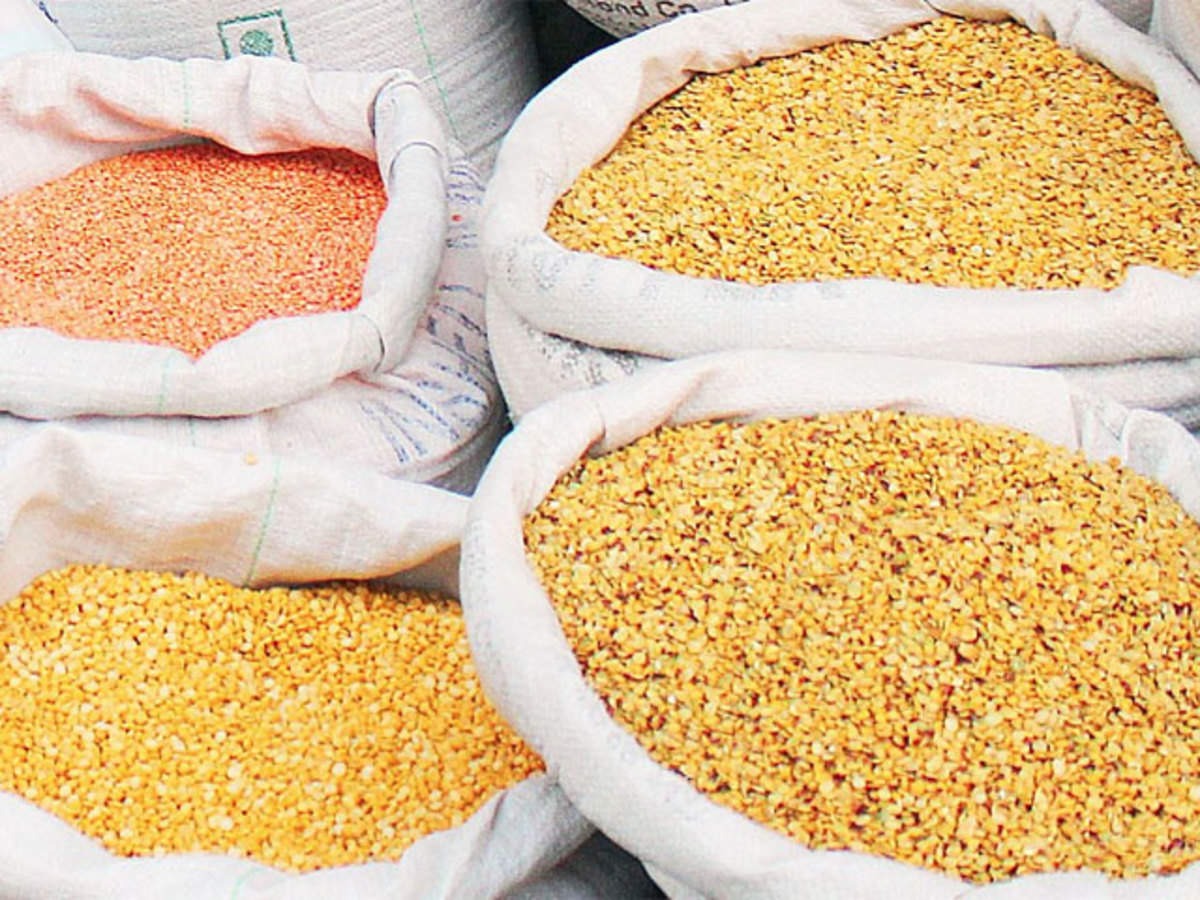
The strongest momentum continues to be visible in India’s pulse markets, where prices remain elevated despite government efforts to boost domestic production. Arhar averaged Rs 7,380 per quintal, nearly 18 per cent higher than last year, while Masur strengthened further to Rs 7,355, posting a 3.21 per cent weekly increase and almost 10 per cent annual growth. Urad has emerged as the strongest performer among major pulses. Prices climbed to Rs 8,535 per quintal, exceeding the MSP of Rs 7,800 by almost 10 per cent. The commodity has appreciated 33.63 per cent over the past year and 13.33 per cent over the last month, reflecting persistent supply tightness. Arrivals remain relatively modest at just 2,442 metric tonnes.
Gram remained comparatively stable at Rs 5,595, trading below its MSP of Rs 5,875, while moong softened to Rs 6,612, remaining significantly below its MSP of Rs 8,768 despite relatively healthy arrivals. The contrasting performance within pulses highlights the varying supply positions across individual crops, with urad and arhar continuing to face tighter availability than gram and moong.
Oilseeds remain under pressure despite global uncertainty
Perhaps the most striking feature of the latest mandi data is the continued weakness in oilseed prices. Soybean, despite recording the highest arrivals among oilseeds at 14,522 metric tonnes, traded at Rs 6,714 per quintal, substantially below its MSP of Rs 5,328. Groundnut averaged Rs 7,128 per quintal, marginally below its MSP of Rs 7,263, although prices remain 32.24 per cent higher than last year. Mustard traded at Rs 7,237, comfortably above its MSP of Rs 6,200, reflecting relatively stronger demand despite modest monthly weakness. Sesamum continued to command one of the highest market prices at Rs 12,714 per quintal, while sunflower maintained firm momentum with prices rising 57.06 per cent year-on-year to Rs 7,696.
Millets show divergent trends
India’s nutritious grain segment also displayed contrasting movements. Jowar emerged as one of the week’s strongest gainers, surging 11.57 per cent to Rs 4,290 per quintal, while remaining nearly 26.4 per cent higher than last year. Bajra also strengthened, rising 5.78 per cent during the week. In contrast, ragi declined nearly 4 per cent week-on-week and remains significantly below both last month’s and last year’s levels despite continuing to trade well below its MSP.
Vegetable markets remain highly volatile
Seasonality continues to dominate India’s horticulture markets. Tomato prices rebounded sharply by 10.6 per cent during the week to Rs 2,003 per quintal, despite remaining 30.4 per cent below month-ago levels. Arrivals reached 19,033 metric tonnes, suggesting supply is beginning to tighten after a period of heavy market arrivals. Onion prices strengthened further to Rs 1,963 per quintal, recording a 7.56 per cent weekly increase and a sharp 52.41 per cent annual rise. Arrivals stood at 67,233 metric tonnes, the highest among horticultural commodities. Potato, meanwhile, remained largely stable at Rs 815 per quintal, with prices virtually unchanged from the previous week but still 34 per cent below last year’s levels owing to abundant supplies.
Markets reflect structural supply shifts
Taken together, the latest mandi data paints a picture of an agricultural economy in transition. Pulses continue to benefit from structural supply shortages, cereals remain supported by procurement and stable demand, while oilseeds and horticultural crops are responding primarily to seasonal arrivals and weather conditions. With kharif sowing still lagging behind last year’s pace, traders will closely monitor rainfall over the coming weeks. A sustained improvement in monsoon conditions could increase arrivals later in the season and ease pressure on several commodities. Conversely, prolonged weather disruptions could tighten supplies further, particularly in pulses and vegetables, adding fresh inflationary risks to India’s food economy.