Monday, 1 June 2026

Government-backed initiatives have already restored over 81,700 water conservation structures, signalling a broader transition toward sustainable water stewardship
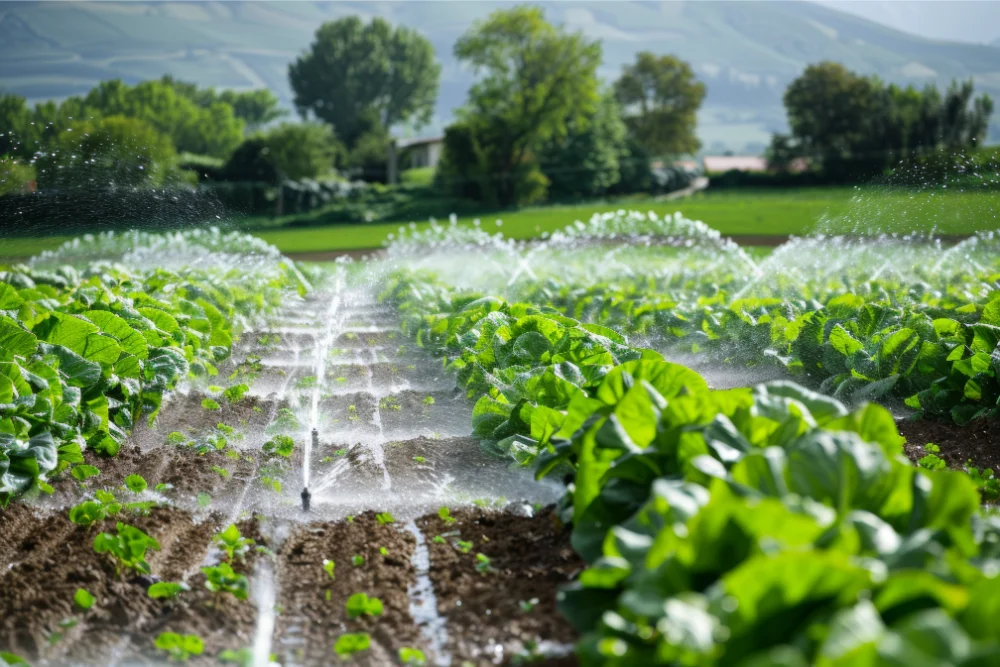
India’s irrigation water demand could climb to an estimated 807 billion cubic metres (BCM) by 2050, intensifying pressure on already strained water resources and reinforcing the urgency for demand-driven water governance, according to projections highlighted by the Ministry of Jal Shakti.
The warning comes as policymakers increasingly position water security as a critical determinant of agricultural sustainability, food production, climate resilience and rural economic stability. With agriculture accounting for nearly 80–90 per cent of water consumption in rural India, the sector remains at the centre of the country’s long-term water management challenge.
Despite receiving an average annual precipitation of approximately 3,880 BCM, India’s effective annual water availability stands at only 1,999.2 BCM after accounting for evaporation, runoff losses and other natural factors, according to assessments by the Central Water Commission.
Against this backdrop, the Ministry of Jal Shakti is advocating a structural shift from traditional supply-oriented water management towards scientific water budgeting, a planning framework designed to align water consumption with renewable availability at the village, watershed, district and river-basin levels.
The ministry described water budgeting as an increasingly indispensable policy instrument for regions facing groundwater depletion, seasonal scarcity and mounting competition among agricultural, domestic, industrial and livestock users.
The challenge is further compounded by rising livestock populations. India, home to 17.5 per cent of the world’s population and 11.6 per cent of global livestock, witnessed its livestock population increase from 512 million in 2012 to nearly 536 million in 2019, creating additional demand for drinking water, fodder cultivation and associated agricultural activities.
According to the National Commission for Integrated Water Resources Development, future water demand trajectories indicate substantial stress on available resources, necessitating stronger planning mechanisms, improved allocation efficiency and enhanced groundwater governance.
The government views water budgeting as a critical intervention capable of supporting informed crop planning, improving irrigation efficiency and enabling location-specific water-use strategies tailored to local climatic and hydrological conditions. Evidence from community-led initiatives supported by development institutions has demonstrated its potential to optimise resource allocation while reducing water stress.
Several flagship government programmes have already integrated water budgeting into their operational frameworks. Among them, the Atal Bhujal Yojana, launched in 2019, promotes decentralised groundwater management through Gram Panchayat-level planning across 229 groundwater-stressed blocks in seven states.
Government assessments conducted during 2023–24 and 2024–25 reported measurable improvements in groundwater levels across 180 of the 229 participating blocks, underscoring the effectiveness of community-driven water governance models.
The programme has also facilitated the creation and restoration of approximately 81,700 water conservation and groundwater recharge structures by March 2026, while more than 8,200 annual water budgets have been prepared across participating villages.
Alongside infrastructure investments, the government is increasingly emphasising social participation and digital innovation. Initiatives such as “Nari Shakti se Jal Shakti” are strengthening women’s leadership in water governance, while technology platforms like the Varuni water budgeting application are enabling data-driven decision-making through integration of rainfall, cropping pattern, land-use and demographic datasets.
Developed under the Indo-German Water Security and Climate Adaptation in Rural India (WASCA) programme, the Varuni platform is designed to generate scientifically robust, block-level water budgets that can support long-term resource planning and climate adaptation strategies.
As climate variability, groundwater depletion and agricultural intensification continue to reshape India’s resource landscape, policymakers increasingly view water budgeting not merely as a conservation tool, but as a strategic necessity for safeguarding food security, rural livelihoods and sustainable economic growth over the coming decades.