Saturday, 11 July 2026

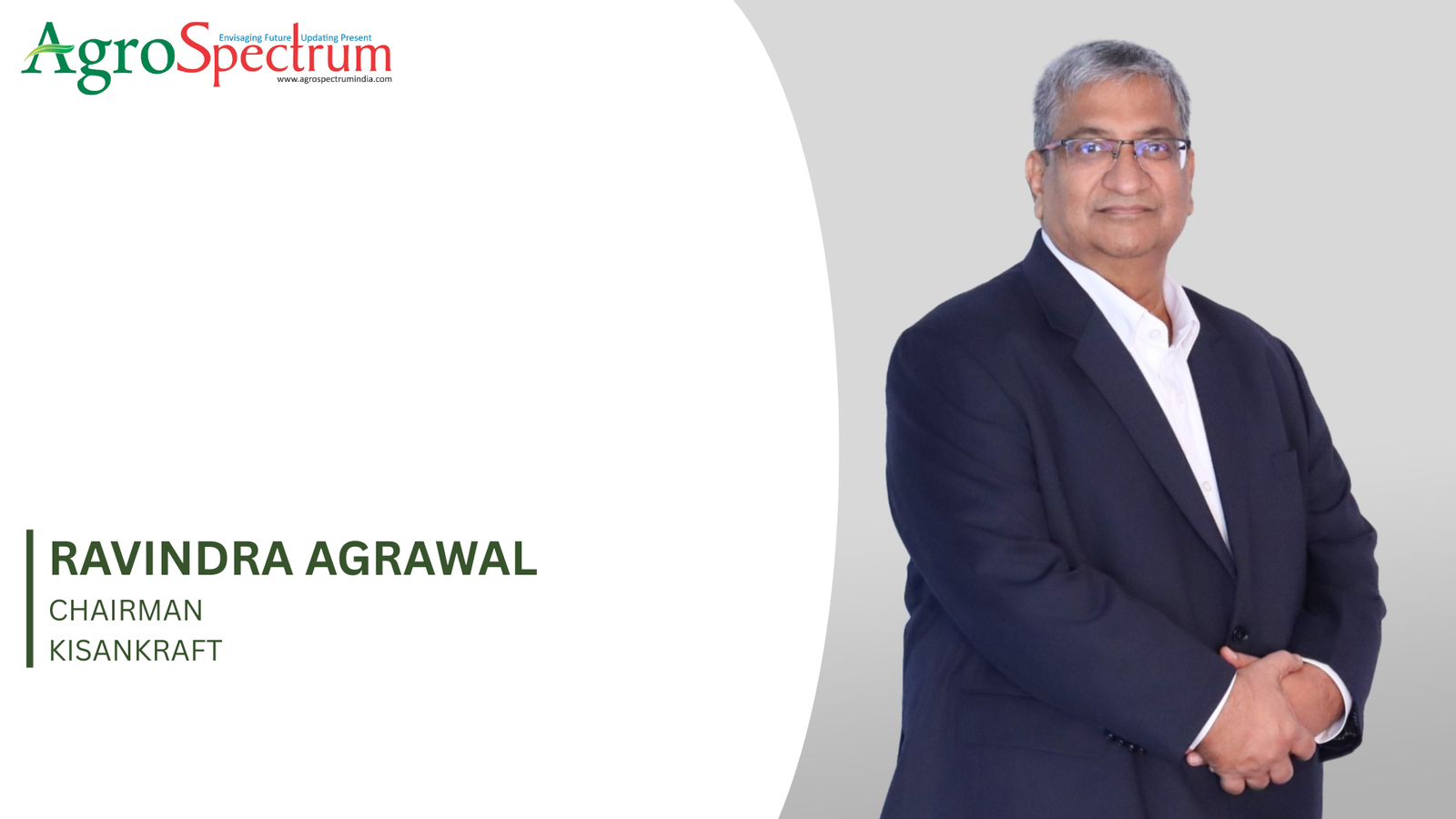
KisanKraft Chairman Ravindra Agrawal highlights why seasonality and asset intensity make farm mechanization fundamentally different from urban platform models
In an exclusive Agrospectrum interview with Ravindra Agrawal, Chairman of KisanKraft, the conversation maps India’s farm mechanization at a clear inflection point, where ownership is steadily giving way to access-based rental models driven by smallholder constraints and seasonal labor shortages. He argues that the rental economy fundamentally improves farm productivity by lowering capital barriers, reducing maintenance burdens, and ensuring time-critical agricultural operations are completed efficiently. However, he highlights that unlike urban “Uber-like” platforms, agricultural mechanization is structurally constrained by seasonality, asset intensity, and complex last-mile logistics, making physical infrastructure as important as digital platforms.
Agrawal emphasizes that long-term viability depends on high asset utilization across crops and seasons, supported by granular agricultural data, local intermediaries, and hybrid revenue streams beyond rentals. Looking ahead, he sees mechanization as the entry layer into a broader “farm-as-a-service” ecosystem, where companies like KisanKraft deepen specialization while partnering across advisory, inputs, and value-chain services rather than attempting end-to-end dominance.
The shift from ownership to access is reshaping multiple industries. Do you see farm mechanization in India approaching a similar inflection point, and what structural factors are driving this transition?
Yes, and the transition has been building for several years. The conditions are finally aligning. For more than 86 per cent of India’s farmers work on small or marginal holdings, owning a tractor or a combine was never a realistic option, and the loan burden would outlast the benefit.
What’s changed in recent years is that the seasonal labor scarcity has worsened, has pushed farmers to look at mechanization more seriously than before. It’s not just one big trigger, but several things moving together, i.e., awareness of options and their efficacy, rising household (not just farm) income, and that’s usually when real change happens.
For small and marginal farmers, capital constraints have long limited mechanization. How does the rental model fundamentally change the economics of farm productivity at the grassroots level?
It removes the biggest barrier, which is the upfront cost. Farmers who cannot justify purchasing a Rs 45,000 machine for limited use on their small farm find it economical to rent it only during critical farm operations. Renting also removes the burden of repairs and upkeep of the machine. That’s not a compromise but actually the smarter economic decision. Often the machines are rented out with an operator who comes to the farm with the machine and performs the task.
And when you work out the numbers on the ground, renting often beats hiring manual labor, too, both on cost and on quality of output. Work gets done faster, more uniformly, at the right time in the crop cycle. That timing piece is underrated; missing the transplanting window by even a few days can affect the yield. So rental isn’t just about affordability. It’s about getting the right tool at the right time.
The idea of an “Uber for agriculture” is compelling but complex. What operational challenges, such as logistics, utilization rates, and seasonality, make farm equipment rental fundamentally different from urban platform models?
The Uber comparison comes up a lot, and I understand why it’s a clean mental model. But it doesn’t really hold up once you get into the specifics.
The most obvious difference is seasonality. A paddy transplanter might be in genuine demand for three weeks in a year. That’s it. You can’t build Uber’s utilization assumptions on that kind of demand curve. Your economics must work with the actual reality of agricultural calendars.
Then there’s the physical complexity. Delivering a machine to a farm, making sure the operator knows how to use it, having basic knowledge, tools and parts, to perform onsite repair, getting it back in working condition, that’s a huge logistics challenge. Equipment in field conditions takes a lot of punishment. Maintenance is constant. And when something breaks down during peak season, the farmer can’t just cancel and book another one. The consequences are real.
Urban platform models are asset-light by design. However, this business is inherently asset heavy. The platform layer is useful and important, but it sits on top of a physical operation that must work well first.
In my view, for the viability of this enterprise, it must supplement their rental business by other sources of revenue. For round the year revenue stream, they should look at inputs, advisory, procurement, processing, machinery sales, or even facilitations of government’s extension services.
In a fragmented agricultural landscape, how can companies ensure equipment availability, maintenance quality, and last-mile delivery without eroding margins?
Many well-intentioned models have struggled here. The answer is not only technology, but dependable physical infrastructure and execution. The answer isn’t a clever algorithm; it’s physical infrastructure, honestly deployed through a network. Small businesses (aka intermediary services) are the true engines for this effort.
You need to be close enough to the farmer that delivery is practical. You need people on the ground who know the equipment and can fix it when something goes wrong. And you need preventive maintenance discipline, because equipment that fails during a critical window doesn’t just hurt your reputation, it genuinely affects someone’s livelihood.
On margins, the key variable is utilization across seasons and crops. If a machine is only earning revenue for six weeks a year, the numbers don’t work. Equipment should be selected so that they can be deployed across multiple crops, multiple operations and geographies throughout the year. It requires deep knowledge of local agricultural patterns and operations. It’s hard to build, but it’s also hard to copy.
What role do digital platforms, data, and precision agriculture tools play in making the rental ecosystem more efficient and scalable?
Booking and payments are the baseline; that’s not a differentiator anymore. What’s more interesting is collection of data with high granularity and precision, spread over reasonable geography and time; then interpreting what the data tells you over time.
For example, if you know who in your target geography is planning to sow what, when and how much; a lot of planning can be done to ensure availability of farmers’ needs. With multiple seasons in the business, you can track product or service categories which have the strongest repeat demand? Where are there pockets of unmet need that aren’t obvious from aggregate numbers? How does usage vary across soil types, crop varieties, and operator experience? If a disease or pest infestation happened in a particular area, can you taken preventive steps, or plan to face it? That kind of smart analysis will help you make better decisions about where to deploy inventory and how to update your portfolio.
Smart and Precision tools like GPS-guided equipment and sensor-based systems add another layer. When a farmer can access those through rental, he’s not just getting a machine. He’s getting a measurably better outcome. That may be a few years into the future, from commodity equipment rental point of view, and but it will happen and it supports an even better relationship with the farmer.
How do you see the competitive landscape evolving between OEM-led rental models, local entrepreneurs, cooperatives, and agri-tech startups?
It is win-win situation for all actors in this segment. Agriculture is too diverse and a lot of people will have opportunity to contribute and grow with it.
OEMs have product knowledge and service networks, but rental operations require a different kind of operations focus than manufacturing. Often, Agri-tech startups have technology and capital but hit a wall with ground realities of small farmer requirement and physical execution. Cooperatives and FPOs have farmer trust but need operational support. Local entrepreneurs are closest to the ground but lack scale. These complex challenges also provide opportunity.
What I expect to see is more collaboration and clearer specialization, OEMs focusing on equipment supply and maintenance, platforms handling booking and data, and local operators managing last-mile delivery. The companies that understand where their real advantage sits, and don’t try to own every part of the chain, will do better.
From a policy standpoint, what regulatory or financial interventions are needed to accelerate the shift toward shared mechanization in India?
Working capital is the most urgent gap. Building a rental operation means deploying capital before revenue comes in; you’re buying machines ahead of the season. Remember that the entrepreneur needs not only the farm machinery, but vehicles to transport machines from their shop to farm and back. They need tools and workbenches to maintain machinery. They need training in equipment selection, maintenance and operations. Seasonal cash flow profile doesn’t fit neatly into traditional bank lending. Targeted credit mechanisms through All India Financial Institutions, built around the seasonal agricultural services business model specifically, would unlock a lot of entrepreneurial energy at the local level. Financial subsidies for small rental businesses and treating them as part of Agricultural Extension services will be essential.
Further, ongoing incentives, for say 5 years, linked to actual utilization and farmer outcomes rather than just asset creation would be a meaningful improvement.
Simpler things matter too, like same GST treatment for spare parts as machinery, and for rental transactions; standardization around operator training, and clearer liability frameworks for third-party equipment use. Not dramatic reforms, but they would reduce friction considerably.
Looking ahead, could access-based models extend beyond equipment to a broader “farm-as-a-service” ecosystem, and where does Kisankraft position itself in that future value chain?
Equipment rental is the concrete entry point because the value is visible and aligned with government’s efforts to boost farm mechanization. A farmer can see the difference in a single day’s work. That builds the trust that makes everything else possible.
From there, the natural extensions, as mentioned earlier, are agronomic advisory, input access, machinery sales, maintenance services for farmer owned machinery, value addition by grading, packing, processing and eventually market linkages. Not because any one company should own all of that, but because farmers are looking for outcomes, not products in isolation. The companies that earn trust at one layer and connect intelligently to adjacent services will have something durable.
KisanKraft’s focus is to build deep capability in affordable and practical solutions designed specifically for Indian smallholder conditions, while partnering across the broader agri ecosystem where it creates better farmer outcomes. We have already expanded beyond our strength in mechanization to Seeds R&D. We want to go deep and address farmers’ major pain points one by one. The broader ecosystem is something we’ll contribute to and partner with where it makes sense.
— Suchetana Choudhury (suchetana.choudhuri@agrospectrumindia.com)