Saturday, 30 May 2026

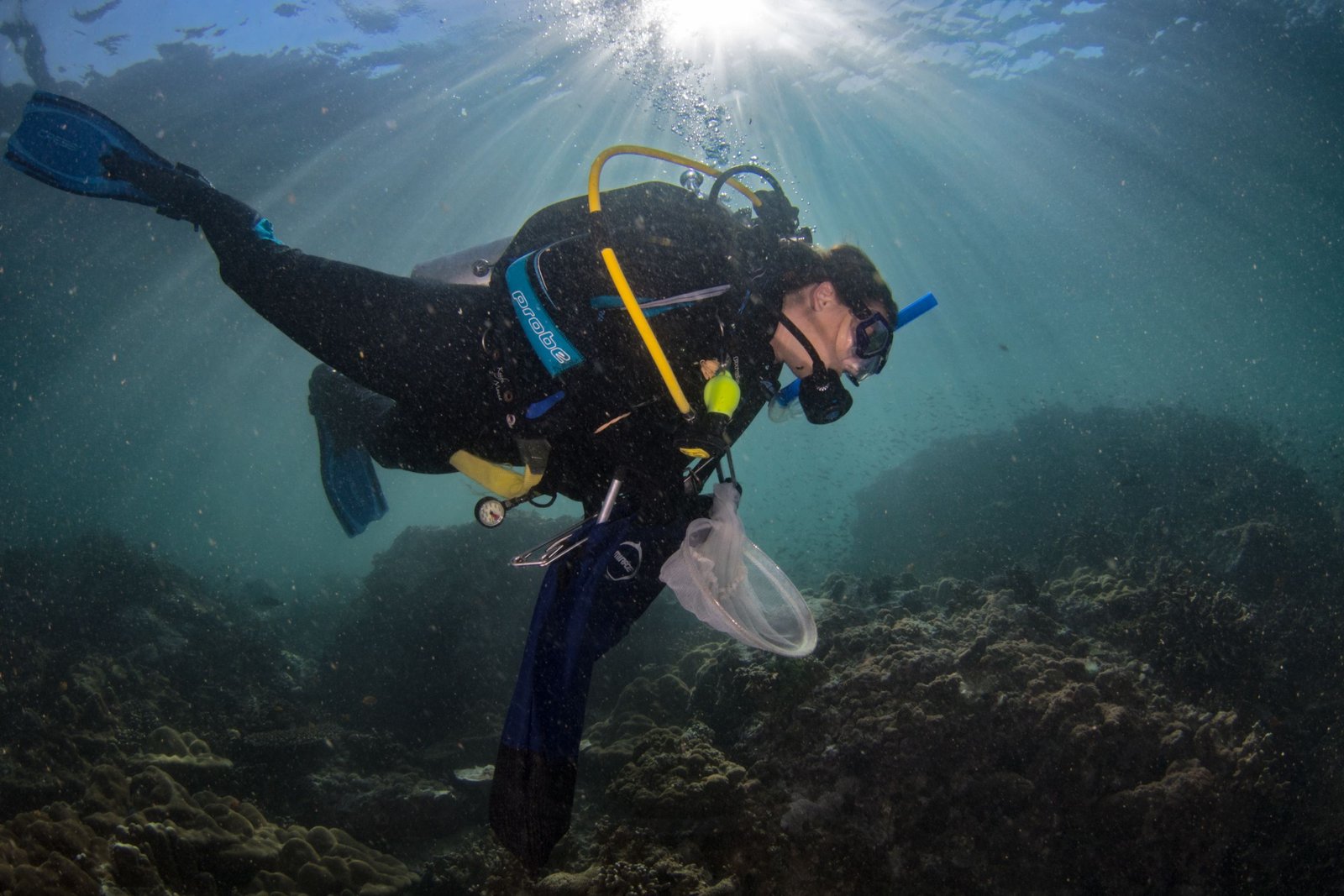
Photo Credit: Michelangelo Pignani/FFI
In an exclusive AgroSpectrum interview, Dr. Amelia Wenger warns that global conservation efforts risk falling short as sewage pollution remains critically underfunded and poorly integrated into marine protection strategies
In an exclusive AgroSpectrum interview, Dr. Amelia Wenger, Water Pollution Program Lead at the Wildlife Conservation Society and Senior Research Fellow at the University of Queensland, highlighted that nearly 75 per cent of marine protected areas are impacted by sewage pollution, exposing a critical flaw in global ocean conservation strategies that overemphasize protection without addressing pollution. She stressed that while the “30 by 30” target is important, it risks prioritizing area coverage over actual biodiversity outcomes, especially as only a small fraction of ocean funding is directed toward pollution mitigation.
Dr. Wenger explained that higher pollution levels within protected areas often stem from their proximity to densely populated, high-pressure zones, revealing gaps in integrated land-sea planning. The study underscores severe long-term ecological risks in tropical ecosystems, where wastewater pollution weakens coral reefs, seagrass, and mangroves while amplifying climate change impacts. She emphasized that effective conservation requires coordinated governance, increased investment in sanitation, and the use of advanced data and monitoring tools to tackle pollution alongside marine protection.
Your study reveals that nearly 75 per cent of marine protected areas are affected by sewage pollution. What does this say about the current global approach to ocean conservation, and where is it fundamentally falling short?
We can’t achieve the goals of the Global Biodiversity Framework without holistically addressing all the targets. That means that our push for “30 x 30” needs to be paired with tackling the threats that cannot be mitigated with protected areas, like pollution. Yet, according to a funding landscape report from Our Shared Seas, between 2015-2024, only 2.36 per cent of the global ocean funding went towards pollution. This means that we have a global threat to biodiversity – pollution – and we are significantly under resourcing our efforts to address it, which ultimately undermines our ability to achieve our marine biodiversity goals.
One of the most striking findings is that pollution levels inside protected areas can be up to ten times higher than outside. How do you explain this paradox, and what systemic gaps does it expose?
I think it highlights that in many cases, MPAs have been put in places where there were threats from fishing. And we know that the closer coral reefs are to populated areas, the more fishing pressure they experience. Our results reveal that these places are also experiencing greater pollution pressure too. We should still implement MPAs in places experiencing pollution, but we need our management activities to extend to efforts to reduce pollution too. I think our results expose that we are not systematically incorporating information about pollution into marine spatial planning or implementing integrated land-sea management.
The research highlights particularly severe impacts in coral reef and tropical regions. What are the long-term ecological consequences if wastewater pollution in these hotspots remains unaddressed?
It has been demonstrated in multiple coral reef regions that wastewater pollution reduces coral growth rates and coral reproduction, while also making them more vulnerable to coral disease. It limits photosynthetic activity in seagrass meadows, and it makes mangrove forests more vulnerable to erosion.
Most concerningly though is that it aggravates the impacts of climate change that they are already experiencing. Chronic nutrient loading heightens coral vulnerability to bleaching events and slows post-disturbance recovery. Mangroves also become more likely to die under nutrient enrichment conditions when facing drought caused by climate change.
Altogether, these impacts undermine the structure, function, and long-term persistence of tropical coastal ecosystems, threatening their associated biodiversity and essential ecosystem services on which millions of people rely. And they will only get worse as climate change worsens. But this also means that we have a really important tool in our toolbox to increase the climate resilience of these ecosystems – pollution management!
You’ve emphasized that marine protection alone cannot solve what is essentially a land-based problem. How should governments rethink the integration of land-use planning and ocean conservation policies?
The land and sea are connected and yet, more often than not, the government departments that management sanitation, land-use planning, urban development, housing, and the environment are siloed. This means that it is very difficult to have cohesive and consistent policies to address this threat. Governments should:
Utilize high-level coordinating mechanisms such as councils or committees within the centre of government or a government authority with policy coherence leadership.
Establish clear mandates and responsibilities for departments in charge of sanitation services provision, environmental protection, and coordination with other institutions or the private sector.
Encourage formal governance arrangements and informal mechanisms that facilitate communication and collaboration between government authorities and other governmental and non-governmental institutions.
With the global “30 by 30” target gaining momentum, do you believe current commitments risk prioritizing quantity over quality when it comes to protected areas?
Yes, I do.
30 x 30 is a mechanism to help deliver on biodiversity conservation, and a very important one. But there have been multiple studies that have demonstrated that MPAs are not effective when exposed to pollution. So, I think we have gotten too focused on the 30 x 30 target and have lost sight of needing to also deliver on all the other targets in parallel to achieve our biodiversity conservation goals. The goal is biodiversity conservation, not MPA coverage, and I think that gets lost sometimes. The trends on where ocean funding has gone also demonstrate this – with protected areas and habitat protection receiving nearly a quarter of ocean funding between 2015-2024.
From a policy and funding perspective, what are the biggest barriers to incorporating wastewater management into marine conservation strategies at scale?
One is the siloed nature of government departments and policies, as I mentioned above, which means that the people who make policy decisions about sanitation are not the same as the people making policy decisions about marine conservation. The second is that delivering sanitation services is expensive and the sanitation sector faces major funding shortfalls. Because it is so expensive, there is often not the political will to invest in sanitation. But being able to link sanitation and marine conservation brings a new set of stakeholders like the tourism industry, fishers, recreational users of the ocean, who can all be champions and advocates for change and investment. The sewage crisis in the UK is a really interesting example of this.
Your study uses geospatial modeling to track nitrogen pollution. How can advancements in data and monitoring technologies improve accountability and decision-making for protected areas?
Water quality monitoring can be complicated, and you need a lot of data to give you a realistic sense of what the levels of pollution are in a protected area. The more we can harness models and remote sensing and use those outputs in marine spatial planning exercises, the more we can assess the levels and impact of pollution on an MPA, and track improvements in pollution levels as we implement management actions on land.
Beyond environmental damage, wastewater pollution has major public health and economic implications. How can policymakers better communicate these cross-sectoral risks to drive urgent action?
I think it’s about selling the co-benefits that can come from addressing wastewater pollution and articulating how investment into sanitation improvements would compare to dealing with the public health, economic, and environmental issues separately. It’s also about knowing your audience and having tailored messaging about the myriad impacts that will resonate best with different audiences.
If you had to identify one immediate, high-impact intervention that governments or global institutions could implement, what would it be to ensure marine protected areas actually deliver on their promise?
Be clear on what is the biodiversity being protected in an MPA, identify the other threats facing it that will not be fixed with an MPA, and develop and implement strategies to address them.
— Suchetana Choudhury (suchetana.choudhuri@agrospectrumindia.com)