Tuesday, 14 July 2026



Kishan Kaujalgi and Anouk Bosman discuss scaling offshore kelp farming, driving farmer ROI, and building a resilient, sustainable input ecosystem
In an exclusive AgroSpectrum interview, Kishan Kaujalgi, India Lead, and Anouk Bosman, Head of Marketing at Kelp Blue, reveal how the company is pioneering large-scale offshore cultivation of Macrocystis pyrifera to solve one of agriculture’s biggest challenges: consistent, sustainable raw material supply. They highlight how ocean farming mirrors land agriculture in complexity—navigating storms, pests, and yield optimization—while eliminating the need for irrigation and chemical inputs.
At the core of their model is a sustainability-first approach, harvesting just 10 per cent of kelp biomass to preserve biodiversity and enable carbon sequestration, while still ensuring commercial scalability. Their flagship biostimulant, StimBlue+, stands out for its cultivated origin, consistent performance, and strong ROI, delivering higher yields at lower application rates across diverse crops. Looking ahead, they position ocean-based agriculture as a transformative pillar of the global food system—unlocking scalable, carbon-negative solutions without competing for land or freshwater.
Scaling Ocean-Based Agriculture
Kelp Blue operates large-scale offshore cultivation systems—what were the key technological and ecological challenges in scaling seaweed farming in open ocean conditions?
A major barrier to scaling the seaweed industry globally is the lack of a reliable and consistent supply of raw material. At Kelp Blue, this is precisely the challenge we are addressing through the development of a stable, offshore cultivation system. We cultivate Macrocystis pyrifera – Giant Kelp – on large-scale, offshore structures. Because this type of farming had never been implemented at this scale in open ocean conditions, it required significant engineering innovation.
Kelp Blue champions organic and sustainable agriculture through a unique “farmers-to-farmers” philosophy – connecting ocean farmers with land farmers. Our products are derived from kelp cultivated in the ocean, creating a natural bridge between marine and terrestrial agriculture.
In essence, farming in the ocean shares the same fundamental principles as farming on land: nurturing a crop under variable conditions, protecting it from natural stressors, and maximizing sustainable yield. The main difference is that ocean farming doesn’t require irrigation or chemical inputs, we let the kelp grow naturally, simply monitoring the farms regularly to ensure healthy development, and our “field” is the open ocean, which adds layers of engineering complexity but doesn’t change the core challenges of agriculture.
Sustainability as a Core Business Model
Harvesting only 10 per cent of the biomass is a deliberate choice—how do you balance ecological preservation with commercial viability at scale?
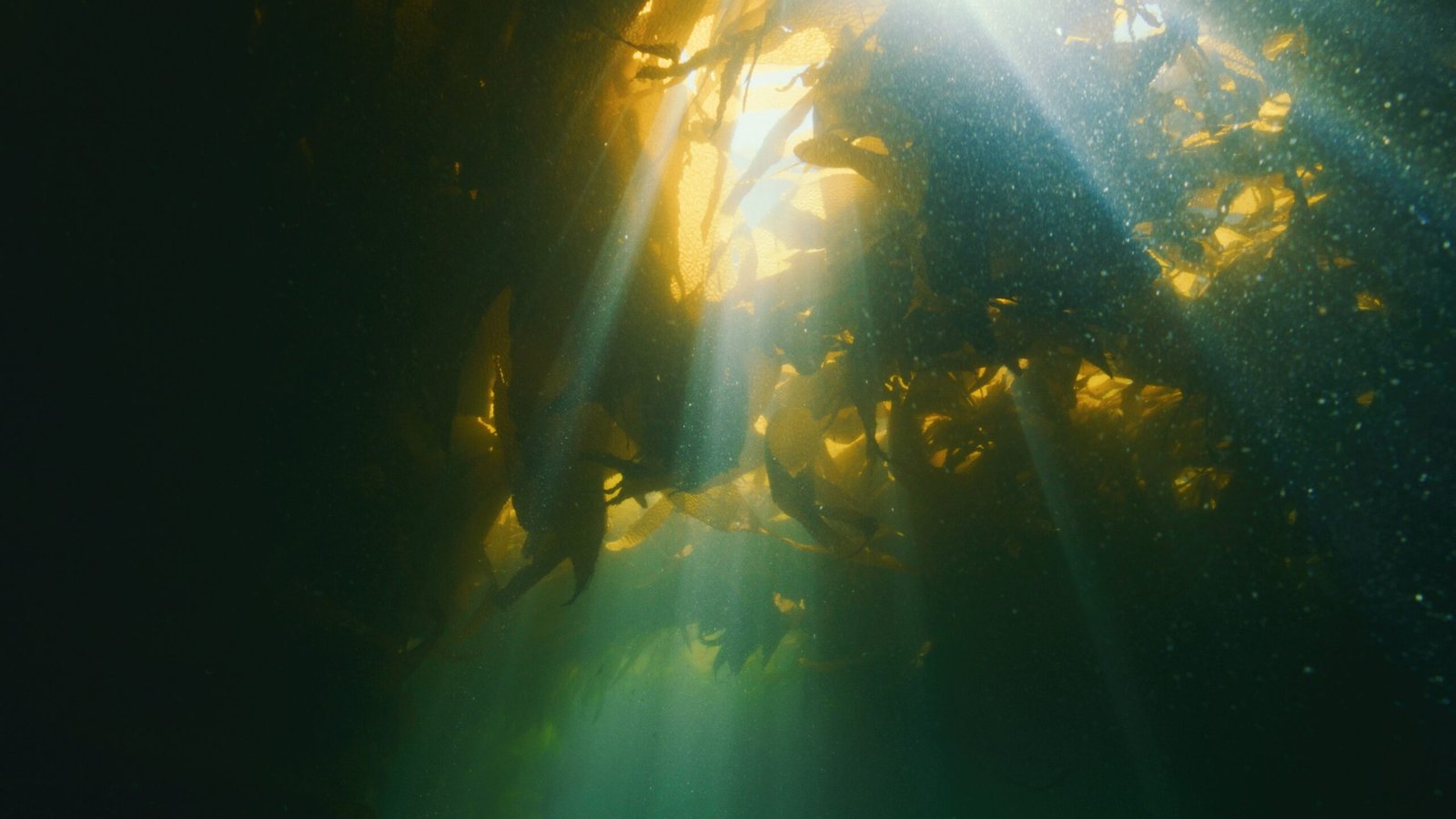
Our underwater kelp forests are about 15 meters tall. In our harvesting approach, we deliberately trim only the top 10 per cent of the kelp – essentially the young, nutrient-rich shoots that are most effective for biostimulants. The majority of the biomass remains in the water, supporting marine biodiversity (+800 species detected through eDNA technology) and carbon sequestration.
This approach allows us to balance ecological preservation with commercial viability. By leaving most of the kelp (biomass) intact, we maintain healthy, resilient ecosystems, while the carefully managed harvest ensures a stable, traceable supply for our customers. With licensed cultivation areas exceeding 6,000 hectares, we ensure a stable and traceable supply for our customers with controlled margin inflation.
Differentiation in the Biostimulant Market
With increasing competition in biological inputs, what makes StimBlue+ structurally different in terms of efficacy, consistency, and scalability?
With the rapid growth of Biostimulants in India, farmers today are more conscious about performance, consistency, and return on investment. StimBlue+ is built on a simple and practical principle: delivering visible results and a clear return on investment for the Indian farmers.
A fundamental point of differentiation is that StimBlue+ is based on cultivated Macrocystis pyrifera, rather than wild-harvested seaweed. This allows us to offer a consistent, traceable, and scalable raw material supply, independent of seasonal or environmental variability. The result is a product with stable composition and performance, which is critical for Asian farmers making input decisions.
In terms of efficacy, StimBlue+ supports a well-regulated transition between vegetative and generative growth phases, integrating seamlessly into existing farming programs. While many seaweed-based biostimulants are positioned around specific use cases – such as root development (commonly associated with Ecklonia) or abiotic stress management (often linked to Ascophyllum) – StimBlue+ delivers performance across multiple stages of the crop cycle, making it suitable for a wide range of crops grown in India & Asia.
It is also highly concentrated, consistently demonstrating strong results at lower application rates. In third-party trials, StimBlue+ has outperformed comparable seaweed-based biostimulants at half the dosage (0.4L/acre versus 0.8L/acre), directly improving per acre profitability which is a key differentiating-factor for Indian growers.
Finally, our mechanical extraction process ensures high miscibility, allowing StimBlue+ to mix easily with other inputs in standard farming programs. This contrasts with more traditional alkaline extraction methods, which can limit compatibility and create additional complexity or cost for farmers.
Together, these elements : cultivated origin, consistent quality, strong efficacy at low dosage, and ease of integration, makes StimBlue+ stand out as a reliable and farmer friendly solution in India’s evolving Biostimulant market.
Science and Mode of Action
Macrocystis pyrifera is rich in bioactive compounds—how do you translate this biological complexity into predictable, measurable outcomes for farmers?
Each crop is extensively trialled against key performance indicators such as yield and quality, under clearly defined conditions – including soil type, season, weather, and application parameters. This ensures that the results we communicate are not only scientifically grounded but also directly relevant and reproducible for farmers.
In parallel, we run an Ambassador Farm Program, working with influential farmers across different regions who trial and use our biostimulants under real commercial conditions. This allows us to complement controlled trials with practical, farmer-led insights, creating a robust body of evidence that reflects real-world performance.
By combining scientific trials with on-farm validation, we turn the natural complexity of Macrocystis pyrifera into clear, reliable, and actionable outcomes that farmers can trust.
Carbon Neutrality and Climate Positioning
You position the product as carbon-neutral—how do you quantify and validate this claim, and what role does carbon accounting play in your business model?
As our kelp grows in the ocean, it naturally absorbs CO2 from the surrounding waters through photosynethsis. Some of this carbon is exported to the deep ocean, where it remains sequestered for long time periods.
As we only harvest the canopy of the underwater kelp forests (which is more or less the top 1m that re-grows quickly) to produce our biostimulant StimBlue+. The rest of the kelp individual continues to grow and contribute to carbon sequestration.
Independent measurement and verification of our 2024 operations validated that the carbon sequestered by our kelp farm exceeds the total CO2 emissions associated with producing our biostimulant. So, producing our products, results in more carbon being removed from the atmosphere than is emitted.
Our 2024 performance was measured by atdepth, a Monitoring, Reporting and Verification (MRV) provider specialised in ocean carbon measurement. Our Life Cycle Assessment (LCA) and relevant reports were verified by independent parties including Boundless Impact and EcoEngineers. This was part of our participation as a Top 20 Finalist in the XPRIZE for Carbon Removal.
Farmer Adoption and ROI
Biostimulants often face adoption barriers—how do you demonstrate clear economic returns to growers across diverse crops and geographies?
Adoption of biostimulants ultimately comes down to one question for farmers: does it deliver a clear and reliable return on investment? At Kelp Blue, we address this by grounding every claim in robust, science-backed evidence.
We invest heavily in independent, third-party trials conducted by contract research organizations (CROs) across different crops, geographies, and growing conditions. These trials don’t just measure agronomic performance such as yield and quality—they also quantify the economic return per hectare, based on real farm gate prices at the time of harvest. Importantly, these calculations are fully transparent and shared with our partners and customers.
The results consistently demonstrate strong economic value. For example, in berries, applications at 0.8L/acre have shown average yield increases of 17 per cent, translating into approximately $2,710 in additional revenue per hectare. In vineyards, we see average yield increases of 13 per cent, corresponding to around $5,190 per hectare. In vegetables, average yield improvements of 12 per cent result in roughly $4,125 additional revenue per hectare.
Another thing, is product range offering choice to farmers. In Indian context, we offer StimBlue+ Amino, Humic, Nutritional; also Seed treatment, Drip & Foliar grades. In addition, specific extracts with Alginic acid & Mannitol derived from seaweeds having wide application across multiple crops in Asia. To be noted, some of these grades also fall under the local regulations.
Integration with Conventional Agriculture
Do you see products like StimBlue+ as complementary to traditional agrochemicals, or is the long-term vision to replace them entirely?
StimBlue+ is designed to complement , not replace, traditional agrochemicals. It does not substitute nutrient fertilizers, but works alongside them to improve their overall efficiency. By enhancing nutrient uptake and utilization, it helps ensure that the inputs farmers are already applying are more effectively absorbed by the plant.
This has two key benefits: it reduces input waste and increases the return on existing investments, translating into both financial and operational gains for growers. Rather than requiring a complete shift in farming practices, StimBlue+ integrates seamlessly into current programs, making adoption straightforward and low-risk.
Over the long term, we see biostimulants playing an increasingly important role in optimizing input use and improving sustainability in agriculture. The goal is not necessarily full replacement, but smarter, more efficient systems where conventional inputs are used more effectively and, where possible, in reduced quantities.
Global Expansion and Ocean Economy Potential
Looking ahead, how do you see ocean-based biomass platforms shaping the future of agriculture and sustainable inputs on a global scale?
The ocean offers a vast, underutilized resource that can be harnessed without competing for arable land, freshwater, or traditional inputs.
Our vision is to establish large-scale kelp farms across multiple continents – where cold, nutrient-rich waters allow for optimal growth. This localized approach enables us to produce biomass close to end markets, reducing supply chain complexity and environmental impact, while ensuring reliable and scalable supply.
At the same time, these kelp farms contribute to the regeneration of marine ecosystems. Kelp acts as an ecosystem engineer, creating habitats, supporting biodiversity, and capturing carbon. By combining production with restoration, ocean-based agriculture has the potential to deliver both economic value and environmental impact at scale.
Ultimately, we believe this model can become a cornerstone of the emerging ocean economy, providing a new, sustainable pathway for producing the inputs needed to feed a growing global population.
— Suchetana Choudhury (suchetana.choudhuri@agrospectrumindia.com)