Saturday, 13 June 2026

Why India must move from ad-hoc compensation to a technology-enabled, trust-driven livestock protection framework that stabilises incomes and safeguards productive assets
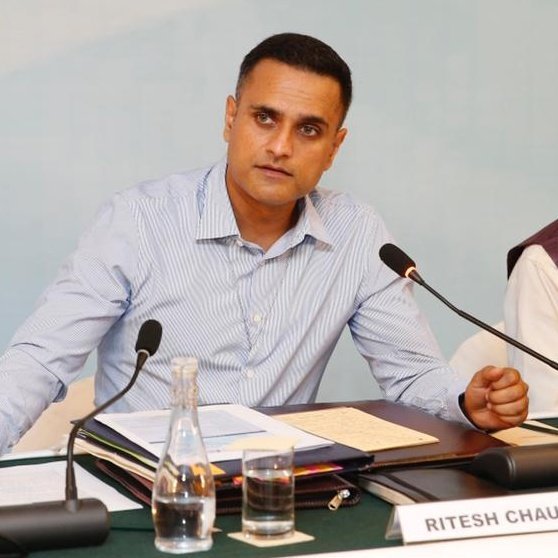
As livestock becomes an increasingly critical pillar of rural incomes amid climate and market uncertainties, the lack of effective risk protection remains a major gap in India’s agricultural policy landscape. In this exclusive AgroSpectrum interview, Ritesh Chauhan, Secretary of Animal Husbandry, Government of Himachal Pradesh, explains why advances in digital identification, veterinary networks, cooperatives, and fintech now make a scalable livestock insurance framework both viable and essential. Drawing from Himachal Pradesh’s on-ground experience, he shares practical insights on building trust, improving claim settlement, and strengthening insurer participation. Edited excerpts:
Why is this the right moment for India to scale up a National Livestock Insurance Scheme?
India’s agricultural economy is undergoing a quiet but consequential shift—and livestock sits at the centre of this transition. As crop agriculture faces yield volatility, land fragmentation, and climate stress, livestock has emerged as the most stable and fastest-growing contributor to agri-GVA. Today, dairying, poultry, and small ruminants together account for nearly one-third of agricultural value added, growing faster than cereals or horticulture. This is not accidental: livestock offers daily cash flow, higher labour absorption, and risk diversification for smallholders in ways that seasonal cropping cannot.
Yet this very backbone of rural resilience remains dangerously under-insured.
Climate stress is reshaping livestock risk profiles –
Heat stress is reducing milk yields, fertility, and animal longevity. Erratic monsoons and droughts are tightening fodder availability, pushing up feed costs and forcing distress sales of animals. Floods and cyclones increasingly wipe out entire herds in coastal and riverine regions. Unlike crops, livestock losses are not confined to one season; they permanently erode household productive assets and future income streams.
Disease outbreaks are becoming systemic economic shocks –
The spread of Lumpy Skin Disease (LSD) across multiple states since 2022 has exposed how vulnerable India’s livestock economy is to transboundary and climate-linked diseases. For households owning one or two cattle—the majority of India’s livestock keepers—the death or productivity loss of even a single animal can mean the collapse of daily income, nutrition security, and repayment capacity for micro-loans. Yet compensation remains uneven, delayed, and fiscally reactive, varying widely by state and fiscal headroom.
The success of Pradhan Mantri Fasal Bima Yojana (PMFBY) in crops and Ayushman Bharat – Pradhan Mantri Jan Arogya Yojana (PM-JAY), in health shows that large-scale, publicly backed, technology-enabled risk pooling is feasible—even in a country with fragmented landholdings and informal livelihoods.
Digital animal identification, Aadhaar-linked beneficiary databases, mobile veterinary records, satellite fodder mapping, and AI-based disease surveillance are finally converging. This makes it possible to design livestock protection systems that are actuarially sound, fraud-resistant, and low-touch for farmers. Waiting longer only raises fiscal exposure, as climate and disease risks compound.
Moving now enables a paradigm shift—from relief to resilience –
Without structured livestock risk protection, governments will continue to rely on ad-hoc compensation after disasters and outbreaks—often delayed, politically negotiated, and fiscally inefficient. A national or federated livestock insurance and protection framework would instead stabilise rural incomes, protect productive assets, and crowd in private insurers, agri-fintech and veterinary networks.
At this inflection point, livestock is no longer a peripheral subsector—it is core economic infrastructure. If India is serious about building climate-resilient agriculture and doubling real farm incomes, integrating livestock into its formal risk-management architecture is not optional. It is the logical next step in the evolution of India’s welfare and productivity state.
How can a formal insurance architecture strengthen rural financial resilience?
In the absence of formal risk protection, livestock-owning households fall back on informal coping mechanisms—moneylenders, distress sale of animals, or emergency borrowing through SHGs. These options are slow, costly, and often value-destructive. High interest rates, delayed access to funds, and forced liquidation of productive animals turn a temporary shock into a long-term income loss. Once an animal is sold or dies without compensation, rebuilding the herd can take years, pushing families deeper into debt and vulnerability.
Formal livestock insurance fundamentally alters this equation. By protecting the household balance sheet, it enables faster replacement of lost animals and prevents irreversible erosion of productive assets. Timely payouts ensure continuity of milk production, which for millions of families functions as daily cashflow—covering food, school expenses, and loan repayments. This income stability is critical in cushioning households against climate and disease shocks.
Equally important, insured livestock becomes bankable collateral. When animals are formally insured and tagged, banks and MFIs are more willing to extend working capital and productivity loans, crowding in institutional credit and reducing dependence on informal lenders. In this way, livestock insurance is not merely a safety net—it is an enabler of rural financial inclusion, resilience, and growth.
Which success elements should be adapted for livestock?
Three design elements from India’s existing risk-protection programmes are clearly transferable to livestock—provided they are adapted to biological and market realities rather than copied mechanically.
First, cluster-based tendering enables better risk pooling and pricing. Instead of fragmented, district-by-district coverage, clustering animals by agro-climatic zones, disease risk profiles, and production systems allows insurers to diversify exposure and price risk more accurately. Larger, well-defined pools reduce adverse selection, lower premiums, and make participation commercially viable for insurers while keeping subsidies fiscally efficient for governments.
Second, a unified national digital platform is essential. A single backbone integrating animal identification, owner KYC, enrolment, premium subsidy flow, veterinary records, and claims processing can dramatically reduce friction and fraud. Mobile-based reporting, geo-tagged mortality verification, and integration with state animal husbandry databases would enable faster, more transparent settlements—critical for households dependent on daily milk income.
Third, enforceable service-level agreements create trust and accountability. Clear timelines for enrolment, disease reporting, claim verification, and payout—backed by penalties for non-performance—are non-negotiable. Without strong SLAs, insurance degenerates into delayed relief. With them, livestock protection becomes a predictable, farmer-centric instrument.
Together, these elements form a scalable blueprint—one that respects livestock’s unique risks while leveraging India’s hard-won institutional learning.
How ready is India for RFID, biometrics, or muzzle‑printing?
India is no longer starting from scratch on livestock identification. Ear-tagging and RFID are already deployed at scale under national and state programmes, while pilots on advanced biometrics—such as muzzle-printing and image-based identification—are steadily improving accuracy and field viability. The immediate priority is not inventing new technology, but establishing a tamper-resistant, unique animal ID that can serve as the backbone of the livestock ecosystem.
This ID must be seamlessly integrated with AgriStack, the National Digital Livestock Mission (NDLM), vaccination and disease surveillance databases, and formal credit systems. When an animal’s identity, health history, ownership, and insurance status sit on a common digital rail, risk assessment, claims verification, and credit underwriting become faster, cheaper, and more credible.
Equally critical is the human interface. Para-veterinarians, cooperative staff, and extension workers are the system’s frontline. They need simple, offline-capable, field-friendly tools to record vaccinations, disease events, mortality, and distress sales—triggering claims or alerts in real time without paperwork or discretion.
In this context, technology is an enabler, not the solution. The real challenge is ecosystem design: aligning incentives across farmers, vets, insurers, banks, and states so that data capture is trusted, participation is rewarded, and protection becomes automatic rather than exceptional.
How can digital workflows transform credibility?
Rebuilding trust in livestock protection hinges less on promises and more on verifiable system behaviour. Four operational levers are critical.
First, geo-tagged, time-stamped enrolment and event capture. Photographic proof at enrolment—linked to animal ID, owner KYC, and location—creates a clear baseline and sharply reduces disputes. Similar capture at vaccination, illness, or mortality ensures objective evidence from the field, not post-fact claims.
Second, rule-based and transparent claim algorithms. Claims must be processed through clearly defined, publicly disclosed logic—triggered by verified events, disease status, and coverage rules. Removing discretion shortens settlement cycles and eliminates perceptions of bias or arbitrariness.
Third, visible and time-bound processing stages. Every step—intimation, verification, approval, and payout—should be trackable by farmers through SMS or WhatsApp in local languages, with automatic escalation if timelines are breached. Visibility is as important as speed.
Fourth, independent audits and public dashboards. Regular third-party audits and anonymised dashboards showing claim ratios, settlement times, and district-level performance create accountability for insurers and implementing agencies alike.
When farmers’ lived experience consistently matches system timelines, trust shifts from rhetoric to reality—and participation follows.
What innovations can serve as national templates?
Himachal Pradesh offers a practical, ground-tested template for how livestock risk protection can be operationalised at scale. The state’s cooperative-led outreach model, anchored in milk unions and village-level institutions, allows insurance and animal health services to piggyback on trusted, everyday touchpoints rather than stand-alone enrolment drives. This significantly lowers awareness gaps and improves uptake.
Equally important is Himachal’s dense para-veterinary and extension network, which functions as the first responder for disease reporting, vaccinations, and mortality verification. When para-vets are digitally enabled and institutionally aligned, claims move faster and data quality improves—reducing both farmer frustration and insurer leakage.
The state’s ongoing digitalisation of animal health records, breeding, and service delivery creates continuity across the animal lifecycle, enabling risk assessment and policy servicing without repetitive paperwork. This integrated data flow is critical for actuarial credibility and faster settlements.
Two financing innovations stand out. Bundling insurance with milk procurement channels sharply reduces customer acquisition costs and premium collection friction, as deductions can be seamlessly aligned with milk payments. Additionally, the use of Milk Cess as a co-funding mechanism for premiums demonstrates how sectoral levies can be recycled to de-risk producers themselves.
Together, these elements show how institutional design—not subsidies alone—can make livestock insurance viable, trusted, and scalable.
Should India introduce productivity‑linked insurance?
India should move toward productivity-linked livestock insurance—but only through a phased, data-anchored evolution, not a leap. Mortality coverage must remain the foundation. It addresses the most catastrophic risk, is easiest to verify, and builds early trust among farmers, insurers, and states. Without a robust mortality layer, more complex covers will lack credibility and fiscal discipline.
That said, productivity losses are economically larger and more frequent than deaths. Heat stress–induced milk yield dips, infertility, disease-related work-loss, and prolonged recovery periods quietly erode household incomes, often without triggering any formal support. Ignoring these losses limits the real stabilisation potential of livestock insurance.
The constraint is not concept, but measurement. Productivity-linked insurance requires reliable baseline data at the animal or herd level, regular digital milk recording, and credible attribution mechanisms to distinguish normal variability from insurable shocks. Parametric or index-based triggers—such as temperature-humidity indices, disease outbreak thresholds, or verified yield deviation bands—offer a practical pathway, but only once data density improves.
India should therefore evolve stepwise: begin with universal mortality cover, pilot productivity-linked add-ons in organised milk sheds and cooperatives, refine triggers and payout logic, and scale gradually. Done right, this progression can transform livestock insurance from a safety net into a true income-stabilisation instrument.
What would a unified livestock digital ecosystem look like?
By 2030, India’s livestock sector should be anchored in a unified digital ecosystem built around a single, tamper-resistant animal ID linked to a verified farmer ID. This core identity layer would serve as the common reference point across institutions, eliminating today’s silos between animal husbandry, insurance, banking, and markets.
On this foundation would sit multiple interoperable layers. The health and disease layer would record vaccinations, treatments, outbreak exposure, and biosecurity status in real time through para-vets and veterinary networks. The insurance and risk layer would track coverage, claims history, and risk scores, enabling faster payouts and actuarially sound pricing. A breeding and productivity layer would capture genetics, fertility, lactation cycles, and yield trends—starting with organised milk sheds and expanding over time.
Above this, a financial services layer would allow banks and MFIs to treat insured, traceable livestock as bankable assets—unlocking credit, working capital, and embedded insurance. Finally, an advisory and market access layer would deliver personalised alerts on nutrition, heat stress, disease risk, and price signals, while linking farmers seamlessly to milk procurement, input suppliers, and buyers.
For the farmer, this complexity must be invisible. The system should feel like one trusted interface—one that protects assets, stabilises income, rewards good practices, and connects livestock keepers to markets and finance with dignity and predictability.
—- Suchetana Choudhury (suchetana.choudhuri@agrospectrumindia.com)