Saturday, 11 July 2026

High-level Niger delegation reaffirms long-term collaboration to scale dryland innovations and strengthen national seed, soil, and genebank systems
A four-decade partnership between the International Crops Research Institute for the Semi-Arid Tropics (ICRISAT) and the Government of Niger is entering a new phase, with both sides committing to accelerate the scaling of climate-resilient agriculture across one of Africa’s most climate-vulnerable regions.
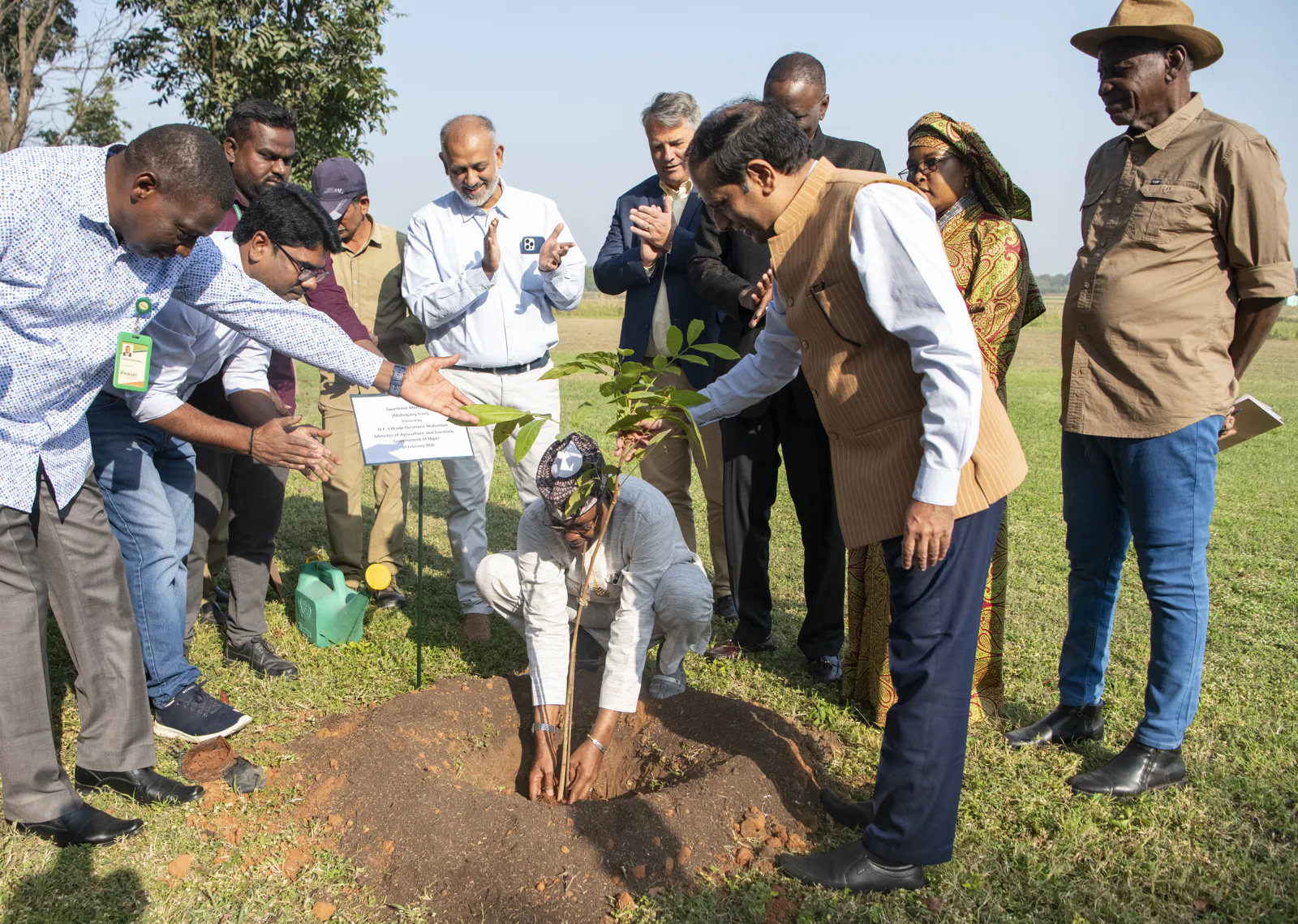
From February 7–9, 2026, ICRISAT hosted a high-level delegation from Niger at its headquarters, led by His Excellency Elhadji Ousmane Mahaman, Minister of Agriculture and Livestock. The delegation included Salamatou Hassane Yacouba, Director of Seed Quality Control and Certification; His Excellency Colonel Major Zada Seidou, Ambassador of Niger to India; and Dr. Abdoulaye Bankoula, Representative of the Association of Agricultural Engineers of Niger. They were accompanied by Prof. Falalou Hamidou, ICRISAT Niger’s Country Representative.
In Niger—where agriculture underpins the majority of livelihoods despite intensifying climate shocks, degraded soils, and limited access to quality seed—ICRISAT’s science-led interventions have reached over 400,000 farmers directly and benefited more than 1.5 million people nationwide. Over four decades, the institute has introduced climate-resilient and biofortified crops, strengthened seed systems, restored soils through conservation agriculture, and built national capacity in biological pest control.
During the visit, the delegation toured ICRISAT’s advanced research platforms, including its globally recognized genebank, which houses one of the largest and most diverse germplasm collections in the Sahel. Discussions centered on how data-driven breeding, genetics, field-based innovation, capacity building, and value addition can further strengthen Niger’s dryland farming systems.
Strategic talks identified priority pathways for scaling impact, including expanding certified seed systems, improving soil fertility and fertilizer management, and promoting appropriate mechanization to raise productivity while enhancing resilience.
Highlighting the strength of the partnership, ICRISAT Director General Dr. Himanshu Pathak emphasized the urgency of scaling proven innovations as climate risks intensify across the Sahel. He noted that Niger’s experience demonstrates what is possible when science and sustained partnership converge, adding that ICRISAT’s focus remains on expanding validated solutions, strengthening national institutions, and ensuring that agricultural science underpins inclusive growth.
A key milestone of the visit was the formal launch of ICRISAT’s Niger Dossier, unveiled by Minister Mahaman. The dossier documents four decades of collaborative progress and outlines a forward-looking roadmap aligned with national priorities on food sovereignty and climate resilience.
Reaffirming Niger’s confidence in the partnership, Minister Mahaman underscored the value of science-based collaboration grounded in long-term commitment. He noted that ICRISAT’s technical capacity and institutional reliability have delivered tangible benefits for smallholder farmers and strengthened national systems, and affirmed Niger’s commitment to deepening the collaboration to scale solutions nationwide.
As part of the renewed engagement, the Niger delegation reiterated its support for strengthening operations of the ICRISAT genebank in Niger and confirmed a contribution toward enhancing its capacity—reinforcing the country’s investment in safeguarding genetic resources critical to dryland agriculture.
Echoing this commitment, Ambassador Zada Seidou stated that the Embassy of Niger in India will actively facilitate the implementation of newly agreed initiatives to ensure the partnership continues delivering timely, practical outcomes.
The visit builds on high-level ICRISAT engagements in Niger in 2025 and aligns with the institute’s Strategic Plan 2025–2030, which prioritizes science-led, resilient, and inclusive food systems across Africa’s drylands. As climate pressures intensify across the Sahel, the ICRISAT–Niger partnership stands as a model for how sustained scientific collaboration can anchor national resilience and long-term agricultural transformation.