Saturday, 6 June 2026

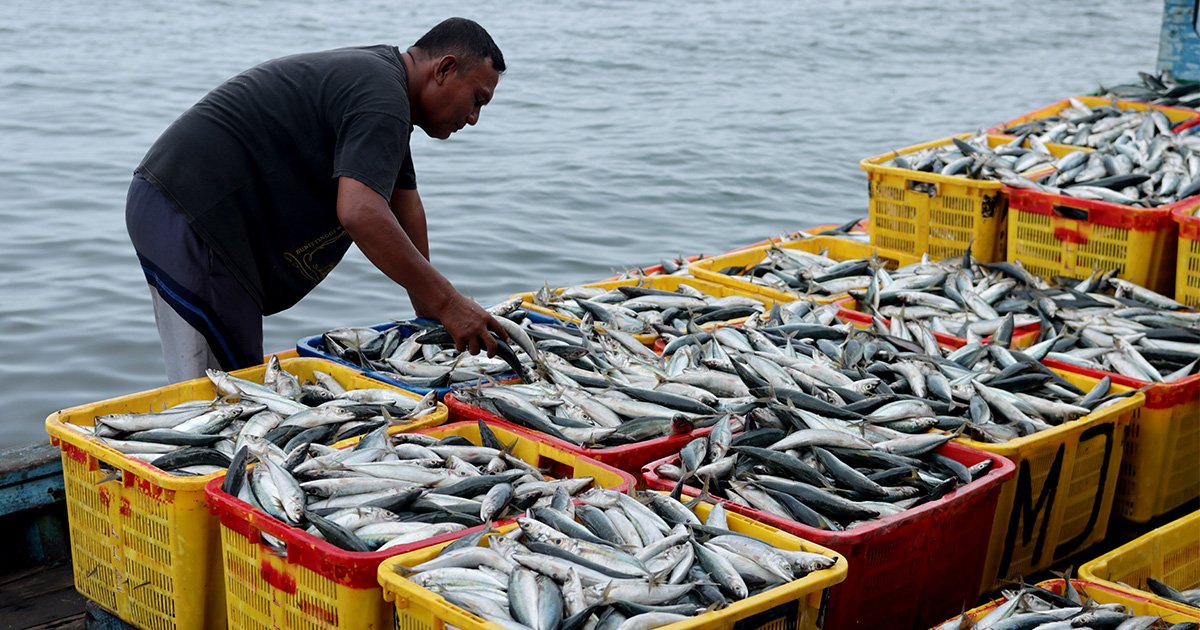
India’s fisheries sector—now widely recognized as a national “Sunrise Sector”—is rapidly transforming from a subsistence-based activity into a modern, investment-driven engine of growth, underpinned by expanding institutional finance, digital integration, and climate-resilient policy frameworks.
Contributing 1.12 percent to India’s Gross Value Added and sustaining livelihoods for nearly 30 million people, fisheries have become central to both nutritional security and rural employment. With the country now ranking as the world’s second-largest fish producer and largest aquaculture producer, India accounts for nearly 8 percent of global fish output, driven by the government’s Blue Transformation strategy.
Production, Exports, and Structural Shift
India’s fish production reached a record 197 lakh tonnes in FY 2024–25, nearly doubling over the past decade. Inland fisheries now account for more than 75 percent of total output, reflecting a structural shift from capture fisheries toward more stable, culture-based aquaculture systems.
The sector has also emerged as a major foreign exchange earner. Fisheries exports touched Rs 62,408 crore ($ 7.45 billion) in FY 2024–25, led by frozen shrimp, with the United States and China as key markets. Policy support—including the reduction of GST on key fish products from 12 percent to 5 percent—has strengthened both domestic consumption and export competitiveness.
Finance as the Growth Multiplier
A defining feature of the sector’s expansion has been the rapid scaling of institutional credit. Recognizing the sector’s diverse capital needs—from micro-scale fishers to large processing enterprises—the Department of Fisheries has partnered with banks to deliver customized, activity-linked financial products.
The Kisan Credit Card (KCC) for Fisheries, introduced in 2018–19, has become the primary vehicle for short-term credit. As of June 2025, 4.76 lakh KCCs have been issued, with Rs 3,214 crore disbursed at subsidized interest rates. For long-term infrastructure, the Fisheries and Aquaculture Infrastructure Development Fund (FIDF)—with a corpus of Rs 7,522 crore—has approved 178 projects worth over Rs 6,369 crore, supporting cold chains, processing facilities, ice plants, and value-added units.
To further unlock lending, a dedicated Rs 750 crore Credit Guarantee Fund, managed by NABSanrakshan, now provides collateral-free coverage for loans up to Rs 12.5 crore, significantly reducing risk for banks and encouraging higher exposure to the sector.
Digital Credit at Scale
At the heart of this transformation is the National Fisheries Digital Platform (NFDP)—a single-window digital ecosystem connecting stakeholders to finance, insurance, markets, and welfare services. With nearly 30 lakh stakeholders registered, NFDP has enabled end-to-end digitization of fisheries credit, onboarding 12 nationalized banks and allowing borrowers to submit, track, and manage loan applications remotely.
To date, over 19,000 loan requests have been submitted through NFDP, with sanctioned loans ranging from Rs 15,000 to Rs 5 crore, and approvals extending up to Rs 10 crore for large aquaculture and processing projects. A post-disbursement incentive under PM-MKSSY Component 1A further offsets transaction costs for small borrowers.
Toward a Bankable Blue Economy
Parallel investments in financial literacy, banker training, and outreach programs—delivered in collaboration with NABARD, BIRD, and MANAGE—are strengthening sectoral understanding and accelerating credit penetration at the grassroots level.
With digital financing rails, interest subvention, credit guarantees, and customized lending products now firmly in place, India’s fisheries sector is transitioning from subsidy-led support to credit-driven, market-aligned growth. Institutional finance is emerging as a cornerstone of India’s Blue Economy—supporting inclusive prosperity, improving value-chain efficiency, and enhancing long-term resilience in an increasingly climate-sensitive global food system.