Saturday, 18 July 2026

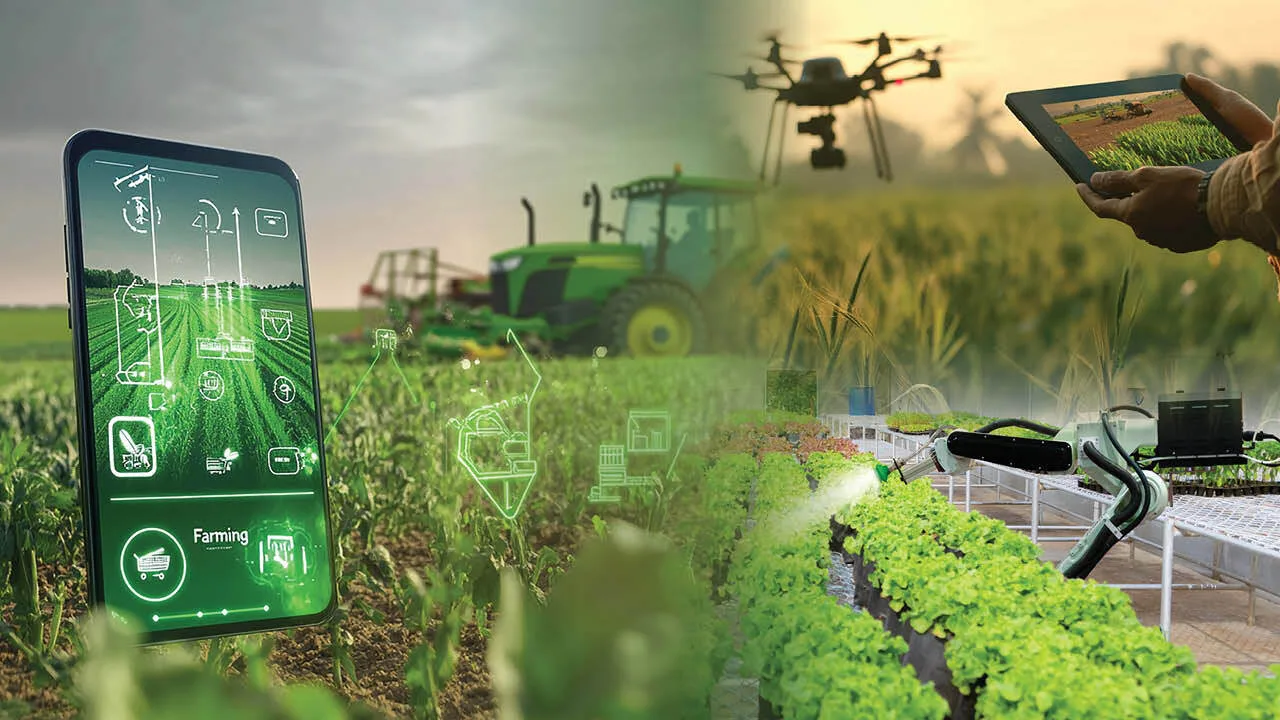
As India prepares for Union Budget 2026, founders and industry leaders from the deep-tech and agritech sectors are calling for a holistic policy approach that accelerates innovation, strengthens domestic manufacturing, and empowers startups and small enterprises to scale. They argue that while India has demonstrated significant technological prowess, structural enablers—training infrastructure, R&D facilitation, and service-led adoption—remain critical bottlenecks.
In the deep-tech domain, one of the most pressing needs is the creation of robust, scalable training ecosystems that produce industry-ready talent on a continuous basis. Rapid technological evolution demands a workforce capable of operating at the cutting edge of drones, AI, robotics, and advanced electronics. Industry-aligned training programs, founders contend, are essential to ensure that innovation is not constrained by skill shortages.

Dr. Preet Sandhu, Founder & MD, AVPL International, highlighted the complementary need for indigenous manufacturing and advanced testing infrastructure:
“Equally important is the government’s focus on developing indigenous component manufacturing infrastructure. Building domestic capabilities for critical drone and deep-tech components is essential to reduce import dependence, strengthen supply chains, and position India as a global manufacturing hub for advanced technologies.
From a founder’s standpoint, the absence of adequate advanced lab testing and validation facilities remains a major bottleneck. Establishing shared, accessible laboratory and testing infrastructure will allow drone companies to design, manufacture, and test components domestically. This will significantly reduce development timelines, lower compliance and certification costs, and enable faster commercialisation of innovations.
There is also a strong need to simplify and incentivise R&D in deep technologies. Founder-led innovation thrives when regulatory processes are predictable, funding mechanisms are accessible, and R&D investments are actively encouraged through fiscal and policy support.
Additionally, promoting the Drone-as-a-Service (DaaS) model across sectors such as agriculture, infrastructure, logistics, mining, defence, and public services can unlock widespread adoption. Targeted incentives and policy enablers for DaaS will not only accelerate industry growth but also generate employment and drive productivity gains across the economy.
From an agritech perspective, digital and precision technologies are seen as a transformative lever for India’s 140 million farm holdings. Founders emphasize that integrating drones, IoT sensors, and AI-driven analytics can optimize inputs, enhance yields, and strengthen climate resilience, but require both credit facilitation and rural skilling to scale effectively.

Swapnil (Neil) Jadhav, Founder & CEO, MapMyCrop, underscored the need for targeted budgetary interventions:
“As we approach Budget 2026, the agritech industry urges the government to champion digital infrastructure, seamless credit linkages, and rural skilling initiatives to propel precision agriculture at scale. Agri-drones, IoT sensors, and AI-driven analytics hold transformative potential to elevate yields, optimize water and fertilizer use, and fortify climate resilience for 140 million farm holdings.
Through targeted subsidies, robust public-private partnerships, and R&D tax incentives, we can fast-track integration with national platforms like AGMARK-NET and e-NAM, pivoting India from input-heavy subsidies to a self-reliant, tech-powered agriculture ecosystem.”
Taken together, these perspectives illustrate that Budget 2026 represents a critical juncture: by focusing on training infrastructure, indigenous manufacturing, advanced testing facilities, R&D enablement, and service-oriented technology adoption, the government can empower startups, scale enterprises, and ensure that India emerges as a global leader in deep-tech innovation and precision agriculture.
— Suchetana Choudhury (suchetana.choudhuri@agrospectrumindia.com)