Wednesday, 10 June 2026

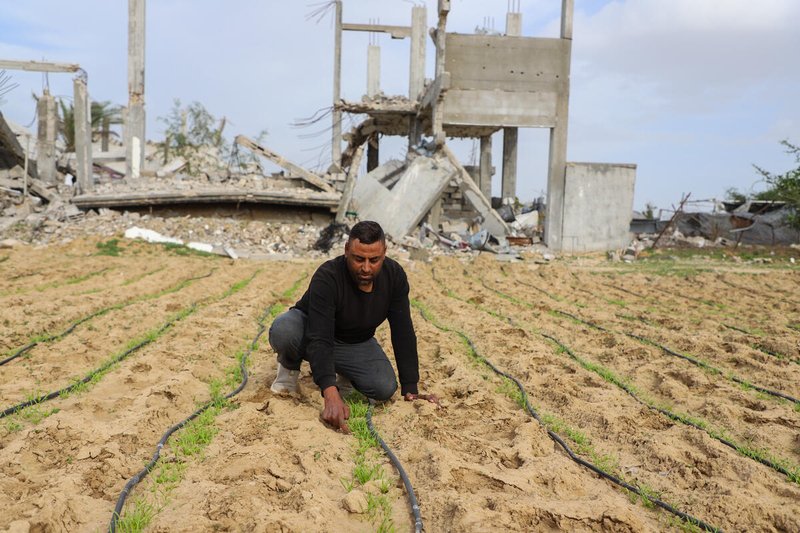
FAO, UNICEF, WFP and WHO say hunger, malnutrition, disease and the scale of agricultural destruction remain alarmingly high
The latest Integrated Food Security Phase Classification (IPC) analysis for Gaza confirms that, following the October ceasefire and the partial easing of humanitarian and commercial access, no area of the Gaza Strip is currently classified as being in famine. While this marks a critical and welcome shift from previous projections, United Nations agencies warn that the improvement rests on an extremely fragile foundation. Vast infrastructure destruction, the collapse of livelihoods, and the near-total disruption of local food production continue to leave Gaza’s population acutely vulnerable, particularly amid ongoing restrictions on humanitarian operations.
The Food and Agriculture Organization of the United Nations (FAO), UNICEF, the World Food Programme (WFP), and the World Health Organization (WHO) caution that without a sustained and large-scale expansion of food assistance, livelihood and agricultural support, health services, and commercial inflows, hundreds of thousands of people could rapidly slip back into famine-like conditions. The agencies stress that the current reprieve reflects access, not recovery, and that progress could unravel quickly if support falters.
According to the new IPC report, an estimated 1.6 million people—around 77 percent of Gaza’s population—continue to face high levels of acute food insecurity. This includes more than 100,000 children and approximately 37,000 pregnant and breastfeeding women projected to suffer acute malnutrition through April next year. Four governorates—North Gaza, Gaza Governorate, Deir al-Balah, and Khan Younis—remain classified under Emergency conditions (IPC Phase 4) through April 2026. Although Gaza Governorate has been downgraded from a prior Famine classification, IPC Phase 4 still signals severe food consumption gaps, persistently high malnutrition, and an elevated risk of mortality.
The ceasefire has enabled modest improvements in the delivery of food, animal feed, essential supplies, and commercial imports, improving food access for some households. Yet for the majority of families, shortages remain acute. Since the ceasefire, more than 730,000 people have been displaced, many now living in overcrowded, makeshift shelters and entirely dependent on humanitarian aid. Limited access to water, sanitation, and hygiene services, weakened health systems, and the widespread destruction of cropland, livestock assets, fisheries, roads, and market infrastructure continue to undermine both survival and recovery efforts.
Humanitarian assistance, while lifesaving, is currently addressing only the most basic needs. Children under five, alongside pregnant and breastfeeding women, remain at exceptionally high risk, with malnutrition levels remaining alarmingly elevated despite recent gains. These vulnerabilities reflect not only food scarcity but also the compounding effects of disease, inadequate health care, and unsafe living conditions.
Although markets are now better stocked with food following improved inflows, affordability has emerged as a defining constraint. Many vulnerable families, particularly those with children, are unable to purchase available food. Nutrition-rich items, especially protein sources, remain scarce and prohibitively expensive. As a result, nearly 79 percent of households report being unable to buy food or access clean water. No children are achieving minimum dietary diversity, while two-thirds are experiencing severe food poverty, subsisting on just one or two food groups.
Living conditions further exacerbate the crisis. Overcrowded shelters, damaged sewage systems, unreliable water supplies, and the widespread practice of burning wood or trash for warmth are accelerating outbreaks of respiratory infections, diarrheal disease, and skin conditions, disproportionately affecting children. These public health risks compound malnutrition and weaken already fragile coping capacities.
FAO, UNICEF, WFP, and WHO have expressed readiness to scale up their responses significantly. However, import restrictions, access constraints, and major funding shortfalls are severely limiting operational capacity, particularly for interventions supporting food security, nutrition, health care, water and sanitation services, and agricultural and livelihood recovery.
“Gaza’s farmers, herders, and fishers are ready to restart food production, but they cannot do so without immediate access to basic supplies and funding,” said Rein Paulsen, Director of FAO’s Office of Emergencies and Resilience. He emphasized that the ceasefire has opened a narrow window for life-sustaining agricultural inputs to reach vulnerable producers, but warned that only sustained access and adequate financing can restore local food production and reduce dependence on external aid.
UNICEF echoed these concerns, highlighting the lasting impact of prolonged conflict on children. “Gaza’s children are no longer facing deadly famine, but they remain in grave danger,” said Lucia Elmi, UNICEF Director of Emergency Operations. She noted that while food is now present in markets, many families cannot afford it, health facilities are barely functioning, clean water remains scarce, and winter conditions are intensifying suffering among displaced populations. Without sustained humanitarian access, restored basic services, and lasting peace, recent gains risk disappearing overnight.
WFP underscored that the current moment represents both proof of what is possible and a warning of what could be lost. “Once again, we have shown that famine can be pushed back when access, security, and funding align,” said Ross Smith, WFP Director of Emergency Preparedness and Response. He stressed that the priority now is to consolidate these gains by ensuring reliable access to essential services and supporting families’ transition from aid dependence toward self-sufficiency.
WHO highlighted the depth of Gaza’s health crisis, noting that only half of health facilities are even partially functional, many having sustained damage during the conflict. “The ceasefire has created space for recovery, but it has not erased two years of destruction,” said Altaf Musani, WHO’s Director for Humanitarian and Disaster Management. Despite WHO’s support to seven severe acute malnutrition stabilization centers, shortages of essential medical supplies, equipment, and prefabricated health infrastructure—often delayed by complex approval processes—continue to limit lifesaving care.
The agencies jointly urge all parties to guarantee sustained, safe, and unimpeded humanitarian and commercial access across Gaza, lift restrictions on essential imports including agricultural inputs, food, nutrition, and medical supplies, and rapidly scale up funding for food security, health, water and sanitation, and livelihood recovery. They emphasize that reactivating local food production and value chains is essential to moving Gaza from survival toward recovery.
Without decisive action now, the agencies warn, the fragile gains achieved since the ceasefire could unravel with devastating speed. Only access, supplies, and funding delivered at scale can prevent famine from returning and help Gaza chart a path toward stability, dignity, and long-term recovery.