Tuesday, 14 July 2026


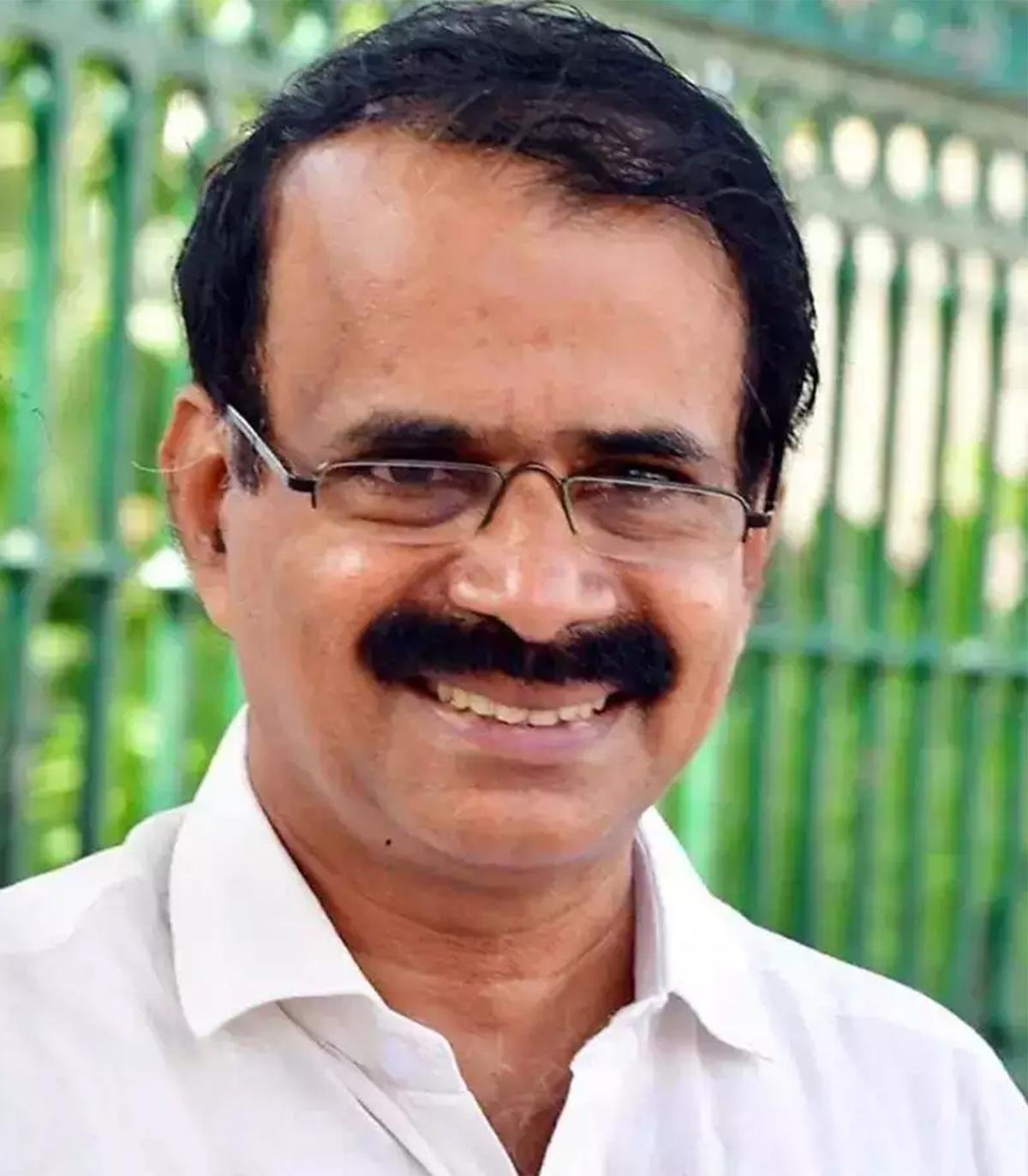
In an exclusive Agrospectrum interview, George Kurian, Minister of State for Minority Affairs and Fisheries, Animal Husbandry & Dairying, Government of India, elaborated on the Marine Fisheries Census (MFC) 2025 as a historic shift from estimation-based planning to a new era of evidence-driven, precision governance. He emphasised that the Census—powered by VyAS-BHARAT and VyAS-SUTRA—creates a dynamic, multidimensional, and scientifically validated foundation that will reshape policy design, welfare delivery, sustainability planning, and global market competitiveness. Under the visionary leadership of Prime Minister Narendra Modi, the MFC 2025 becomes the central pillar of India’s marine-sector transformation, aligning governance with the long-term national aspiration of Viksit Bharat 2047.
George Kurian highlighted that the Ministry’s initiatives under the guidance of Rajiv Ranjan Singh, Union Cabinet Minister of Panchayati Raj and Minister of Fisheries, Animal Husbandry and Dairying, Government of India, are already delivering record levels of production and exports while ensuring that technology, sustainability, and inclusivity permeate every intervention. The Census’s unprecedented household-level granularity will enable targeted welfare distribution, fisherwomen-led entrepreneurship, and a scientific roadmap for deep-sea expansion, mariculture growth, and ecosystem-based fisheries management.
Ultimately, MFC 2025 equips India with the consolidated intelligence needed to emerge as a top-3 global seafood power, setting new international benchmarks in transparency, traceability, and responsible ocean stewardship. Edited excerpts:
The MFC 2025 is described as a foundational dataset for Indian marine fisheries. How will this census reshape policy planning, coastal livelihood schemes and blue economy development over the next decade ?
The MFC 2025 will fundamentally reshape planning by providing a cogent, granular database with a multidimensional focus on the sector for the first time.
For Policy: The Census will provide us with real time data. We will have a precise, multi-dimensional understanding of the present condition—financial status, equipment ownership, and infrastructure status—of every single fishing family and village. This becomes the bedrock for rolling out schemes like Pradhan Mantri Matsya Yojana (PMMSY), allowing for highly focused and requirement-based allocation of resources.
For Livelihoods: The Census provides a “ringside view” of skill levels within fisher families. This is critical. It allows us to strategically plan alternative livelihood support, such as diversification into deep-sea fishing or targeted development of mariculture avenues, based on the actual skills and capacity present in the community.
For the Blue Economy: This database will serve as the scientific and spatial map we need for sustainable expansion. It identifies our present wherewithal, allowing us to plan the exploration of untapped avenues in our Exclusive Economic Zone (EEZ) while simultaneously implementing sustainable, ecosystem-based management for our current fisheries.
This is the first fully digital and geo-referenced Marine Fisheries Census. What new granularity and decision intelligence will the VYAS–BHARAT & VYAS–SUTRA systems unlock that earlier cycles could not ?
The biggest strength of this Census is its digital and real-time nature, powered by the VyAS systems.
The key innovation is “household-level granularity.” Earlier cycles gave us broadly grouped factors or indicators, with less options for integration with similar databases and spatial assessment; MFC 2025 gives us a georeferenced, real-time, and verified picture of each household.
VyAS-BHARAT is designed to capture the complete picture—the household’s socio-economic status, craft ownership, and access to coastal infrastructure. This is not just data; it’s a status appraisal of our entire coastline.
VyAS-SUTRA, its complimentary app, is the quality control mechanism. It uses meta-information to ensure the data being populated is plausible, validated, and purified at the source.
This combination unlocks real-time decision intelligence. We can see which specific “pockets” of fisher settlements have been historically left out and bring them into the fold. The digital tracking and validation system makes the data immediately usable and reliable for any analysis, from a district-level scheme to a national policy furthering PM Narendra Modi’s vision of leveraging data, digitalisation, and technology to design better policies and ensure transparent, evidence-based governance.
How will census insights directly support welfare architecture — including insurance coverage, PMMSY benefit targeting, safety-at-sea systems, housing, and fisherwomen entrepreneurship ?
The MFC 2025 is the master database for inclusive delivery of welfare schemes.
Targeting Benefits: For PMMSY, housing schemes, or financial aid, the Census provides the precise list of beneficiaries. We will know exactly who owns what, what their financial condition is, and where they live.
Inclusivity: The Census is designed to include settlements that may not have been covered yet. This exhaustive mapping ensures that welfare benefits can reach all genuine marine fishers.
Fisherwomen Entrepreneurship: By cataloguing the specific skills available in households, we can design pointed schemes to support fisherwomen in alternative livelihoods like mariculture or value-addition, moving them from labourers to entrepreneurs. The exclusive details being collected of the Self-Help Groups active in the fishing villages using VyAS-BHARAT will aid in the expansion of women centric entrepreneurship.
Insurance & Safety: By creating a detailed, validated picture of all crafts and fishing assets, we can establish a clear baseline for universal insurance coverage and ensure targeted deployment of safety-at-sea systems.
How will MFC 2025 enhance India’s competitiveness in EU, US & Japan seafood markets ?
International markets like the EU, US, and Japan demand proof of sustainability and traceability. The MFC 2025 provides the foundation for meeting these expectations.
This Census is the foundational layer for a sustainable ecosystem-based fisheries management (EBFM) plan. It gives us a complete, scientifically-consolidated assessment of our fleet’s health and capacity.
When we can speak loudly in the global arena with robust, homogenous national data, we demonstrate that our fisheries are managed responsibly. This Census is the first step in building a national traceability system—linking crafts, households, and landing centres. This data becomes the verifiable backbone that satisfies international queries and solidifies India’s position as a responsible, high-quality seafood supplier.
How does MFC 2025 align with India’s vision to emerge as a Top-3 global seafood power — both in sustainable capture fisheries and high-value, value-added exports ?
Our vision to make India a top-3 global seafood power rests on two pillars: sustainable capture and high-value diversification. The MFC 2025 is the strategic tool for both.
Sustainable Capture & Expansion: The Census assesses the professional fitness of our fleets. It provides the data needed to manage our existing resources sustainably while simultaneously identifying the capacity and requirements for diversification into deep-sea fishing and harnessing the full potential of our EEZ.
High-Value Diversification: The future lies in high-value products. The Census identifies the skills and resources available for aquaculture and mariculture, enabling us to strategically pivot and scale up these high-value sectors.
In short, the MFC 2025 is the consolidated, scientific roadmap that charts our path. It identifies our strengths, highlights key areas for improvement, and illuminates the precise opportunities we must seize to achieve our national goal. Under the leadership of Prime Minister Narendra Modi, India is setting new global standards in data-driven governance and inclusive growth through the Marine Fisheries Census 2025.
— Suchetana Choudhury (suchetana.choudhuri@agrospectrumindia.com)