Wednesday, 1 July 2026

Crop Residues as a Source of Income and Carbon Value
Jain Irrigation Systems Ltd. announced that it will set up India’s first industrial biochar project aimed at converting agricultural residues into biochar and carbon credits. The announcement was made during a consultation session held at Jain Hills. Experts noted that crop residues can function as a revenue source while supporting national carbon credit generation.
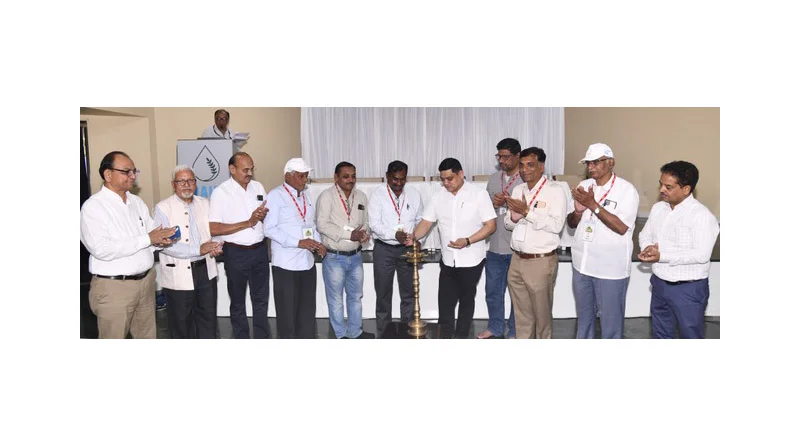
The event at Jain Hills included the participation of District Agriculture Superintendent Kurban Tadvi, scientists from the Banana Research Centre, Muktaiganj Agriculture College, cotton research institutions and representatives from farmer groups. The session opened with a lamp-lighting ceremony attended by farmers, academics and organisations working in agriculture.
Athang Jain, Director of Jain Farm Fresh Foods, joined the workshop remotely and outlined the background of the initiative. He explained the company’s work in agriculture, its goals in residue utilisation and the expected role of the biochar project in supporting smallholder farmers.
Technical Structure of the Biochar Initiative
Project Head Atin Tyagi presented the operational plan, technologies and expected outcomes of the initiative. Srijesh Gupta provided information on AA1000SES and PURO.EARTH standards related to sustainability assurance and carbon credit mechanisms.
A joint presentation by Atin Tyagi and Dr. Monica Bhavsar explained the production process of biochar, the use of local biomass and its application in soils.
The project will process residues from agriculture and food industries such as mango seeds, maize cobs and cotton stalks. The focus is on reducing the burning of residues in open fields and lowering greenhouse gas emissions.
Maharashtra produces around 21 million metric tonnes of surplus residues annually. The project will use about 100,000 tonnes each year to produce nearly 25,000 tonnes of biochar and generate more than 50,000 carbon credits.
In the discussion session, farmers raised questions on residue supply, market linkages, carbon mechanisms and soil application. The Q&A was moderated by Gautam Desarda from the agriculture department, followed by closing remarks from Dr. Anil Dhake.
During the workshop, Atin Tyagi highlighted the changes observed in climate patterns over the past decade and the increasing need for solutions that support soil resilience and reduced emissions.
Role of Biochar in Soil Management
District Agriculture Superintendent Kurban Tadvi emphasised that biochar can support improvements in soil organic carbon and soil structure. He mentioned that farmers spend large amounts on fertilisers while burning residues that could otherwise be processed. Biochar remains in soil for multiple seasons and helps in sustaining nutrient retention.