Friday, 17 July 2026

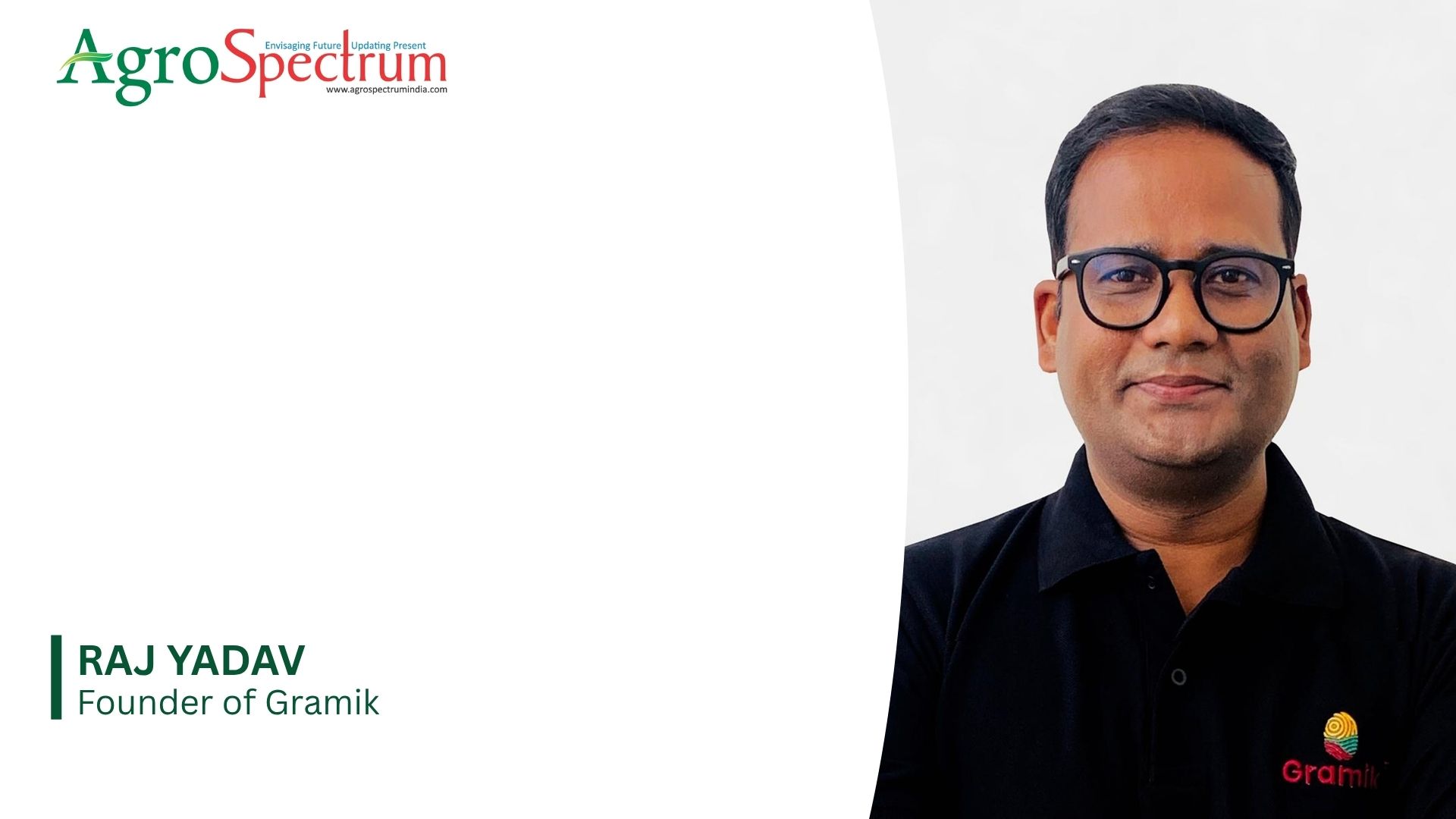
In an exclusive interaction with AgroSpectrum, Raj Yadav, Founder, Gramik explains how rural quick commerce will become a mainstream agri distribution channel and how the biggest opportunity in rural India is building distribution Infrastructure and not just commerce. Yadav also argues that the future of rural commerce lies in combining technology with local entrepreneurship and hyperlocal fulfillment and digital supply chains will define rural India’s next growth phase. Edited excepts:
How important are village-level entrepreneurs and local delivery partners in the success of Gramik’s model?
Village level entrepreneurs and local delivery partners are not just an execution layer for us; they are a core part of our operating and growth engine. Unlike urban commerce where density drives economics, rural markets require hyperlocal trust, distributed execution, and deep community integration.
In rural India, success is driven by trust, proximity, local knowledge, and the ability to serve fragmented demand efficiently. We have built a localised fulfilment and delivery architecture where dark stores, village level entrepreneurs, and delivery partners collectively create a scalable distribution layer.
Over and above fulfilment & distribution, they act as local commerce enablers by improving farmer acquisition and retention through trusted community relationships, supporting demand aggregation and localised inventory planning, increasing delivery efficiency and reducing last-mile costs, creating faster feedback loops on farmer requirements and market shifts and strengthening service reliability during critical agricultural windows.
This model reduces CAC (Customer acquisition costs), improves delivery efficiency, increases repeat purchase behaviour, and strengthens long-term network effects. Also, we believe this Village level entrepreneur led distribution network is becoming one of our strongest competitive advantages and a meaningful barrier to replication in rural commerce.
What opportunities is Gramik creating for rural employment and entrepreneurship?
We are creating employment and income generation across multiple layers; our model is designed to build local participation into the supply chain rather than centralising value creation.
Through our network of dark stores, Village-level Entrepreneurs, and Last Mile Delivery (LMD) partners across Uttar Pradesh, we are creating a new category of rural employment and entrepreneurship linked directly to agricultural commerce.
Village-level entrepreneurial opportunities (Peer Partner) through local distribution and farmer engagement networks.
Last mile delivery roles that generate income opportunities within rural communities
Dark store operation & Inventory management jobs supporting local fulfilment infrastructure
Rural retail and distribution partnerships that strengthen local commerce ecosystems
Technology-enabled field operations that introduce digital capabilities into rural markets
Our approach is designed to create local ownership within the ecosystem rather than centralized execution. As the network expands, every new geography creates a multiplier effect across jobs, micro-entrepreneurship, and rural income generation.
This creates a scalable and asset-efficient expansion model where growth is supported by distributed local infrastructure and community participation, enabling stronger market penetration and long-term network effects.
How is data helping the company predict demand and reduce supply chain inefficiencies?
Agricultural demand is highly dynamic and influenced by crop cycles, seasonality, regional farming patterns, weather conditions, product adoption trends, and local market behaviour. Our operating model uses demand forecasting, seasonal consumption patterns, regional crop cycles, inventory movement signals, and local buying behaviour to position inventory closer to demand.
Our technology and supply chain teams analyse multiple operational inputs which include Historical order and consumption trends, Crop and seasonal demand patterns across regions, Dark-store level inventory movement, Farmer purchase behaviour and repeat cycles, Delivery performance and fulfilment data, Geographic demand concentration and local market trends.
From an operational perspective, this drives measurable efficiencies by improving inventory turns, lower stock-outs during critical agricultural windows, lowering excess inventory and product ageing risk, increasing order fill rates and lower logistics and supply chain costs
Our objective is to transition from a reactive distribution model to a predictive supply chain platform and create a durable data advantage that strengthens our ability to scale rural commerce infrastructure profitably.
What investments are being made in digital infrastructure to support future expansion?
Our investment strategy is focused on building an integrated technology and supply chain ecosystem rather than simply adding physical distribution capacity. This helps us in scaling efficiently & with sustainability.
Key investment areas include Dark-store and inventory management systems, Demand forecasting and analytics capabilities, Last-mile routing and delivery optimisation, Integrated order and fulfilment platforms, Farmer-facing digital interfaces and Data infrastructure and operational automation
These investments are designed to enable rapid geographic expansion while maintaining operational consistency and improving unit economics. This digital layer becomes a key enabler of scale and a competitive advantage in rural agricultural commerce.
Do you believe rural quick-commerce could become a mainstream channel for agricultural input distribution in India?
Yes. We believe rural quick-commerce has the potential to become a mainstream distribution channel for agricultural inputs over the next few years.
Agriculture operates on narrow and time-sensitive windows where access to the right product at the right time directly impacts farm productivity and farmer outcomes. Traditional agri-input supply chains often involve multiple intermediaries, inconsistent inventory availability, fragmented distribution, and long procurement cycles particularly in rural markets.
We have cracked the problem through our model of creating predictable, reliable, and demand-driven access to agricultural inputs when farmers need them most. Through our network of dark stores, local distribution infrastructure, and last-mile delivery capabilities, we are building a model that brings inventory closer to demand and reduces the friction historically associated with rural procurement.
Several structural factors support this shift in increasing smartphone and digital adoption in rural India, growing comfort with digital purchasing behaviour among farmers, improving rural logistics and fulfilment infrastructure, greater need for reliable and quality-assured agricultural inputs and stronger data capabilities enabling localised inventory planning.
Our model is defined by availability, fulfilment reliability, local trust, and supply chain efficiency and building a foundational layer of India’s next-generation agricultural supply chain.
What market trends are shaping the future of rural commerce and agri-supply chains?
Several long-term trends are shaping this evolution:
Digitisation of rural demand: Increasing smartphone penetration, digital payments, and improved connectivity are accelerating digital engagement among rural consumers and farmers, making commerce more accessible and scalable.
Shift toward organised distribution: Farmers are increasingly prioritising product availability, authenticity, transparency, and service reliability over fragmented and informal procurement channels.
Rise of hyperlocal fulfilment infrastructure: Distributed fulfilment models such as dark stores and local inventory hubs are becoming more relevant in addressing the economics and complexity of rural last-mile delivery.
Data driven Supply Chains: Demand forecasting, inventory intelligence, and localized planning are enabling more efficient procurement and fulfilment decisions, reducing waste and improving service levels.
Farmer expectations are evolving: Farmers increasingly expect convenience, faster access, better product availability, and a more predictable purchasing experience similar to broader consumer commerce trends.
Integration of physical and digital networks: The future is unlikely to be purely online. Winning models will combine technology platforms with local entrepreneurs, field operations, retail networks, and last-mile infrastructure.
Increasing investor focus on Rural Infrastructure Platforms: Capital is increasingly moving toward businesses solving fundamental rural distribution and supply chain challenges rather than purely transactional commerce models.
The next generation of market leaders will likely be companies that combine technology, local distribution, and supply chain intelligence to create scalable and efficient access models for rural India. We believe these trends position rural quick-commerce and digitally enabled agri-supply chains to become a meaningful part of India’s agricultural and rural economic growth story over the coming decade.
What opportunities remain untapped in India’s rural commerce ecosystem?
India’s rural commerce ecosystem remains significantly underpenetrated despite representing one of the world’s largest consumer and agricultural markets. While demand exists, the largest opportunity still lies in building efficient access and distribution infrastructure.
Several high-potential opportunities remain largely untapped:
Rural Fulfilment Infrastructure: Large parts of rural India still lack organized inventory networks and localized fulfilment capabilities.
Demand driven agricultural distribution: Traditional supply chains remain inventory-push driven. There is an opportunity to create data-led models that forecast local demand and improve product availability while reducing inefficiencies.
Integrated Rural Commerce Platforms: Farmers continue to navigate fragmented ecosystems for agricultural inputs, livestock products, and essential rural commerce categories.
Digitisation of the last mile: Significant opportunity exists in equipping local entrepreneurs, delivery partners, and rural operators with digital tools that improve execution, visibility, and productivity.
Rural supply chain visibility and intelligence: Data remains underutilized across procurement, inventory planning, and fulfilment.
Village-level commerce networks: Local entrepreneurship remains one of the most scalable yet underdeveloped infrastructure layers for expanding access and strengthening rural market penetration.
High-frequency rural consumption categories: Beyond traditional Agri-inputs, there is substantial opportunity to expand into adjacent categories with recurring farmer demand and stronger wallet share potential.
The biggest opportunity remains building a unified rural operating system rather than isolated commerce channels. At Gramik, our focus is to capture this opportunity by creating a digital and physical operating layer for rural India combining localized fulfilment, supply chain intelligence, and village level entrepreneurs to build long-term infrastructure for agricultural commerce.
What is your long-term vision for building next-generation rural commerce infrastructure in India?
Our long-term vision is to build the digital and physical infrastructure layer that powers rural commerce and agricultural distribution across India, we envision an integrated network of dark stores, intelligent supply chains, village level entrepreneurs, and technology platforms that make access to agricultural inputs seamless, reliable, and efficient across rural India. We believe the next phase of India’s commerce growth will not be driven by creating demand; it will be driven by solving access, availability, and supply chain inefficiencies in rural markets.
To enable this, our model that combines a distributed network of localised dark stores positioned close to farmer demand, technology-led inventory and demand forecasting capabilities,strong last-mile delivery infrastructure and village-level execution, digital platforms that connect farmers, local entrepreneurs, and supply networks.Data-driven operational intelligence that continuously improves efficiency and service quality.
How do you envision Gramik contributing to the broader digitisation of Indian agriculture over the next five years?
Our model integrates technology, physical distribution infrastructure, local entrepreneurship, and data-driven decision-making across the entire agricultural value chain. Our focus is to digitize the full rural commerce journey by building capabilities across:
Digital demand Capture: Creating structured visibility into farmer requirements and purchasing behaviour to enable more responsive and efficient supply chains.
Technology-led supply chain operations: Using data, forecasting, and inventory intelligence to improve product availability and reduce inefficiencies across procurement and fulfillment.
Distributed Rural Fulfillment Infrastructure: Expanding dark stores and localized delivery networks that bring organized commerce closer to farmers.
Digitally enabled last-mile execution: Empowering Village Level Entrepreneurs and delivery partners with operational tools that improve speed, reliability, and service quality.
Farmer access and engagement: Simplifying access to agricultural inputs through seamless ordering, better product availability, and improved purchasing experiences.
Our long-term goal is to become one of the enabling infrastructure layers for digital agriculture in India transforming fragmented rural supply chains into a more connected, efficient, and data-driven system.
– Dipti Barve
– dipti.barve@mmactiv.com