Friday, 17 July 2026

Exclusive AgroSpectrum interview explores how geopolitical tensions are accelerating procurement diversification across Asia, Africa and Latin America
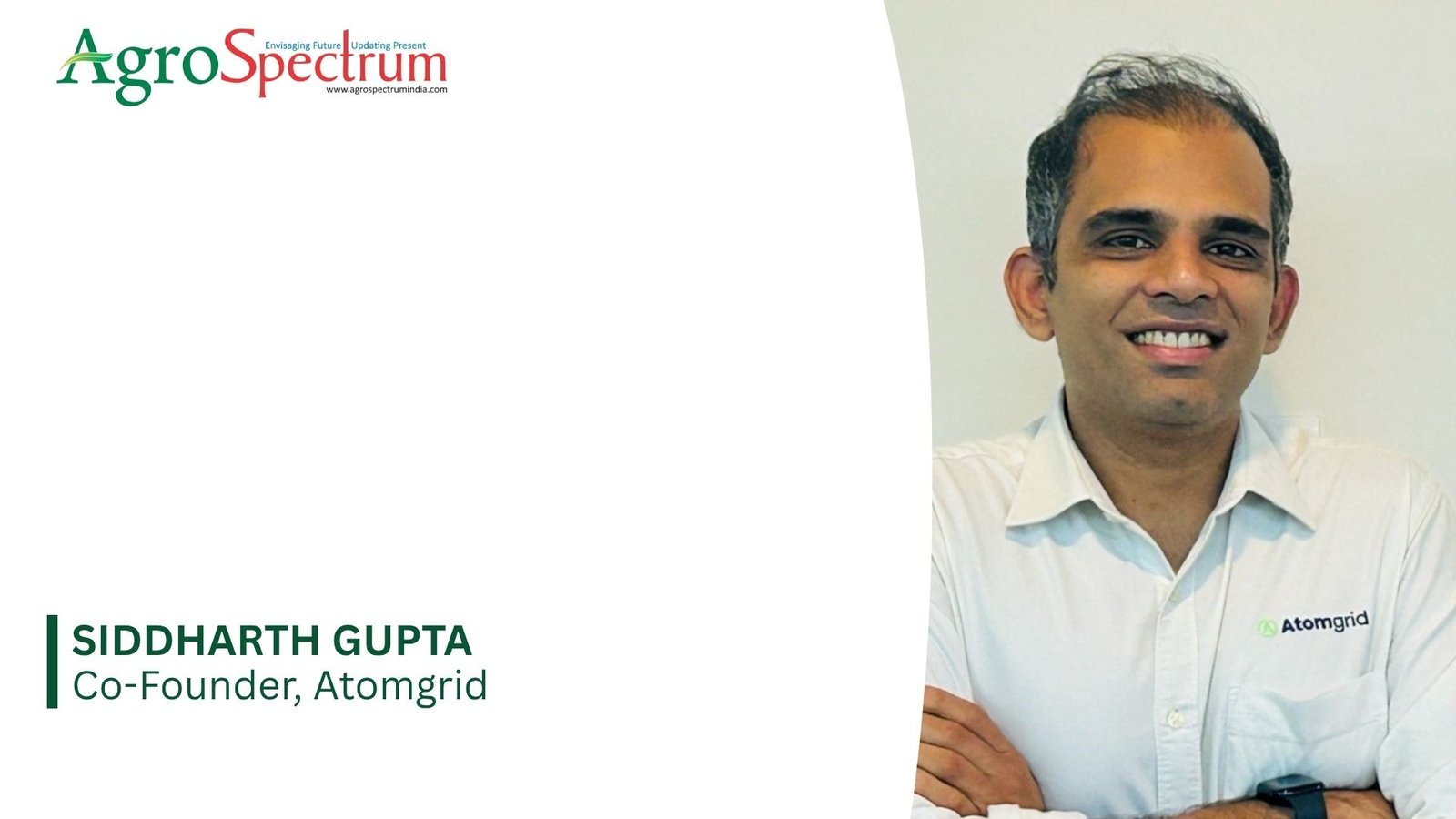
In this interview, Siddharth Gupta, Co-Founder of Atomgrid, argues that the ongoing Hormuz crisis is accelerating a global realignment of agrochemical supply chains, with buyers increasingly prioritising reliability over lowest-cost sourcing. He notes that while India is steadily advancing towards greater domestic manufacturing of active ingredients, deep dependencies on Chinese technicals and intermediates remain a long-term challenge rather than a short-term fix. Gupta highlights emerging opportunities for Indian agrochemical exporters in markets such as Vietnam and Latin America, where concerns over supply disruptions are driving procurement diversification. He also warns that African markets are facing a “double pricing squeeze” from both rising input costs and weakening local currencies, intensifying pressure on smallholder farmers. According to Gupta, the current geopolitical volatility is reinforcing a simple market reality: Suppliers that can guarantee consistent quality, availability and delivery schedules stand to gain significant market share in the years ahead.
Is “China+1” no longer a diversification strategy, but an execution test where India is being evaluated less on intent and more on operational reliability?
Yes, the qualification bar has shifted. Global buyers are no longer asking “Can India supply?” but “can India supply consistently as per required product specifications, on time, and with complete documentation?”
In agrochemicals specifically, this is visible in the inquiries that Atomgrid receives: customers want reliable supply in terms of product quality, specifications, packaging, etc., not just product samples. Reliability of the supply chain is now a precondition for even entering the conversation.
To what extent is the Hormuz crisis fundamentally reshaping global agrochemical supply chains, given that Gulf-origin sulfur, ammonia, and urea constitute critical upstream inputs across emerging markets?
The upstream exposure is real but often misframed. Sulfur, ammonia, and urea are fertilizer inputs — the direct agrochemical active-ingredient supply chain is more affected by gas costs, solvent cost, and freight economics than by Gulf chemical flows specifically. Freight disruption is the most immediate effect for exporters. Rerouted shipping, higher insurance premiums, and unpredictable lead times translate directly into working capital pressure — longer transit windows mean longer cash cycles, especially painful for companies scaling into multiple geographies simultaneously.
The crisis accelerates a bifurcation already underway: buyers everywhere are reducing single-corridor dependency. India, which manufactures formulations and active both, is structurally better positioned than most to absorb this shift — provided it can pair supply reliability with competitive pricing.
Is India’s agrochemical sector witnessing a structural shift toward import substitution and domestic active-ingredient manufacturing, or merely a temporary margin compression cycle?
This is a structural shift on which Indian companies have been working since long and is not only related to the crisis. But there is a long way to go. Indian companies will have to invest heavily in technical R&D and then setting up manufacturing at scale with the government subsidising the overhead manufacturing costs in order to compete with China.
The honest answer : most technicals and intermediates still have deep Chinese dependency that India cannot replace in the near term. It will have to be done product by product with a very long term view.
How exposed is Vietnam’s export-oriented agriculture to upstream fertilizer and pesticide disruptions, particularly in rice and aquaculture-linked input systems dependent on imported intermediates?
Vietnam market is heavily dependent on imports of technicals ( not intermediates ) Vietnam’s technical supply chain is overwhelmingly China-sourced. The rise of input prices has led to the market being in a wait and watch mode.
But looking at the last 6 months, in our Vietnamese customer conversations we are seeing an opportunity to take market share in certain technical products where India is competitive. The opportunity for Indian suppliers is not to be the cheapest option but the most reliable alternative.
In Latin America, where large-scale monoculture dominates, does Hormuz-driven volatility amplify systemic risk in soybean, sugar, and maize input economics more than in Asia or Africa?
Yes, and the scale is very different. Industrial-scale monoculture — soy in Argentina and Brazil, sugar, maize — operates on thin margins with high input intensity. A 15–20% input cost increase doesn’t just squeeze one season; it affects planting decisions, acreage allocation, and forward contract economics in ways that cascade globally. The buyer profile in LatAm is also different — large agribusinesses and cooperatives with sophisticated procurement, not smallholders. These buyers have the scale to demand supply chain diversification and the ability to switch at volume. That makes them high-value early adopters for Indian exporters who can demonstrate reliability.
Atomgrid has a deep focus on Latin America markets and we are applying for our product registrations aggressively. When a crisis creates urgency in buyer procurement, having existing registrations is the difference between being a credible supplier and being invisible.
Are African agrochemical markets facing a dual shock of availability constraints and currency depreciation, effectively creating a “double pricing squeeze” on smallholder agriculture inputs?
Yes, currency depreciation against the dollar compounds the dollar-denominated freight and availability premium simultaneously. The result is a landed cost squeeze that smallholder agriculture cannot absorb through price increases at the farm gate.
In practice, availability matters as much as price. Farmers and distributors will pay a premium for a product they can actually get over a cheaper product with an unpredictable schedule. A bulk formulation from India with predictable lead times and the right quality is what our customers need when they are looking for an alternative to China.
How critical is execution speed—land acquisition, regulatory clearance, logistics integration—in determining whether India can convert China+1 intent into sustained industrial migration?
For chemicals specifically, regulatory clearance speed, both in India (pollution clearances, CPCB compliance) and in destination markets (product registrations) — is the single biggest bottleneck. Land and logistics matter, but they’re problems to be tackled later.
The companies gaining ground right now are those that started their international registration pipelines 5-10 years ago. That lead time is structural—you cannot compress a 12–18 month registration process with capital alone. Speed advantage is baked in ahead of time, not at the moment of demand.
With the agrochemical market seeing a patent cliff in the next 5 years, the above becomes even more important.
To what extent does fragmented infrastructure across Indian states dilute the “execution premium” required to fully absorb China+1 manufacturing shifts?
Significantly, yes, particularly for companies trying to operate multi-state manufacturing networks. The absence of harmonized GST administration, inconsistent state-level regulatory timelines, and logistics cost variance between clusters all erode the margin advantage India should theoretically hold.
In practice, the best-run Indian specialty chemical companies have compensated by concentrating their manufacturing footprint rather than distributing it. Deep presence in one or two clusters beats shallow presence across many. Fragmentation is a problem you solve by design, not by waiting for policy.
At what point does “India + execution” become a structural global supply chain standard rather than a transitional narrative in the post-China manufacturing era?
When Indian companies stop being described as “China alternatives” and start being the first call, when customers build their global supply chain architecture around India rather than as a hedge against China. That transition happens molecule by molecule, category by category, as Indian companies build the registration moats and customer relationships that make switching costs real.The structural inflection point is probably 5–7 years away at the sector level, but individual companies can achieve it much sooner. The marker is when a global buyer’s India supplier is on their approved vendor list for new product launches, not just for existing products sourced from China.
For agrochemicals specifically, product registrations are the moat that is irreversible. Once an Indian company holds 50+ active registrations across regulated markets, it becomes structurally embedded in global supply chains in a way that outlasts any geopolitical narrative. That’s the transition from transitional to structural.
— Suchetana Choudhury (suchetana.choudhuri@agrospectrumindia.com)