Tuesday, 14 July 2026

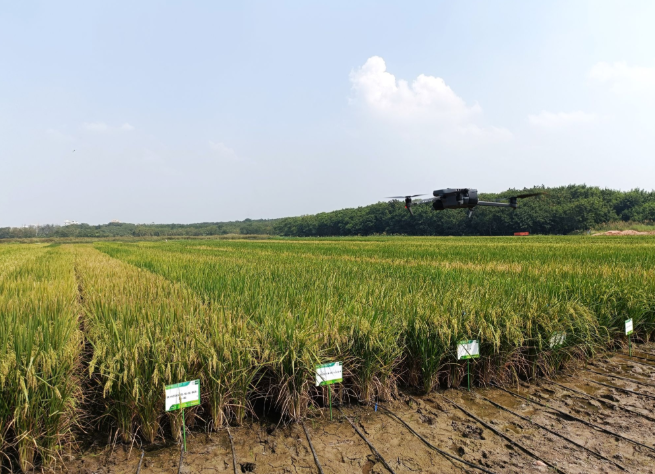
ICAR–IRRI collaboration delivers direct-seeded rice cultivars designed to reduce water consumption, lower labour dependence and strengthen climate resilience amid mounting agricultural pressures
In a significant development for India’s evolving agricultural landscape, two advanced rice varieties specifically engineered for direct-seeded rice (DSR) cultivation have been identified for release, offering farmers a pathway toward more resource-efficient and climate-resilient rice production.
The varieties—DRR Dhan 92 and CR Dhan 217—represent the culmination of years of collaborative research between the International Rice Research Institute (IRRI) and the Indian Council of Agricultural Research (ICAR). Their emergence comes at a pivotal moment for Indian agriculture, as concerns over groundwater depletion, labour shortages and increasingly erratic monsoon patterns compel a rethinking of conventional rice cultivation practices.
Traditionally, rice production in India has relied heavily on the transplanting of seedlings into flooded fields, a system that demands substantial quantities of water and labour. Direct-seeded rice offers a compelling alternative by allowing seeds to be sown directly into the soil, reducing dependence on both resources while lowering methane emissions associated with flooded paddy cultivation.
Yet despite its promise, widespread adoption of DSR has remained constrained by a fundamental limitation: most existing rice varieties were bred for transplanted systems rather than the more demanding conditions encountered in direct-seeded environments.
The newly identified cultivars seek to address precisely that challenge.
DRR Dhan 92, earmarked for northeastern India, demonstrated an average yield of 5.8 tonnes per hectare under direct-seeded conditions, outperforming the widely cultivated MTU 1010 variety by approximately 18 percent in national trials. Notably, it also maintained strong productivity under conventional transplanted systems, producing 5.74 tonnes per hectare.
Meanwhile, CR Dhan 217, identified for eastern and central India, delivered average yields of approximately 5.9 tonnes per hectare, with trial results reaching as high as 8.7 tonnes per hectare under favourable growing conditions. Its maturity period of around 118 days makes it particularly suitable for regions where crop schedules remain closely linked to monsoon dynamics.
What distinguishes these varieties is not merely their productivity, but the scientific sophistication underlying their development.
Researchers employed advanced genomic-assisted breeding techniques to integrate more than 19 genes associated with crop establishment, stress tolerance, disease resistance, resilience and grain quality. The result is a new generation of rice cultivars purpose-built for direct-seeded production systems.
Among their key attributes are improved germination under flooded or low-oxygen conditions, vigorous early growth that enhances weed competitiveness, stronger stems that reduce lodging risk, and greater yield stability across diverse agro-climatic environments.
For agricultural scientists, the development represents a shift in breeding philosophy itself.
“Many farmers recognise the benefits of direct-seeded rice. However, adopting this improved approach has been challenging without varieties specifically developed to perform well under direct-seeding conditions,” said Dr. Michael Quinn, Research Director for Rice Breeding Innovations at IRRI.
“These new varieties enable farmers to adopt a more productive, sustainable and efficient rice production system,” he added.
The significance of the achievement extends beyond individual varietal performance.
According to Dr. R. M. Sundaram, Director of the ICAR–Indian Institute of Rice Research (IIRR), the real breakthrough lies in the consistency demonstrated across diverse production environments.
“What is important here is not just a single high-performing trial, but consistent performance across environments,” Sundaram observed. “This is where long-term collaboration between ICAR and IRRI, supported through India’s national testing system, becomes critical in moving innovations from breeding pipelines to farmers’ fields.”
Public investment in agricultural biotechnology has also played a central role in bringing the varieties to fruition.
Sanjay Kalia, Program Officer at India’s Department of Biotechnology (DBT), noted that sustained support for genomic-assisted breeding has enabled researchers to design varieties around emerging production systems rather than adapting older genetics to new challenges.
“The outcome is not just improved genetics, but technologies that are aligned with everyday constraints in farmers’ fields,” Kalia said.
The two varieties underwent three years of rigorous national testing before being selected for release through the All India Coordinated Research Project on Rice (AICRIP). DRR Dhan 92 was developed under the DBT-supported ICAR–IRRI partnership framework, while CR Dhan 217 received financial backing from the Asian Development Bank (ADB) and the Government of Finland.
Their formal notification by the Government of India is expected in due course.
Beyond the immediate agronomic benefits, the release signals a broader transition within rice breeding—from incremental varietal improvement toward systems-oriented innovation.
As water scarcity intensifies, labour availability declines and climate variability becomes increasingly pronounced, agricultural technologies capable of delivering “more crop per drop” are likely to assume greater strategic importance.
Should adoption occur at scale, DRR Dhan 92 and CR Dhan 217 could help establish direct-seeded rice as a mainstream production system, enabling farmers to sustain productivity while conserving resources and reducing agriculture’s environmental footprint.
In doing so, they may represent not only a milestone in rice breeding, but a glimpse into the future of sustainable crop development itself.