Thursday, 16 July 2026

How women sustain global agriculture beneath formal systems of land, labour, and finance—and why food systems remain structurally incomplete without them
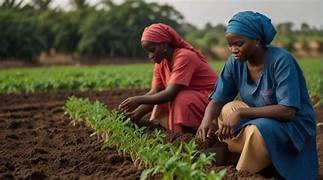
In the first light of day—before markets open their shutters, before satellites finish their quiet scanning of fields, before policy desks begin translating reality into reports—agriculture is already in motion. It begins in small, unrecorded acts: hands sorting seed by touch and memory, bodies tending livestock that recognise the rhythm of care more than clock time, labour moving fluidly between soil and stove, field and household, without the clean boundaries that economics prefers.
Across much of the world, this early work is carried disproportionately by women. Not as an exception, and not as a footnote, but as routine—repeated, distributed, and essential. Yet agriculture is still often written as though it begins later, at the point where visibility starts: when inputs are purchased, when land is formally registered, when yields are counted, when harvests enter trade systems and become data. Everything before that moment is treated as background. Everything after it becomes the story.
Between these two versions of agriculture—the lived and the measured—there is a quiet but persistent gap. It is not simply a gap in data, but a gap in recognition. It is precisely within that space, half-seen and undercounted, that women have long sustained agricultural systems, holding together the parts that do not easily appear in spreadsheets or policy frameworks, yet without which nothing else would function.
What emerges from global research, then, is not a marginal narrative of inclusion waiting to be completed. It is something more fundamental and more unsettling: Women are not positioned at the edge of agriculture, waiting to be drawn into its centre. They are already embedded in its centre of gravity—structuring how food is grown, processed, preserved, and distributed. The question, therefore, is not whether women participate in agriculture. They already do, at scale and across systems. The real question is whether the systems that define agriculture are capable of seeing that participation clearly enough to build upon it.
Scale: The workforce that statistics partially capture
International estimates consistently place women at roughly 40 per cent of the global agricultural workforce, according to the Food and Agriculture Organization. On paper, this is already a substantial share. But it is also only a partial rendering of reality—one that captures what is formally counted, while leaving much of what sustains agriculture outside the frame.
The moment unpaid labour is included, the contours of the picture shift. Food processing that never enters markets, seed saving passed through households rather than institutions, water collection measured in kilometres walked rather than income earned, care responsibilities that make agricultural labour possible in the first place—these are not auxiliary tasks. They are the infrastructure of survival in rural economies. Yet they rarely appear in the same datasets that define agricultural “participation.”
Time-use studies across rural economies make this imbalance harder to ignore. When unpaid labour is accounted for, women’s total workload in agrifood systems is consistently higher than men’s, often by 20 to 30 per cent. This is not a marginal statistical variation. It is a redistribution of time so deep that it quietly shapes everything else: the hours available for paid work, the ability to access training, the likelihood of engaging with markets, and even the capacity to adopt new technologies.
Agriculture, in this sense, is not a single occupation for women. It is an overlapping set of obligations—productive and reproductive, formal and informal, visible and unseen. It stretches across household economies, informal exchange networks, and subsistence systems that rarely enter official accounting frameworks. Not because they lack economic weight, but because they resist the language through which modern economies prefer to measure value. The result is a structural paradox that global data repeatedly circles but never fully resolves: women are central to food systems, yet they remain partially invisible within the systems that define those same food systems.
The measurement problem: When agriculture is only what can be counted
How agriculture is measured is not a neutral technical choice. It determines what becomes legible as “work,” what becomes policy-relevant, and what is left outside intervention. Most formal statistical systems prioritise what can be easily quantified: registered landholdings, commercial output, input consumption, and monetised production. These indicators are important, but they are also selective. They tend to privilege formal markets and structured ownership systems, which do not reflect how much of global agriculture actually operates—particularly in smallholder and mixed subsistence contexts.
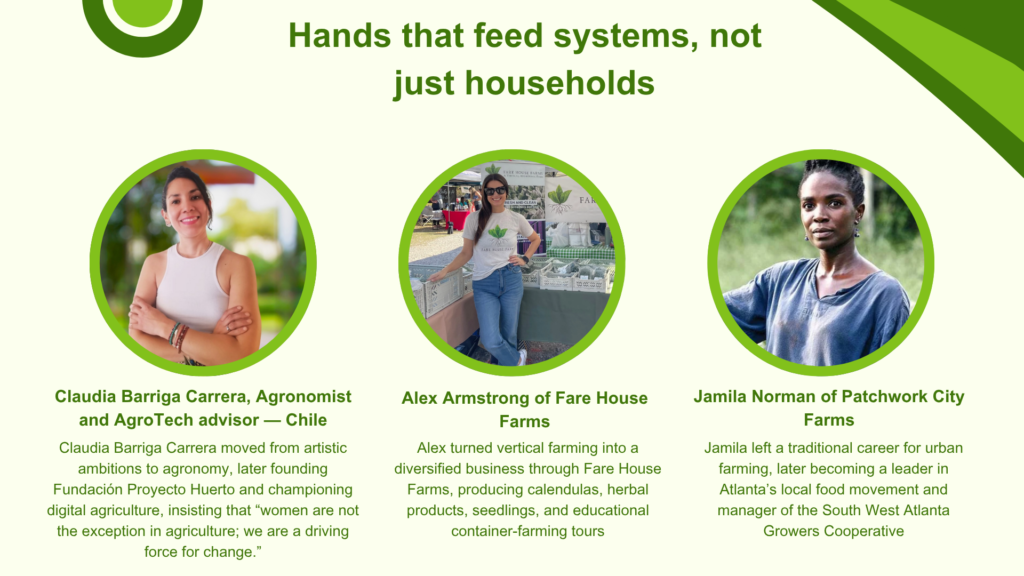
In these systems, production is distributed rather than centralised. A household garden may supply nutrition without ever appearing in trade statistics. A shared plot may be cultivated through informal arrangements that leave no administrative trace. Food may move through local exchange networks where value is social as much as monetary.
Food and Agriculture Organization analyses consistently show that women play a substantial role in these systems, particularly in smallholder and subsistence agriculture. But this role is difficult to quantify precisely because it is embedded in household economies rather than formal market transactions. It is present in output, but absent in classification.
As a result, key agricultural activities—seed saving, post-harvest processing, food preparation, informal trading—often sit outside national agricultural accounts. They are functionally essential but statistically peripheral. This creates a structural distortion in how agriculture is seen. Systems appear more formal, more mechanised, and more male-dominated than they actually are on the ground. The economy becomes narrower in measurement than it is in practice.
What is missing, then, is not labour. It is not even scale. What is missing is visibility—an ability to recognise agricultural systems in their full, layered form, rather than only in the parts that conform to existing metrics.
Land: Where inequality becomes structural
If labour defines participation in agriculture, land defines power. And in most farming systems around the world, that line of power is still sharply drawn.
Across global datasets, women are consistently less likely than men to own or control agricultural land. Even in regions where women make up a substantial share of the agricultural workforce, they remain a minority among registered landholders. The imbalance is not accidental, and it is not purely legal. It is built through layers of inheritance norms, customary practices, administrative procedures, and documentation systems that tend to privilege male ownership by default.

In many rural contexts, land is not simply allocated—it is inherited, transferred, witnessed, and recorded through systems that were not designed with gender parity in mind. Even where formal law guarantees equal rights, informal enforcement often determines actual access. The result is a quiet but persistent gap between legal entitlement and lived reality.
This gap matters because land is not just a productive asset. It is the entry point to everything that follows in agriculture. Without secure tenure, farmers are less able to access credit, because land is often required as collateral. Without credit, investment in irrigation systems, mechanisation, soil restoration, or improved seed varieties becomes difficult. Without those inputs, productivity is constrained—not by capability, but by the structure of access.
In other words, the limitations are not technical. They are systemic.
World Bank analyses have repeatedly shown this pattern in parts of Africa and other developing regions: women’s farms often record lower yields per hectare than men’s farms. But the same evidence also shows something equally important. When women’s access to land, credit, and inputs is improved, the productivity gap narrows significantly. In some cases, it narrows substantially enough to change household-level food security outcomes.
The implication is direct, and it is uncomfortable in its simplicity. The productivity difference is not inherent. It is constructed through unequal access to the foundations of farming itself.
Land, then, is not merely a productive asset within agriculture. It is the threshold through which every other resource flows. It determines who can invest, who can scale, who can absorb risk, and ultimately, who can shape the trajectory of agricultural systems over time.
In that sense, land is not just where agriculture begins. It is where inequality becomes structurally fixed—or structurally undone.
Finance: The invisible barrier behind productivity
Finance is often discussed in agriculture as a technical constraint—something that can be solved with better products, smarter lending models, or expanded outreach. But on the ground, it functions less like a technical gap and more like a structural filter: Deciding who can scale, who can invest, and who remains locked into low-productivity systems.
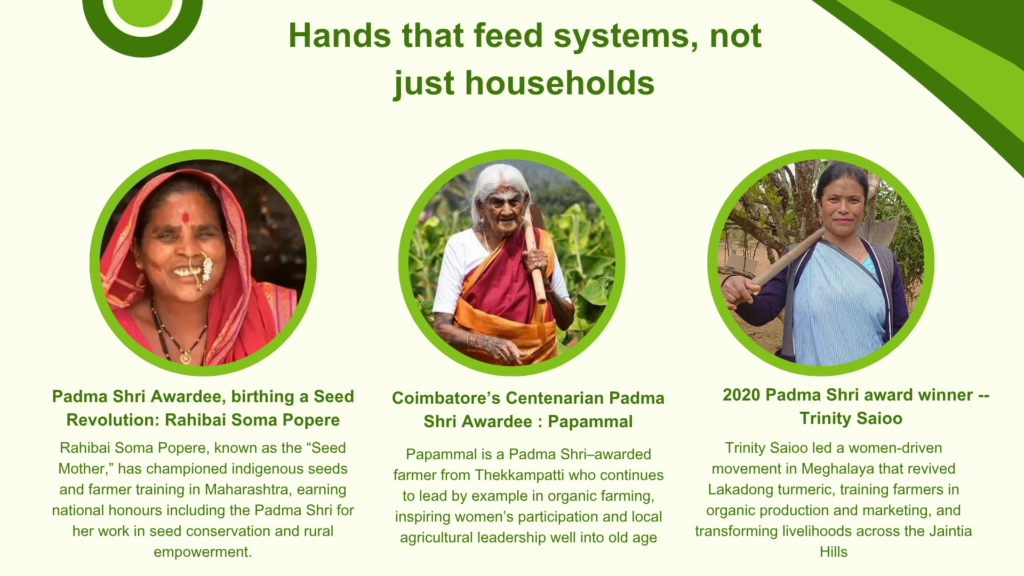
Formal financial systems are built on a narrow set of requirements. Collateral is central. Credit histories matter. Documented income streams are expected. These conditions appear neutral in design, but in practice they are deeply uneven in their effects. Women farmers are less likely to meet them, not because they are less economically active, but because their economic activity is more often informal, distributed, and unrecorded in ways that banks recognise.
Lower land ownership compounds the problem. Without land titles, collateral options shrink. Without collateral, credit access weakens. Without credit, the ability to move beyond subsistence or low-input farming becomes limited. The constraint is cumulative, and it reinforces itself over time.
Microfinance has expanded access in many regions and has played a meaningful role in bringing financial services closer to rural households. But its limits are also clear. Loan sizes are frequently too small to support mechanisation, irrigation infrastructure, or larger productivity investments. In effect, microfinance can smooth consumption cycles, but it rarely shifts structural capacity at scale.
Digital finance is often presented as the next breakthrough. Mobile banking, digital credit scoring, and fintech platforms promise to bypass traditional barriers. Yet they introduce a different risk: If algorithms are built on incomplete or biased data, they can replicate existing exclusions in more automated form. Informal labour, seasonal income patterns, and non-monetised agricultural contributions often remain invisible to these systems, which still depend on formal financial footprints.
The outcome is a persistent capital gap that runs through the entire agricultural system. It shapes what inputs farmers can afford, how much risk they can absorb, whether they can invest in productivity improvements, and how they engage with markets.
In practice, finance does not simply support agriculture. It quietly determines its boundaries.
When inclusion works: Women as system builders
Despite structural constraints, evidence from multiple regions shows that when barriers are reduced, women are not only participants in agriculture—they become system designers.
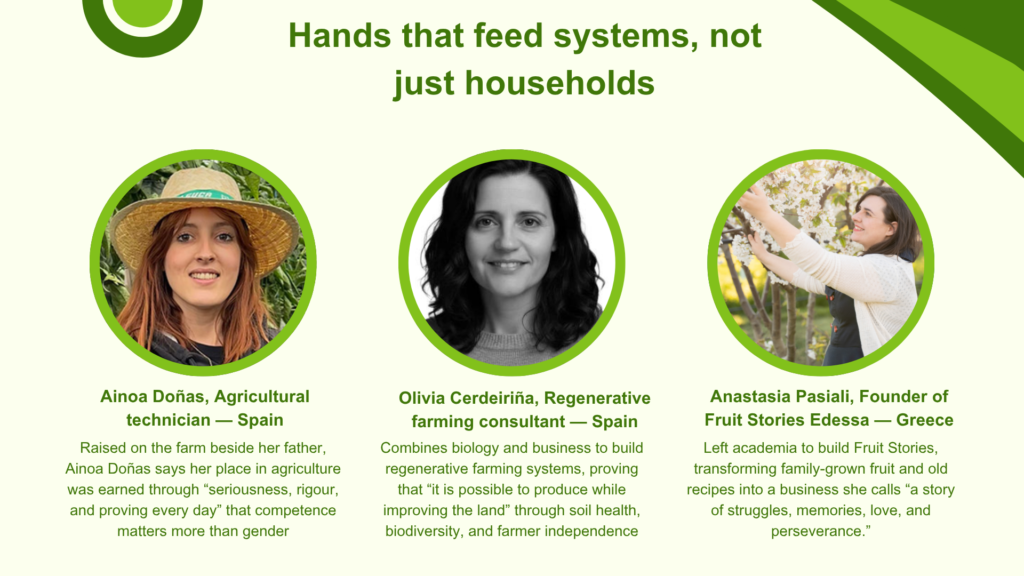
In East Africa, women’s participation in coffee cooperatives has strengthened value chains and improved market stability. In West Africa, women dominate shea production networks that have evolved from informal collection into structured global supply chains. In South Asia, dairy cooperatives have integrated millions of women into formal markets, stabilising income and improving household nutrition.
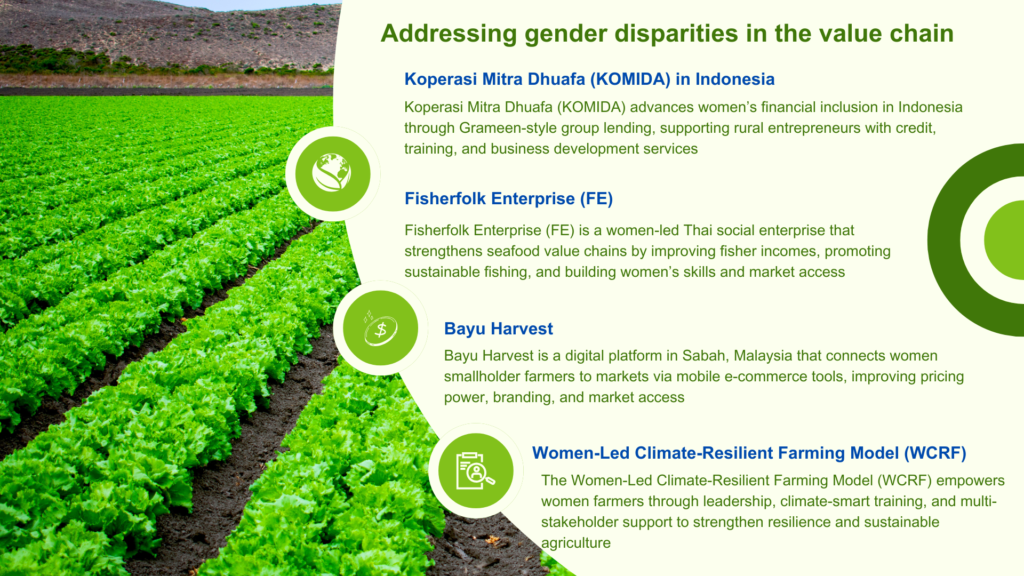
In Latin America, women-led agroecological systems have strengthened biodiversity and climate resilience. In Southeast Asia, access to mechanisation and extension services has significantly improved rice productivity in women-managed farms. Across Europe, women are increasingly present in organic and precision agriculture systems, often leading diversification and sustainability practices.
These are not isolated successes. They are evidence of what happens when structural constraints are reduced: productivity increases, systems stabilise, and innovation becomes more widely distributed.
Conclusion: the system beneath the system
The global evidence on women in agriculture does not describe a marginal development concern. It describes something more fundamental: a structural foundation on which food systems already rest, whether or not they formally acknowledge it.
Women constitute a significant share of agricultural labour across the world. They contribute substantially to food production in smallholder, subsistence, and mixed systems. They are central to seed preservation, household food security, and local market economies. Yet this centrality is paired with persistent structural constraint—unequal access to land, finance, technology, and institutional decision-making.
This is not a contradiction in participation. It is a contradiction in power. The work is present, but the control over resources and direction is unevenly distributed. The most telling evidence comes from places where those constraints are reduced. Where women gain secure land rights, where credit systems become accessible, where extension services and technology reach them directly, the outcomes shift in measurable ways. Productivity rises. Household resilience strengthens. Agricultural systems respond more effectively to climate and market shocks. Innovation is no longer concentrated; it becomes distributed.
Nothing in this pattern suggests dependency on a specific model or geography. It suggests something more general: when structural barriers are lowered, women do not simply participate more fully in existing systems—they alter the functioning of those systems themselves. Agricultural transformation, therefore, cannot be understood only as a question of output or efficiency. It is also a question of access—of who is enabled to produce, who is able to decide, and who ultimately benefits from the system that is built.
Beneath every visible agricultural structure—markets, yields, technologies, policies—there is another system operating more quietly. It is less documented, less measured, but equally decisive. It is the system of participation, access, and control. Within that system, women are not positioned at the margins waiting for inclusion. They are already part of its memory—and increasingly, part of its direction.
— Suchetana Choudhury (suchetana.choudhuri@agrospectrumindia.com)