Friday, 17 July 2026

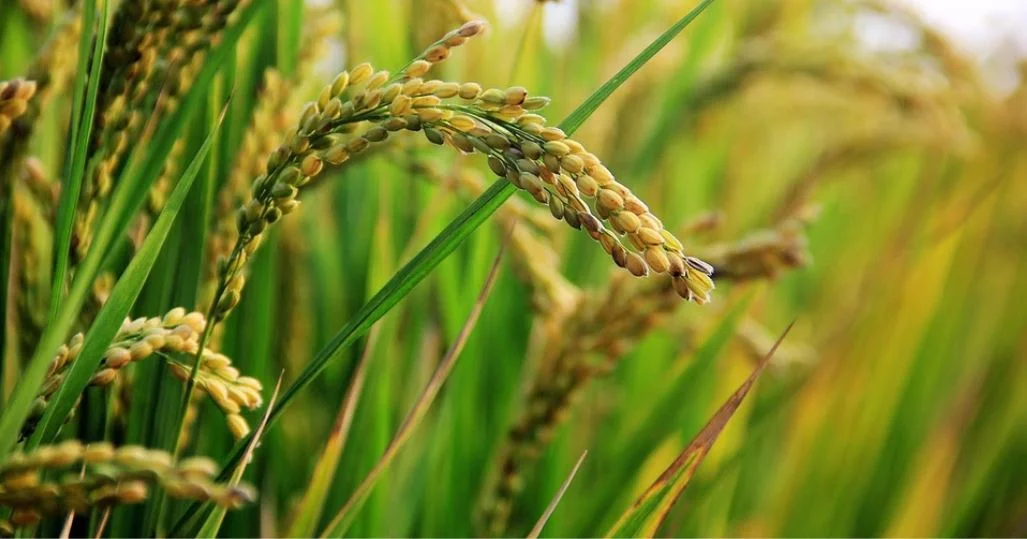
As India approaches the Kharif 2026 season, its agricultural narrative reflects a measured evolution—from the imperatives of food security to a more refined emphasis on nutrient resilience and ecological balance.
The past year reveals a supply chain growing increasingly nimble amid global uncertainty. Urea, the system’s backbone, saw requirements exceed 100 LMT in Kharif 2025 and rise further to 156.80 LMT in Rabi 2025–26, supported by steady domestic output. This stability sustained productivity across key agrarian centres such as Madhya Pradesh and Maharashtra, even as DAP availability tightened during Kharif.
That disruption catalysed more disciplined import planning and buffer creation in the months that followed. Simultaneously, the rise of the “NPKS revolution” signalled a deeper behavioural shift toward balanced fertilisation, with availability during Kharif 2025 comfortably exceeding demand and strong uptake recorded across Maharashtra, Karnataka, and Madhya Pradesh—momentum that extended into the Rabi season. Muriate of Potash (MOP), meanwhile, retained a stable, crop-specific niche in plantation economies such as Kerala.

While Kharif preparedness appears robust—backed by procurement cycles completed well in advance—the industry’s gaze is already shifting to the horizon. As Vipin Saini, CEO, BASAI points out, “The real uncertainty lies beyond the immediate season, particularly in the chemical agri-input segment. While biological inputs remain largely insulated due to domestic availability, the dependence on imported inert ingredients continues to pose a structural risk, subtly shaping supply expectations for Rabi 2026 and beyond”.
Saini observed, “This underlying fragility is further reflected in the sector’s energy backbone. Between 2015–16 and 2024–25, the fertiliser industry consumed 15,000–20,000 MMSCM of natural gas annually, yet domestic production accounted for only 14 per cent in 2024–25—a trend that has persisted into 2025–26. With production and imports typically peaking in the latter half of the year, the relatively lean March and June quarters underscore the cyclical pressures and enduring external dependencies that continue to define the sector’s trajectory.”
The following table encapsulates the All-India Fertiliser Position for the Rabi 2025–26 season (till March 23, 2026), highlighting the transition from reactive supply management to proactive nutrient planning:
| Product | Pro rata requirement from 1/10/25 to 23/3/2026 (in LMT) | Availability from 1/10/25 to 23/3/2026 (in LMT) | Sales from 1/10/25 to 23/3/2026 (in LMT) | Closing Stock from 1/10/25 to 23/3/2026 (in LMT) |
| Urea | 192.20 | 250.26 | 197.21 | 53.08 |
| DAP | 52.80 | 74.74 | 52.94 | 21.80 |
| MAP | 15.23 | 19.07 | 11.10 | 7.98 |
| NPKS | 80.57 | 114.96 | 66.61 | 48.38 |
This transition sets the stage for Kharif 2026, where sustainability is steadily moving from policy intent to field-level practice, supported by comfortable closing stocks that ensure a smooth monsoon transition. The shift is reflected in the evolving geometry of India’s fields. As of April 3, 2026, summer cropping spans 58.29 lakh hectare, a modest 0.84 per cent increase over last year, yet indicative of a deeper strategic realignment.
Farmers are gradually retreating from water-intensive rice, down 7.6 per cent, even as pulses expand sharply by 25 per cent, led by black gram and green gram (urad and moong). The diversification is broader: climate-resilient coarse cereals have risen 8 per cent, with bajra and ragi driving the shift, while oilseeds are up 4.2 per cent, supported by groundnut and sunflower.

The momentum is expected to carry into the upcoming season, with industry assessments pointing to a broadly positive outlook. “The upcoming Kharif season is expected to be a positive one, even with a few operational challenges. We project that acreage for all major crops will increase this year. It is important to note that specific crop outcomes will still show minor fluctuations based on localised rainfall and on-ground factors,” remarked Satyender Singh, Chief Executive Officer – Seeds, Crystal Crop Protection Ltd. “Taken together, these shifts point to an agrarian economy that is not merely expanding, but recalibrating—tilting toward a future defined by nutritional balance, climate resilience, and measured self-reliance,” he added.
Domestic Resilience and Global Sourcing
Policy is simultaneously pivoting toward efficiency-led interventions. As Saini highlights, “The government has been promoting Neem Coated Urea (NCU) since 2018, with the base price fixed at Rs 242 per 45 kg bag (exclusive of 5 per cent neem coating charges and 5 per cent GST). In comparison, Sulphur Coated Urea (SCU), notified on January 23, 2026, at Rs 254 per 40 kg bag (inclusive of 18 per cent sulphur coating but exclusive of 5 per cent GST), reaches an effective retail parity of around Rs 266 per bag after all charges.
While NCU contains 46 per cent nitrogen, SCU has 37 per cent, but delivers significantly higher fertiliser use efficiency. Drawing on inputs from the Indian Council of Agricultural Research, he notes that SCU’s slow-release mechanism improves nutrient use efficiency to 50–60 per cent, compared to 30–40 per cent for conventional urea, enabling similar crop outcomes with lower application volumes and reduced input costs.
Kharif 2026: Balancing Fiscal Buffers and Supply Chain Resilience
The outlook for Kharif 2026 presents a veneer of stability, where robust inventories and functional supply chains conceal a more calibrated exercise in strategic management. India’s fertiliser security continues to navigate a tightrope of nutrient imbalance, import dependence, and fiscal pressure—faultlines that shape, rather than destabilise, the current agrarian framework. Details of Requirement, Receipt, Availability, Sales and Stock position of Major Fertilizers (Urea, DAP, MOP, Complex and SSP) during Kharif 2026 as on 17.04.2026 is given below:
(Unit : in Lakh MT)
| Product | Total Requirement Kharif 2026 | Total sale during Kharif 2026 | Availability | Sales | Closing stock |
| Urea | 194.02 | 8.53 | 64.43 | 8.53 | 55.90 |
| DAP | 59.17 | 2.15 | 21.82 | 2.15 | 19.67 |
| MOP | 17.57 | 0.65 | 8.21 | 0.65 | 7.56 |
| NPK | 84.99 | 2.97 | 51.11 | 2.97 | 48.14 |
| SSP | 34.81 | 1.19 | 24.88 | 1.19 | 23.68 |
| Total | 390.56 | 15.49 | 170.45 | 15.49 | 154.96 |
Source: https://upag.gov.in/
At the core lies the Nutrient Based Subsidy (NBS) regime, with a proposed outlay of Rs 41,533.81 crore for Kharif 2026—an increase of about Rs 4,317 crore, or 11–12 per cent, over the previous season. The revised rates reflect a proactive buffering of global shocks: Nitrogen at Rs 47.32 per kg, Phosphate at Rs 52.76 per kg, Potash at Rs 2.38 per kg, and Sulphur at Rs 3.16 per kg. While most nutrients have seen upward revisions, potash remains unchanged. Crucially, the retail price of DAP has been anchored at Rs 1,350 per 50 kg bag, insulating farmers from global volatility. Subsidy levels have broadly risen by around 10 per cent across major grades, with DAP reaching Rs 32,787 and NPK 12-32-16 at Rs 22,942, while SSP has seen a sharper 19 per cent increase to Rs 8,789.
| Grades | 2025-26 (Rabi) (Rs / MT) | 2026-27 (Kharif) (Rs / MT) | % Change |
AS (20.5-0-0-23) | 9,479 | 10427 | 10 |
| DAP (18-46-0-0) | 29,805 | 32,787 | 10 |
MAP (11-52-0-0) | 29,671 | 32,640 | 10 |
| MOP (0-0-60-0) | 1,428 | 1,428 | 0 |
| NP (20-20-0-0) | 18,196 | 20,016 | 10 |
| NP (28-28-0-0) | 25,474 | 28,022 | 10 |
| NP (24-24-0-0) | 21,835 | 24,019 | 10 |
| NPK (10-26-26-0) | 17,390 | 19,068 | 10 |
| NPK (12-32-16-0) | 20,890 | 22,942 | 10 |
| NPK (14-28-14-0) | 19,785 | 21,731 | 10 |
| NPK (14-35-14-0) | 23,142 | 25,424 | 10 |
| NPK (15-15-15-0) | 14,004 | 15,369 | 10 |
| NPK (17-17-17-0) | 15,871 | 17,418 | 10 |
| NPK (19-19-19-0) | 17,738 | 19,467 | 10 |
| NPK (16-16-16-0) | 14,938 | 16,394 | 10 |
| NPKS (15-15-15-9) | 14,262 | 15,653 | 10 |
| NPS (16-20-0-13) | 16,848 | 18,534 | 10 |
| NPS (20-20-0-13) | 18,569 | 20,427 | 10 |
| NPS (24-24-0-8) | 21,835 | 24,272 | 10 |
| SSP (0-16-0-11) | 7,408 | 8,789 | 10 |
| TSP (0-46-0-0) | 22,062 | 24,270 | 10 |
| NP (14-28-0-0) | 19,452 | 21,398 | 10 |
| NPK (8-21-21-0) | 14,013 | 15,365 | 10 |
| NPK (9-24-24-0) | 15,953 | 17,492 | 10 |
| PDM (0-0-14.5-0) | 345 | 345 | 0 |
| Urea-SSP Complex (5-15-0-10) | 9,088 | 10,596 | 17 |
| NPK (11-30-14-0) | 19,453 | 21,366 | 10 |
| SSP (Fortified grade) (16-0-11-0) | 7,408 | 8,789 | 19 |

Yet, beneath this fiscal cushioning, input cost pressures are intensifying. As Sohit Satyawali, Chief Business Officer – Brand Business, Crystal Crop Protection Ltd, observes, “Global supply chain disruptions—particularly constraints in naphtha and propylene from West Asia—are driving up costs of intermediates such as isopropylamine, thereby inflating prices of key agrochemicals like glyphosate, even as packaging costs have surged by 30–40 per cent. “

Concerns over supply security are equally pronounced. Dr Rahul Mirchandani, Chairman & Managing Director, Aries Agro Ltd, points to continued dependence on West Asia for critical inputs such as DAP and ammonia, noting that geopolitical disruptions have already triggered price increases exceeding 20 per cent in some fertilisers and raised concerns over timely availability. “For micronutrients and water-soluble fertilisers, the dual impact of global supply shocks and domestic demand build-up could lead to intermittent shortages during the sowing window, necessitating efficient last-mile distribution “, he adds.
Dr Mirchandani further highlights emerging stress in the micronutrient segment, where rising sulphur and energy-linked costs, coupled with export restrictions from China, have tightened global availability—by as much as 75 per cent in certain categories—leading to delayed shipments and higher working capital requirements for domestic players.
To reinforce domestic preparedness, India has secured an additional 7.31 MMSCMD of natural gas—a 23 per cent increase—expected to raise urea production to 67,000 metric tonnes per day. As a result, Urea stocks stand at 61.14 LMT and DAP at 24.24 LMT, covering nearly 46 per cent of the total 390.54 LMT requirement at the start of the season.
This resilience extends to allied sectors. Seed availability has reached 185.74 lakh quintals, creating a surplus of 19.29 lakh quintals across major crops, while agrochemical production of 2,61,099 MT (till February 2026) comfortably exceeds the seasonal requirement of 42,000 MT.

At the farm level, adaptation is already underway. As Dr Renuka Diwan, Co-Founder & Chief Executive Officer, BioPrime AgriSolutions Pvt. Ltd, notes, “ Farmer sentiment reflects a blend of caution and recalibration amid climatic uncertainties as El Niño, with growing interest in biological solutions and fertiliser bioadditives that enhance nutrient use efficiency and stress tolerance. “
Ultimately, as state governments intensify action against hoarding and diversion, the focus is shifting from mere availability to efficiency and equity in distribution—marking a gradual transition toward a more resilient and technology-driven agricultural ecosystem.
—- Suchetana Choudhury (suchetana.choudhuri@agrospectrumindia.com)