Monday, 6 July 2026


Authored by Radhika Krishnaswamy, Senior Vice President, Findability Sciences
Recently, I was watching a documentary with my children about leafcutter ant colonies when my ears perked up as the narrator described the ants as farmers. Leafcutter ants harvest leaves that they do not eat directly. Instead, they cultivate the leaves into fungus, which becomes their primary food source. Different ants specialise in different roles, with physical characteristics adapted to the tasks they perform.
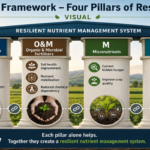
I had been thinking about the global food system for this article, and given a subject area of this magnitude where outcomes are driven by more than individual participants’ actions, the leafcutter ant colony mechanisms proved thought-provoking. To feed 10 billion mouths by 2050, we know that we can do more with the resources we currently have – and so improve productivity, build resilience to handle climate change, and manage costs. But to do so in a way where access to nutritious food is equitable, food safety is strong, and food that is produced is sustainable for the long term, will require collaboration beyond optimising the siloes.
Can AI support both goals? To explore this question, I’ll borrow a few analogies from the ant world (ironically, from an agricultural pest!) to look at two ways AI can support near-term and long-term food-system outcomes:
Building resilience within individual parts of the system using data we already have — a problem AI is increasingly well suited to address.
Building resilience at the ecosystem level, where coordination across participants matters as much as optimisation within any single stage.
To read more, click: https://online.anyflip.com/unmb/pewj/mobile/index.html