Friday, 17 July 2026


Move aims to ensure affordable access to key fertilizers amid volatile global input prices
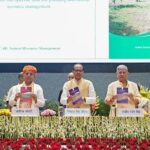
The Union Cabinet, chaired by Prime Minister Narendra Modi, has approved the Nutrient-Based Subsidy (NBS) rates for the Kharif 2026 season, reinforcing the government’s commitment to shield farmers from rising input costs and ensure the timely availability of essential fertilizers.
The subsidy, applicable from April 1 to September 30, 2026, covers Phosphatic and Potassic (P&K) fertilizers, including widely used grades such as DAP and NPKS. The government has earmarked an estimated Rs 41,533.81 crore for the season—an increase of approximately Rs 4,317 crore compared to the Rs 37,216.15 crore allocated for Kharif 2025.
The enhanced outlay comes against the backdrop of fluctuating global prices of key raw materials and fertilizers such as urea, DAP, muriate of potash (MOP), and sulphur, which have exerted upward pressure on agricultural input costs.
Stabilizing Input Costs for Farmers
Under the NBS regime, subsidy is provided to fertilizer manufacturers and importers based on pre-determined nutrient rates, allowing them to offer fertilizers to farmers at controlled, affordable prices. The latest approval ensures that 28 grades of P&K fertilizers remain accessible to farmers during the critical sowing season.
Officials noted that the move is expected to maintain price stability in the domestic market and prevent supply disruptions, particularly during peak agricultural demand.
Policy Continuity with Strategic Adjustments
Introduced in 2010, the NBS scheme marked a shift from product-based to nutrient-based subsidies, encouraging balanced fertilization and efficient nutrient use. The Cabinet’s latest decision reflects a continuation of this policy framework while adapting to current global market dynamics.
By increasing the subsidy allocation, the government aims to absorb a significant portion of the cost escalation, thereby minimizing the financial burden on farmers and supporting agricultural productivity.
Ensuring Supply Chain Stability
The approved subsidy rates will be notified and implemented for the Kharif 2026 season, enabling fertilizer companies to plan imports, production, and distribution in advance. This is expected to ensure seamless availability of fertilizers across the country.
As India navigates global supply uncertainties and price volatility, the decision underscores a broader strategy to balance fiscal prudence with farmer welfare—ensuring that agricultural growth remains resilient in the face of external pressures.