Friday, 17 July 2026

Key measures include designating Krishi Vigyan Kendras (KVKs) as nodal agencies in every district to act as coordinated teams addressing farmers’ needs.
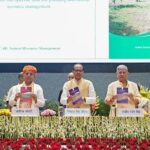
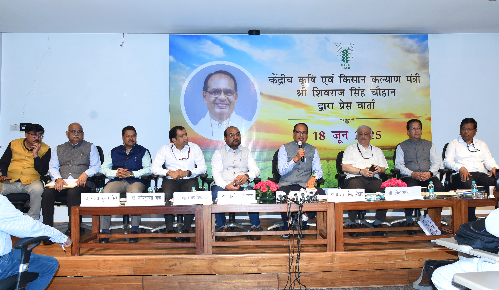
Union Agriculture Minister Shri Shivraj Singh Chouhan has announced significant reforms to enhance agricultural development and farmer welfare following the success of the Viksit Krishi Sankalp Abhiyan. The campaign, which directly engaged over 1.34 crore farmers across 1.42 lakh villages, will not be a one-time effort but a sustained movement to modernize Indian agriculture.
Key measures include designating Krishi Vigyan Kendras (KVKs) as nodal agencies in every district to act as coordinated teams addressing farmers’ needs. KVK scientists will spend at least three days a week in the field, ensuring they remain connected to ground realities and provide practical solutions to farmers. This shift underscores the importance of field engagement for all agricultural personnel, as the Minister emphasized that true understanding of agricultural challenges cannot be achieved from air-conditioned offices. Instead, regular interaction with farmers in their natural environment will be a core operational priority.
To streamline efforts at the national level, a centralized coordination mechanism will be established to align the functioning of key agricultural institutions. This mechanism will ensure better collaboration among stakeholders, reducing redundancy and improving efficiency. Additionally, the Indian Council of Agricultural Research (ICAR) will appoint State-wise Nodal Officers for agriculture. These officers will oversee scientific trials, identify state-specific challenges, offer expert advice, and maintain close communication with state governments. Their role will be pivotal in tailoring scientific insights and policy responses to the unique needs of each region, fostering a more regionally relevant agricultural strategy. The Minister also assured regular consultations with state governments to align strategies and deliver solutions that address local agricultural conditions.
The campaign also highlighted critical concerns such as substandard seeds and pesticides. In response, the Ministry will take strong measures to strengthen the Seed Act and implement stringent quality control mechanisms. This will ensure that only certified, high-quality inputs reach farmers, protecting them from potential losses caused by poor-quality materials. These measures aim to bridge the gap between research labs and agricultural fields, ensuring that innovations and best practices are effectively translated into actionable outcomes for farmers.
Efforts will focus on increasing productivity, reducing input costs, and making agriculture a profitable and sustainable livelihood for every farmer. The Viksit Krishi Sankalp Abhiyan will be relaunched during the Rabi season, with targeted follow-up actions beginning with a dedicated Action Plan for Soybean. This will be followed by similar missions for crops like cotton, sugarcane, pulses, and oilseeds, addressing the specific needs of these sectors. A stakeholder consultation for soybean is scheduled on June 26 in Indore, setting the stage for collaborative efforts to improve crop-specific strategies.
A national-level meeting in hybrid mode is scheduled on June 24 at the Pusa Institute, where scientists, agricultural officers, and state agriculture ministers will review campaign outcomes. Nodal officers will present comprehensive reports on state-wise agricultural conditions, laying the groundwork for collaborative efforts between the Centre and states. This meeting will also explore future research priorities, structural reforms, and ways to enhance the resilience of Indian agriculture against challenges such as climate change and market volatility.
Shri Chouhan stated that under consistent and strategic policy implementation, food grain production has risen by 40% in the last 11 years. While this is a significant achievement, the focus must now shift to ensuring food security, nutritional availability, and profitable farming while preserving soil health for future generations. The vision of “One Nation – One Agriculture – One Team” was emphasized, emphasizing the need for an integrated platform where farmers, scientists, institutions, and policymakers collaborate to achieve the common goal of developed agriculture and farmer prosperity.
The campaign also emphasized inclusive outreach, with special focus on underserved regions:
A key highlight of the campaign was the Kisan Chaupals, which facilitated direct and meaningful dialogues between scientists and farmers. Discussions included agro-climatic suitability of crops, seed varieties, soil health, and pest management. Two significant insights emerged: localized research is critical—research priorities must be informed by ground realities, not just central directives—and farmers as innovators, with many demonstrating indigenous solutions tailored to local needs.
Several farmers also raised policy-related concerns, such as the need for an integrated climate change action plan, simplifying organic farming certification, formulating a comprehensive fodder policy, and making Farmer Producer Organizations (FPOs) more practical and effective. These recommendations will be integral for future policy development, as the Minister stressed that “the field is the most authentic laboratory, and the farmer’s voice must guide our path.”