Friday, 17 July 2026

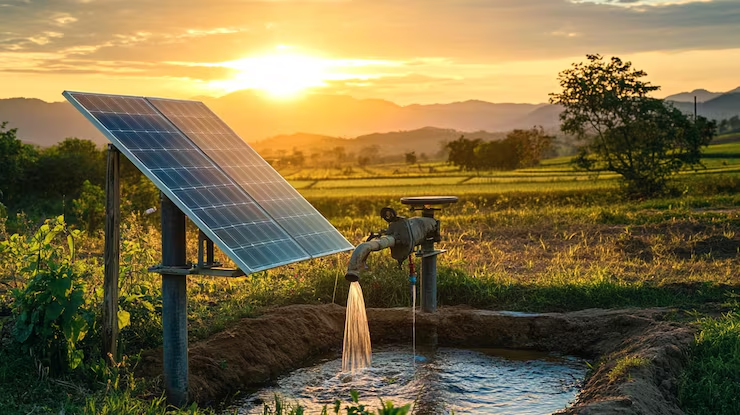
Subsidies sparked the boom—but scale will hinge on execution, financing, and farmer economics
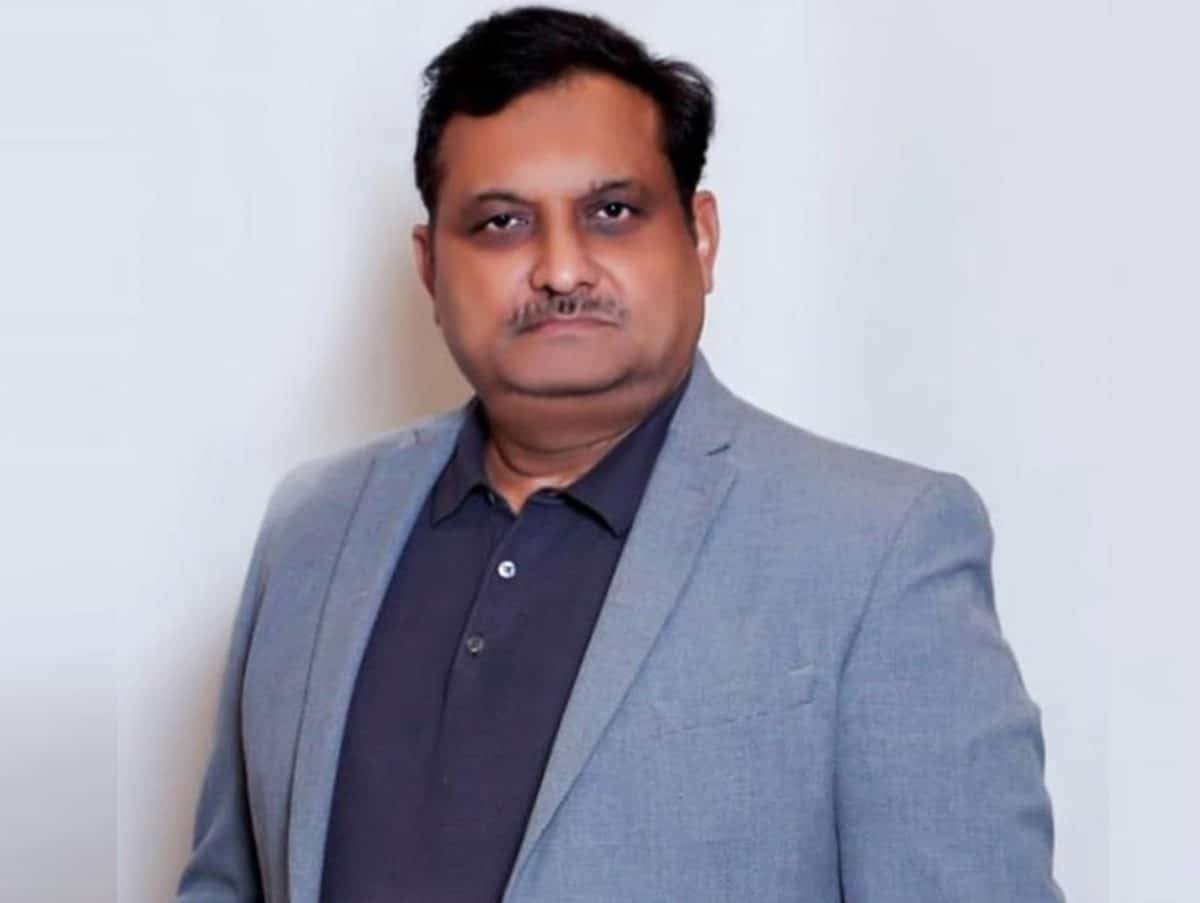
In an exclusive Agrospectrum interview, Vivek Gupta, Managing Director of Oswal Pumps, highlights that India’s solar irrigation market is transitioning from subsidy-driven adoption under schemes like PM-KUSUM to a more sustainable, value-led demand, particularly across Maharashtra, Rajasthan, and parts of Uttar Pradesh. He underscores that while states such as Maharashtra and Haryana have achieved scale—with over 60,000 and 30,000 installations respectively—execution gaps persist elsewhere due to DISCOM readiness, financing constraints, and last-mile challenges.
Gupta notes that despite strong economics, including a 3–5 year payback and 30–40 per cent higher discharge efficiency, adoption remains sensitive to subsidy timelines, farmer awareness, and complementary infrastructure like micro-irrigation. Looking ahead to FY2030, he sees financing innovation, improved policy execution, and ecosystem readiness as key triggers that could shift India from steady growth to mass-scale adoption, positioning solar irrigation as core agricultural infrastructure rather than a policy-led intervention.
Demand Inflection & State-Level Divergence
India’s solar irrigation push has been policy-led so far. Are you now seeing organic, farmer-driven demand emerge in states like Maharashtra, Rajasthan, and Uttar Pradesh, or is growth still largely subsidy-dependent?
For the past several years, India’s solar irrigation market has been fundamentally policy-driven, with schemes like PM-KUSUM Scheme acting as the primary catalyst. However, what we are now witnessing is an important inflection point, particularly in states like Maharashtra, Rajasthan, and parts of Uttar Pradesh, where farmer awareness and confidence in solar pumping solutions have matured significantly.
While subsidies still play a critical enabling role, demand is no longer purely subsidy-dependent. Farmers are increasingly evaluating lifecycle benefits: zero fuel cost, lower maintenance, and reliability compared to diesel or erratic grid supply. In water-stressed regions with high solar irradiance, this shift is even more pronounced. The transition underway is from “scheme-led adoption” to “value-led adoption,” which is a far more sustainable demand driver over the long term.
PM-KUSUM Reality Check
How do you assess the on-ground execution gap in PM-KUSUM across states? Which states are actually translating policy intent into installations at scale, and where is the bottleneck—DISCOMs, financing, or last-mile execution?
The PM-KUSUM Scheme has set a strong policy foundation, but its success varies significantly across states depending on execution capabilities.
From our experience, states like Maharashtra and Haryana have demonstrated what effective execution looks like at scale. This is reflected in our installation numbers, 60,000+ in Maharashtra and 30,000+ in Haryana, enabled by better alignment between state nodal agencies, DISCOMs, and on-ground implementation partners.
The bottlenecks elsewhere are largely operational. In some states, DISCOM readiness and feeder-level planning slow down grid-connected components. In others, delays in subsidy disbursement or farmer contribution financing create friction. Last-mile execution, installation capacity, site readiness, and service networks, also plays a critical role. The lesson is clear: policy design is only half the equation; execution capability at the state level ultimately determines impact.
Water Stress vs Adoption Curve
In water-stressed regions such as Rajasthan and parts of Maharashtra, solar pumps should be a no-brainer. Yet adoption varies. What are the non-obvious barriers, behavioral, economic, or infrastructural, that still slow penetration?
While water stress creates a strong case for solar irrigation, adoption patterns show that it is not the only determining factor. Regions like Rajasthan and Marathwada in Maharashtra have both high water stress and strong solar potential, yet adoption varies based on ecosystem readiness.
In our experience, areas with dense adoption, such as districts like Jalna, Beed, Latur, Jind, and Sirsa, benefit from strong local awareness and peer validation. Farmers are more willing to adopt when they see consistent performance in neighboring fields.
Additionally, solar pumps deliver 30–40 per cent higher discharge compared to conventional systems, making them well-suited for drip and sprinkler irrigation. However, in regions where micro-irrigation penetration is still evolving, the full value proposition is not always realized. So, adoption is a function of not just need, but awareness, trust, and complementary infrastructure.
Unit Economics for Farmers
At current costs and subsidy structures, what does the true payback period look like for a marginal farmer? And how sensitive is demand to any reduction or delay in subsidies?
From a purely economic standpoint, solar pumps are increasingly compelling. With current subsidy structures under programs like PM-KUSUM Scheme, a farmer’s upfront contribution is significantly reduced, bringing payback periods down to roughly 3–5 years, depending on usage patterns and the alternative being replaced (diesel vs grid).
However, demand remains highly sensitive to subsidy timelines and financing access. For marginal farmers, even a partially subsidized capital expense can be a barrier if financing is not easily available. What we are seeing is that where financing options are streamlined, through NBFCs or state-supported credit, conversion rates improve sharply. Over time, as costs decline and confidence increases, we expect payback-led decision-making to become more dominant than subsidy-led adoption.
Competitive Intensity & Pricing Power
With increasing participation from both domestic manufacturers and EPC players, how is pricing discipline evolving? Do you see commoditization risks, or is there still room for technology-led differentiation?
The sector is certainly seeing increased participation, from domestic manufacturers to EPC players, which is a positive indicator of market maturity. However, this does not necessarily translate into commoditization. Solar pumping is not just a hardware product; it is a system involving design, installation, controls, and long-term service.
While pricing pressure exists at the lower end, especially in tender-driven markets, differentiation is increasingly happening through efficiency, reliability, and after-sales service. Technologies such as remote monitoring systems (RMS), IoT-enabled diagnostics, and higher-efficiency motors are becoming key differentiators. In a market where uptime directly impacts farmer income, reliability often outweighs marginal price differences, allowing credible players to maintain pricing discipline.
Financing as the Next Growth Lever
To what extent will innovative financing models, NBFC partnerships, pay-as-you-go, or carbon-linked financing, drive the next leg of demand, especially in states where subsidy rollout is uneven?
Financing will be the single most important unlock for the next phase of growth. While subsidies have enabled initial adoption, scaling to the next level, especially in underpenetrated regions, will require innovative financing models.
We are already seeing early traction with NBFC partnerships and structured farmer loans, but models like pay-as-you-go or annuity-based payments could be transformative. There is also emerging potential in carbon-linked financing, given the clear displacement of diesel usage. In states where subsidy rollout is uneven or delayed, financing can effectively bridge the gap, turning latent demand into actual installations. Ultimately, making solar pumps “cash-flow positive from day one” for farmers will be the key to mass adoption.
Supply Chain & Execution Readiness
Given the scale India is targeting, are domestic manufacturing and supply chains ready to meet a potential surge in demand? Where do you see vulnerabilities, modules, controllers, or installation capacity?
India has made significant progress in building domestic manufacturing capacity for solar pumps and related components, especially with vertically integrated players expanding into motors, controllers, and panels. However, scaling to meet a sharp demand surge will still test the ecosystem.
The key vulnerabilities lie less in core manufacturing and more in execution layers: availability of trained installation teams, quality control at scale, and service responsiveness in remote areas. Controllers and power electronics also require consistent quality standards. Encouragingly, the ecosystem is evolving, with companies investing in in-house capabilities and service networks. The next phase will require not just manufacturing scale, but execution excellence across thousands of decentralized installations.
5-Year Demand Outlook: Base vs Breakout Scenario
If we look out to FY2030, what is your base-case vs breakout scenario for solar irrigation adoption across key agri states? What specific triggers could accelerate India from steady growth to mass-scale penetration?
Looking ahead to FY2030, the base-case scenario is one of steady expansion, driven by continued policy support and deeper penetration in leading states. Our current footprint, spanning over 20+ countries globally and strong domestic presence across Maharashtra, Haryana, Rajasthan, and Uttar Pradesh, reflects this gradual but consistent growth trajectory.
The breakout scenario, however, could be significantly more transformative. If financing becomes widely accessible, subsidy execution improves, and solar pumps are integrated more deeply with micro-irrigation systems, India could move from lakhs to millions of installations.
With ambitions to reach 5,000 dealers and 10 lakh farmer beneficiaries, we believe the inflection point will come when solar irrigation is no longer seen as a scheme-driven solution, but as core agricultural infrastructure.
— Suchetana Choudhury (suchetana.choudhuri@agrospectrumindia.com)