Tuesday, 14 July 2026

As India’s wood market surges—from $ 14.77 billion in 2024 to a projected $22.5 billion by 2029—reducing the country’s $7-billion Annual Wood Import Bill has become a national priority.
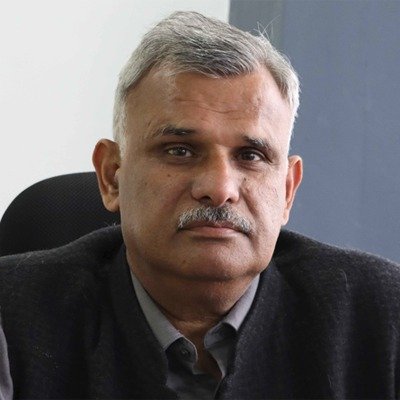
In an interview with AgroSpectrum, Manoj Dabas, Country Director, CIFOR-ICRAF India, explains why agroforestry is at a decisive inflection point. Drawing on CIFOR-ICRAF’s long-standing collaboration with ICAR and the Ministry of Agriculture and Farmers Welfare, he outlines how scaling Trees Outside Forests through regulatory harmonisation, patient finance, stronger markets, and digital MRV systems can boost climate resilience, rural incomes, and domestic timber security ahead of TREESCAPES 2026.
India has had a National Agroforestry Policy since 2014, yet adoption remains uneven. What have been the biggest structural barriers to scaling agroforestry and Trees Outside Forests, and how can TREESCAPES 2026 help move implementation beyond pilots?
Adoption of agroforestry has been uneven because of a combination of policy, market, and institutional barriers. State-level regulatory variations, like restrictions on permissible tree species for harvest create uncertainty and discourages farmers, whereas continued policy support for conventional agriculture through MSPs, subsidies, and market infrastructure tilts incentives away from agroforestry.
The sector is both knowledge- and labour-intensive, yet institutional systems for farmer capacity building remain an underdeveloped area. In addition to this, access to appropriate finance is limited, and agroforestry requires patient capital to address high upfront costs and longer investment horizons. Conclusively, in regions where agroforestry has not yet achieved commercially viable production volumes, weak market linkages reinforce a vicious cycle that constrains both adoption and scale.
Tree-based systems already account for nearly 20 per cent of India’s carbon stocks. How can agroforestry be more formally integrated into India’s NDCs, carbon markets, and net-zero planning frameworks?
Agroforestry is already formally integrated into the UNFCCC’s framework for climate change mitigation and adaptation, with dedicated carbon offset instruments such as Rabobank’s ACORN, and is also recognised under India’s Nationally Determined Contributions (NDCs).
The opportunity to be explored, therefore, is not one of formal inclusion but of implementation. Key limitations include achieving viable scale thresholds, the inherent complexity of agroforestry systems, land tenure considerations, long project durations, accounting and verification challenges, as well as the current weakness of carbon markets and wide variability in carbon pricing mechanisms.
With over 86 per cent of Indian farmers classified as marginal, how do we design agroforestry models that are economically viable at small scales while remaining attractive to markets, financiers, and policymakers?
Agroforestry offers proven economic viability for India’s 86 per cent marginal farmers, boasting higher land equivalent ratios, premium-value products, and resilience against ecological/economic shocks via diversified portfolios. Evidence from India and globally confirms it outperforms mono-cropping for smallholders. Success stories like Yamuna Nagar’s wheat-poplar systems and mixed tree-spice farms demonstrate robust market and investment pull once scale is achieved. However, absent upfront financial support, reaching critical mass remains challenging.
Design must prioritise farmer collectives, FPOs, and modular models that aggregate small plots for financier appeal—simplifying risk assessment in diverse systems versus uniform cereals or dairy. Policymakers should incentivise market linkages, micro-credit tailored to agroforestry gestation, and R&D for standardised, smallholder-ready packages. This balanced approach ensures economic attractiveness across scales, unlocking markets, finance, and policy buy-in for nationwide adoption.
Carbon finance, green credit, and blended finance are often cited as solutions—but adoption remains limited. What needs to change in financing mechanisms to make agroforestry investable and bankable at scale?
To make agroforestry investable and bankable at scale, financing mechanisms must evolve beyond carbon finance, green credits, and blended models by fully valuing its dual economic and public-good benefits—like enhanced soil/water quality, temperature moderation, and biodiversity conservation. Current models undervalue these co-benefits, limiting adoption. Public and private sectors need to co-develop catalytic instruments that internalize these externalities, with government incentives accelerating innovation. NABARD has pioneered efforts, but scaling requires broader replication.
Outreach must intensify to raise awareness of existing tools among farmers and financiers. Finally, research institutions should deliver timely, actionable data to de-risk investments and refine credit models. These shifts will unlock agroforestry’s potential, blending profitability with sustainability for widespread adoption
India imports over $7 billion worth of wood and wood-based products annually. Can agroforestry realistically reduce this dependency, and what policy or industry alignment is needed to make domestic supply chains competitive?
Agroforestry already fulfills approximately 90 per cent of India’s wood and timber needs, demonstrating its proven potential as a domestic powerhouse. To realistically slash the remaining $7 billion in annual imports, we must scale this through targeted financial instruments—like subsidies and green bonds—alongside robust investments in tree plantations outside forests.
Institutional support, capacity building for farmers, and a policy framework prioritising agroforestry incentives will make domestic supply chains globally competitive. This includes streamlined regulations, R&D for high-yield species, and market linkages to match import quality and pricing.
Success won’t be a sprint but a marathon, demanding sustained stamina and collaboration from government, industry, and farmers. With alignment, agroforestry can drive import substitution, boost rural economies, and secure India’s green future.
How critical are digital tools—such as satellite monitoring, MRV systems, and farm-level data platforms—in addressing certification, traceability, and trust in agroforestry value chains?
Digital tools like satellite monitoring, MRV systems, and farm-level platforms are essential for certification, traceability, and trust in agroforestry value chains. Initiatives such as ICAR’s agro-advisory apps, NRSC’s satellite-based tree cover mapping, and platforms like Kisan Suvidha already provide hyperlocal insights on species selection, management, processing, and marketing—delivered affordably via smartphones.
These build on a solid start toward a comprehensive information ecosystem, but scaling is crucial. They empower farmers, close adoption gaps, and enhance financial models/MRV with data on canopy cover, vitality, and soil health. Certification and traceability risk adding costs that hurt competitiveness—unless premiums for agroforestry services/commodities justify labeling. In premium markets, these proven digital tools would seamlessly enable trust and traceability.
Beyond sequestration, agroforestry delivers water security, biodiversity, and livelihood resilience. How should policymakers and markets better value these co-benefits when designing incentives and programmes?
Valuing agroforestry’s co-benefits—water security, biodiversity, and livelihood resilience—requires smarter policy and market design beyond carbon sequestration. Policymakers should prioritise nested-scale land-use planning, assessing ecosystem services from field to basin levels to identify restoration needs and viable tree cover options. This demands investment in science, data, and integrative platforms that bridge sectoral silos, translating insights into regenerative agroforestry suited for climate resilience and sustainable development.
Markets must follow with financial models—like insurance products and long-term incentives—that offset upfront costs and extended gestation periods, while mitigating temporal risks. Blended finance, carbon-credit bundles with co-benefit premiums, and public-private partnerships can make these systems economically attractive. By aligning incentives this way, India can unlock agroforestry’s full potential for resilient landscapes and thriving rural economies.
TREESCAPES 2026 is the first regional Congress of its kind in South Asia. What lessons can India both offer and learn from neighboring countries, and how important is regional cooperation in scaling agroforestry as a climate solution?
TREESCAPES 2026 marks South Asia’s first regional Congress on trees outside forests, spotlighting a unique opportunity for agroforestry scaling as a climate solution. India can share its policy leadership—boasting one of the world’s densest clusters of National Agroforestry Policies alongside Nepal and Maldives—while learning from neighbors’ traditional practices and smallholder innovations.
South Asia’s diverse ecosystems, smallholder-dominated agriculture, and deep-rooted tree-integrated farming traditions position it as a global agroforestry cradle. Regional cooperation is vital: exchanging experiences on modern scaling, urban treescapes, and linear infrastructure like roads/waterways will build confidence and insights. Through TREESCAPES 2026, India and neighbors can co-create strategies accelerating adoption, policy harmonisation, and investment—transforming shared challenges into resilient, climate-smart landscapes across the region.
—- Suchetana Choudhury (suchetana.choudhuri@agrospectrumindia.com)