Friday, 17 July 2026

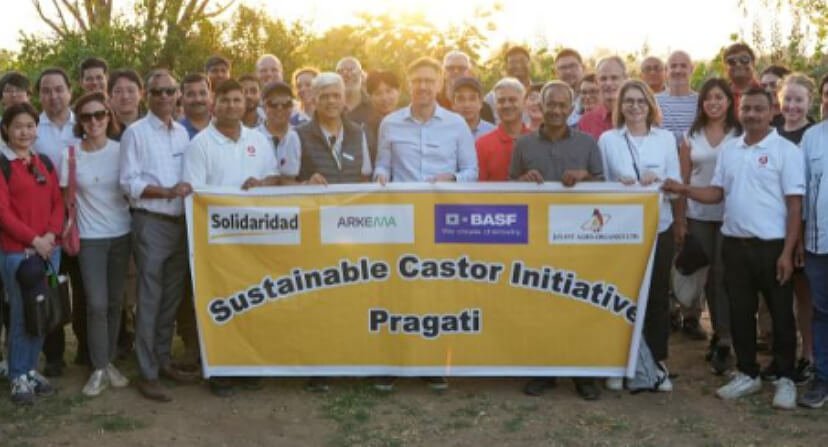
In an era where traceability and sustainability are reshaping global supply chains, Jayant Agro-Organics Limited is steadily transforming India’s castor ecosystem into a benchmark for responsible agriculture at scale.
Now in its ninth year, Project Pragati—co-led with Arkema, BASF and Solidaridad—has evolved from a pilot into a globally recognized model for sustainable and traceable castor supply chains. In parallel, Project iPragati, driven by subsidiary Ihsedu Agrochem Private Limited, is expanding the initiative’s reach and deepening its on-ground impact.
Scaling With Substance
The program’s scale is now matched by measurable outcomes. More than 13,500 farmers have been certified under the SuCCESS sustainability code, with over 16,000 hectares of land brought under responsible cultivation. Together, these efforts have yielded approximately 170,000 tons of certified castor seeds, significantly strengthening the availability of traceable raw material for global specialty chemical markets.
Equally important are the productivity gains. Pragati farmers are reporting yields that are 32 per cent higher than regional benchmarks, while demonstration plots have shown nearly 30 per cent lower water consumption compared to conventional practices. In a semi-arid region like Gujarat, which dominates global castor production, these gains signal a meaningful shift toward climate-resilient agriculture.
From ESG Compliance to Farmer Economics
What sets Pragati apart is its evolution from a compliance-led initiative to one focused on building farmer capability and long-term resilience. Over the past year, the program has conducted more than 450 capacity-building sessions while developing over 500 lead farmers to mentor their communities, creating a self-sustaining ecosystem of knowledge transfer.
Support has extended beyond agronomy. More than 10,000 safety kits have been distributed, and over 150 medical camps have been organized, benefiting thousands of farmers and their families. These interventions are translating into tangible economic outcomes, with farmers reporting reductions of 20–25 per cent in cultivation costs alongside improved crop health and productivity through the adoption of certified inputs.
Women at the Center of the Next Growth Curve
In its third phase, Pragati is placing a sharper focus on women as key drivers of agricultural transformation. More than 1,150 women across multiple villages have been brought into the program and trained in good agricultural practices, alongside modules in digital and financial literacy.
This shift is beginning to reshape rural dynamics. Women participants are not only contributing to higher productivity but are also taking on stronger roles in household decision-making, reinforcing both economic stability and community resilience.
Strengthening India’s Global Position
As global markets increasingly demand ethically sourced and fully traceable inputs, Pragati is reinforcing India’s leadership in the castor value chain. The steady expansion in certified acreage and output is positioning the country as a reliable supplier of sustainable raw materials to international specialty chemical industries.
Chairman Abhay V. Udeshi underscored the philosophy behind the initiative, noting that responsible agricultural practices can simultaneously enhance farmer incomes while ensuring a stable and sustainable supply base for global markets.
The Bigger Signal
What began as a regional intervention in Gujarat has evolved into a scalable blueprint for sustainable agriculture. The Pragati model demonstrates that productivity gains, environmental stewardship, and farmer prosperity are not competing priorities but reinforcing outcomes.
As global supply chains undergo structural shifts toward sustainability and transparency, initiatives like Pragati position India not merely as a dominant producer, but as a standard-setter in responsible agribusiness.