Monday, 15 June 2026

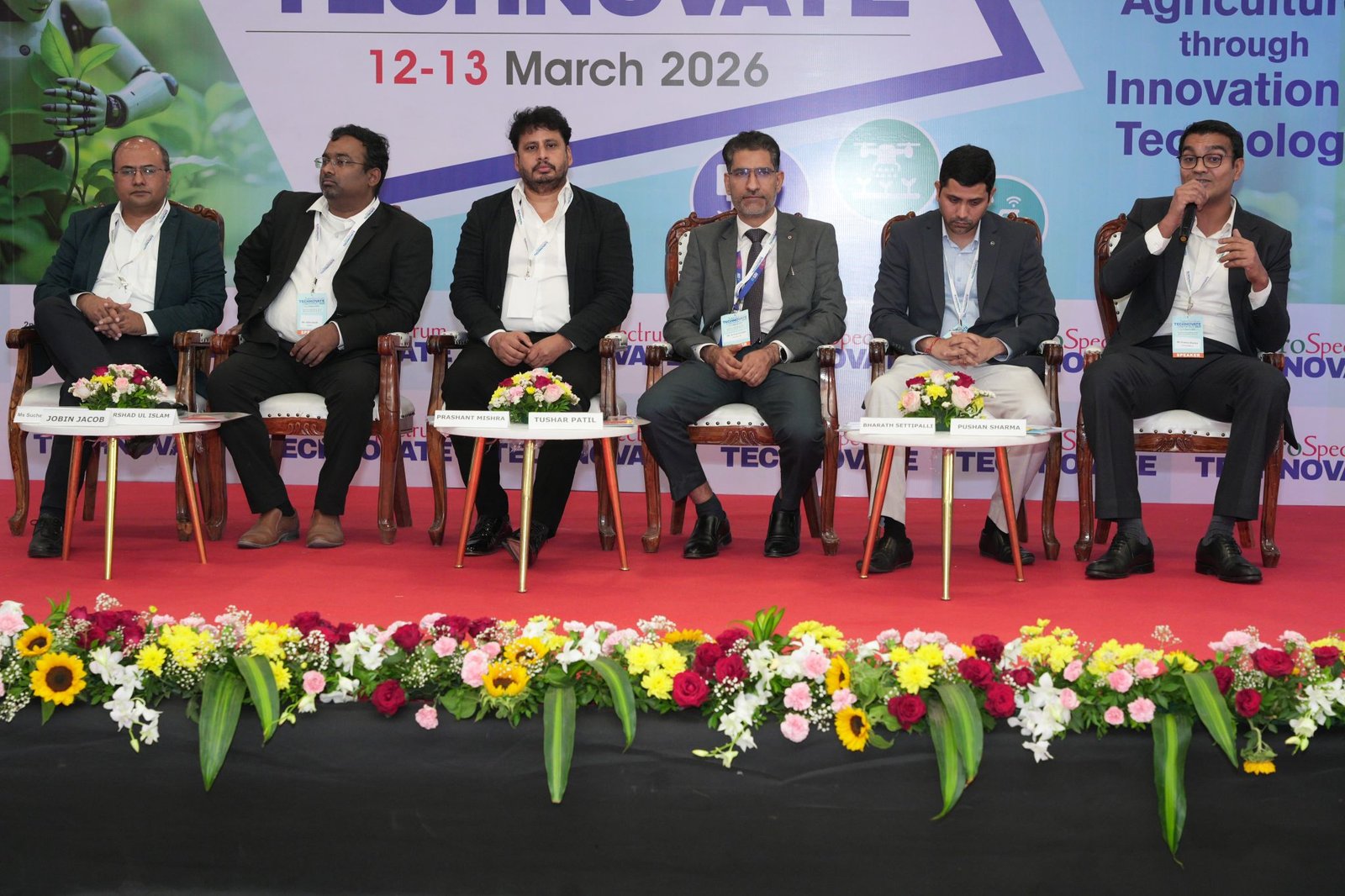
A panel discussion on the role of satellite intelligence in strengthening agricultural credit and crop insurance systems highlighted both the transformative potential and structural challenges of integrating space-based data with India’s agricultural finance ecosystem.
The discussion brought together experts from banking, satellite intelligence, agritech, and data analytics, including Pushan Sharma, Director at Crisil Intelligence; Bharath Settipalli, Head of Development and Chief Solution Architect at LeadsConnect Services Pvt Ltd; Tushar Patil, Managing Director of Planeteye Farm-AI Ltd; Prashant Mishra, Founder of AgriPilot.ai; Arshad Ul Islam, Deputy General Manager (Crop Loan) at State Bank of India; and Jobin Jacob, Senior Enterprise Account Manager at SatSure.
Credit Access Remains a Structural Challenge
Opening the discussion, Pushan Sharma highlighted the persistent credit gap in Indian agriculture.
Despite multiple policy initiatives to expand financial inclusion, only about 60 percent of farmers currently have access to formal institutional credit, leaving nearly 40 percent dependent on informal lenders and moneylenders.
Sharma noted that reliable crop and land intelligence systems could significantly improve access to agricultural finance.
He also pointed to deeper structural issues within the agricultural ecosystem. Nearly 86 percent of farmers in India are small and marginal farmers, many cultivating land through informal tenancy arrangements.
As land leasing remains legally restricted in several states, oral leasing arrangements are widespread. This makes it difficult for financial institutions to identify the actual cultivator eligible for credit.
According to Sharma, digitisation of land records and clear documentation of both landowners and tenant farmers will be critical to strengthening agricultural credit systems.
He emphasised that satellite intelligence must be complemented by ground-level verification to ensure reliability.
“Once bankers gain confidence in the accuracy of satellite data, it can strengthen trust across the entire agricultural finance ecosystem,” Sharma noted.
Satellite Intelligence Transforming Agricultural Lending
From the banking perspective, Arshad Ul Islam explained how satellite imagery is already reshaping crop loan processing.
Loan approvals that earlier required nearly 35 days can now be completed in around 30 minutes with the integration of satellite imagery and digital verification tools.
According to Islam, banks are increasingly working with state governments to deploy satellite-based monitoring systems that allow faster crop verification and reduce dependency on manual field inspections.
He added that within the next one to two years, agricultural lending systems could become almost fully digitised, significantly improving efficiency and transparency.
Satellite data is also improving risk assessment for lenders and crop insurers, enabling more accurate evaluation of crop conditions and yield potential.
Technology Companies Push Predictive Agriculture
Technology providers highlighted how advances in satellite analytics are enabling increasingly precise agricultural intelligence.
Tushar Patil said agritech platforms are rapidly evolving to deliver more accurate predictive insights.
“If stakeholders require specific agricultural datasets, we can provide them. The focus now is on delivering even more accurate predictions to support farmers, lenders and insurers,” he said.
However, Prashant Mishra pointed out that satellite-based systems still face operational limitations.
One of the key challenges is timeliness, as satellite imagery cannot always capture real-time crop changes.
Mishra also highlighted the need for greater government-led data sharing frameworks to enable wider access to agricultural datasets.
Another key concern, he said, is ensuring that these technologies remain financially viable for small and marginal farmers.
“All these solutions ultimately require credible and trusted sources of agricultural information,” Mishra noted.
Integrating AI, Remote Sensing and Cloud Platforms
Experts also emphasised the importance of integrating satellite intelligence with other advanced technologies.
Bharath Settipalli highlighted the growing role of artificial intelligence, cloud computing and remote sensing in transforming agricultural data analysis.
According to Settipalli, optical satellite data combined with AI-driven analytics can help interpret soil characteristics, ecological parameters and crop health indicators, enabling more precise agricultural insights.
However, he stressed that the industry must move beyond traditional data processing approaches.
“The next phase of agritech innovation requires a shift from data-driven solutions to context-driven solutions, where intelligent systems can interpret complex agricultural conditions and deliver meaningful insights,” he said.
Validation and Ground Truthing Remain Critical
While satellite intelligence is advancing rapidly, experts emphasised the importance of robust validation mechanisms.
Jobin Jacob highlighted that multiple layers of validation are essential for ensuring reliability.
Satellite-based analytics models must be supported by ground truthing and machine learning validation processes to improve accuracy and build confidence among financial institutions.
Such validation frameworks will be critical for scaling the use of satellite intelligence in agricultural lending and insurance.
Building the Future Agricultural Data Ecosystem
The discussion concluded that satellite intelligence has the potential to significantly transform crop insurance systems, agricultural lending frameworks and farm risk management.
However, unlocking this potential will require stronger collaboration between government institutions, financial organisations, agritech companies and farmers.
Experts agreed that the next phase of agricultural finance in India will depend on trusted data infrastructure, digitised land records and intelligent analytics platforms capable of delivering reliable insights across the agricultural value chain.
— Suchetana Choudhury (suchetana.choudhuri@agrospectrumindia.com)