Sunday, 12 July 2026

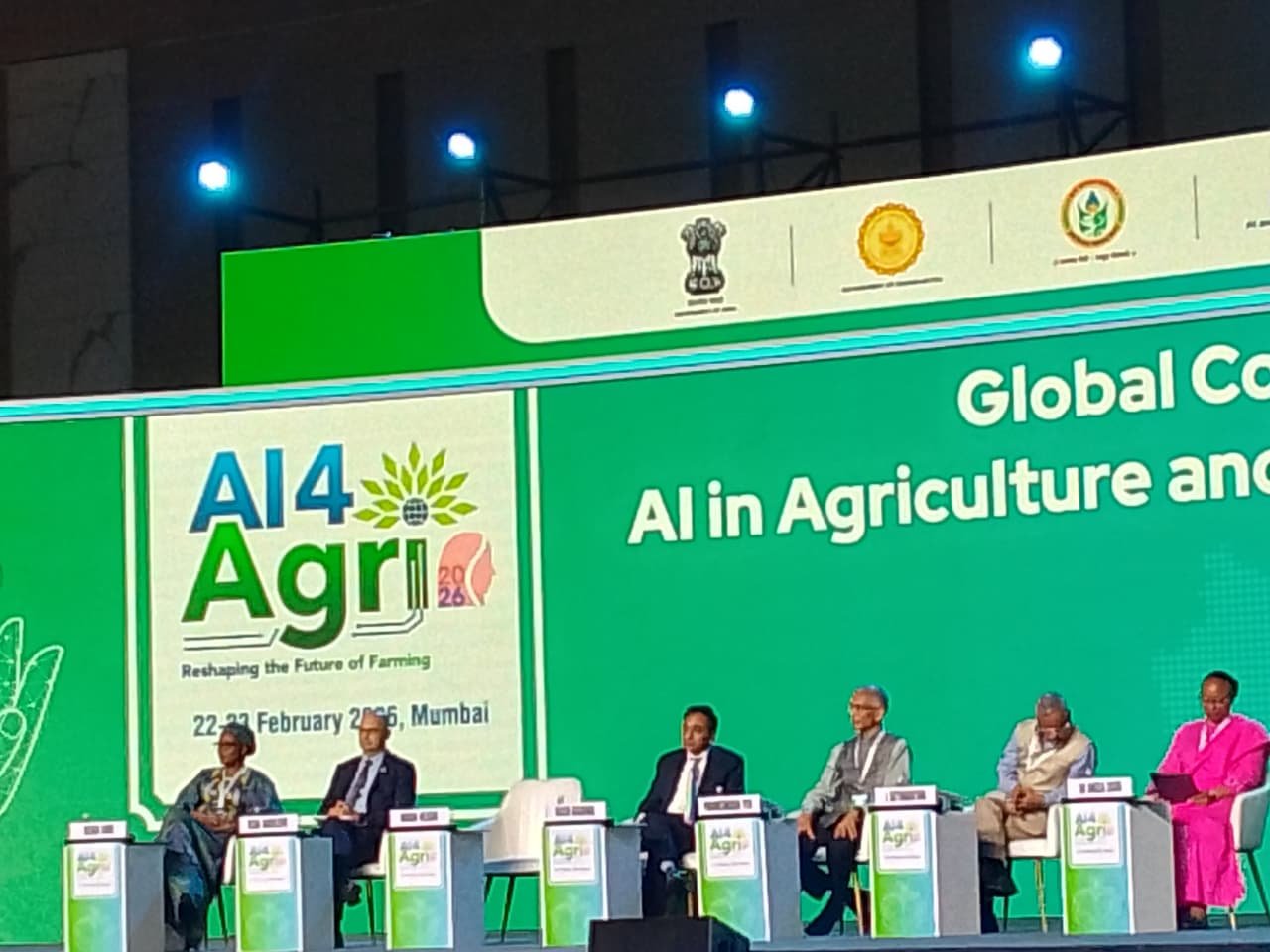
AI4Agri2026 in Mumbai charts a bold roadmap for inclusive, climate-resilient and scalable AI in agriculture — from MahaVISTAAR to Bharat Vistaar, from policy to last-mile delivery
AI4Agri2026 concluded in Mumbai with a powerful consensus: Maharashtra is not merely experimenting with Artificial Intelligence in agriculture — it is building the governance architecture, digital infrastructure and institutional partnerships required to scale it responsibly.
The high-level convening brought together global institutions, policymakers, technology leaders and development partners to shape India’s AI diffusion pathways in agriculture, with Maharashtra emerging as a pioneering “living lab” for farmer-centric innovation.
India: The Global Epicentre of AI Diffusion
Nandan Nilekani – Co-founder and Chairman, Infosys; Founding Architect of Aadhaar emphasized that India will be the place where AI is put to use at scale across sectors, with agriculture as a primary beneficiary.
Maharashtra has been at the forefront of applying AI in agriculture, with MahaVISTAAR cited as a real-world example of AI diffusion becoming a lived experience rather than a theoretical promise. Rapid innovation cycles, including AI-assisted applications developed in weeks, demonstrate India’s capacity for accelerated deployment.
AI’s future was framed as a race between two trajectories. The “race to the bottom” risks job displacement, social fragmentation and widening inequality, while the “race to the top” holds transformative promise — curing diseases, ensuring food security and driving inclusive prosperity. Without deliberate governance and institutional safeguards, the negative trajectory could move faster than the positive one. India’s high acceptance of AI, combined with the AI Summit roadmap outlining 100 diffusion pathways by 2030, positions the country as a global testbed for responsible AI.
Voice AI in local languages was highlighted as critical in India’s agricultural context, enabling farmers to access advisory services without literacy or technological barriers. Bharat Vistaar and MAHAVistaar represent AI that is accessible, vernacular and farmer-friendly.
Governance Innovation: Transparency, DBT and Land Digitisation
Rajesh Aggarwal, Chief Secretary, Government of Maharashtra outlined a forward-looking governance vision powered by AI. Key questions shaping the next phase include whether land records can be made more transparent, whether land acquisition disputes can be resolved through AI-enabled systems, and whether farmers selling maize at Minimum Support Price can receive direct payments instantly into their accounts.
Building on Maharashtra’s pioneering Direct Benefit Transfer (DBT) systems, AI can now simplify government form-filling, streamline entitlements and strengthen agri-business linkages through MahaVISTAAR. An open innovation approach has been encouraged, inviting startups to build complementary applications and allowing competitive solutions to emerge.
The need to integrate allied agricultural activities and increase women’s participation within MAHAVistaar remains a priority, alongside introducing behavioral nudges into AI systems to drive adoption and impact.
Technology Must Reduce — Not Reinforce — Inequality
Dejan Jakovljevic – Representative, Food and Agriculture Organization (FAO) emphasized that technology-driven approaches are essential to combat climate stress, noting that 8 percent of the global population remains hunger-affected and 2.6 billion people cannot afford a healthy diet.
AI applications in crop optimization, weather prediction, food loss reduction and predictive insurance modeling are already demonstrating value. However, technology must not amplify existing inequalities. Farmer-facing AI advisory services delivered through mobile platforms must prioritize access, affordability and equity across the agri-food ecosystem.
Designing AI Policy for Scale and Security
J. Satyanarayana – Chief Advisor, Center for the Fourth Industrial Revolution, World Economic Forum commended Maharashtra’s farmer-centric AI policy, noting its timeliness amid geopolitical pressures, climate volatility and labor shortages.
Scaling AI requires security by design, privacy by design and scalability by design. Value creation must remain central, institutions must be aligned and legal frameworks must evolve alongside innovation. Digital Public Infrastructure (DPI) for agriculture must be architected to drive efficiency while democratizing AI through structured use cases such as crop management, crop health assessment and satellite-based monitoring — positioning AI as a digital public agent.
Financing AI for Farmers
Brenda Gunde – Regional Director, East and Southern Africa Division, International Fund for Agricultural Development (IFAD) called for decisive investments to ensure AI benefits those who need it most. MAHAVistaar was recognized as a strategic move toward large-scale dissemination, but AI must not drift toward purely commercial applications at the expense of smallholder farmers.
AI for Human Development and Climate Resilience
Angela Lusigi – Resident Representative in India, United Nations Development Programme (UNDP) described the launch of Bharat Vistaar as a strong example of India’s commitment to building inclusive AI infrastructure.
India’s latest economic assessment indicates that climate stress reduces crop yields by 15 percent overall and up to 35 percent in unirrigated areas, underscoring the urgency of AI-driven climate resilience. Successful AI implementation requires strong public institutions, accessible data systems and inclusivity frameworks.
Examples of AI-enabled impact include Telangana’s climate vulnerability analytics for identifying and reviving highly vulnerable farms; UNDP’s facilitation of PM-Kisan Samman Yojana and Agristack; localized meteorological data support under PM Krishi Dhandhanya Yojana; and AI-enabled market intelligence support to Farmer Producer Organizations (FPOs).
A commitment was reiterated to scale MahaVISTAAR and strengthen AI adoption across India, recognizing 2026 as a pivotal year to acknowledge women farmers as agents of change in climate-resilient agriculture.
Global Partnerships and the Road Ahead
With strong engagement from the World Bank Group and collaboration across FAO, IFAD and UNDP, Maharashtra is shaping a globally relevant model for responsible AI in agriculture.
AI4Agri2026 reinforced a shared vision: AI must be secure by design, inclusive by architecture and scalable through policy. It must strengthen markets while advancing human development, reduce climate risk while empowering farmers and democratize access rather than deepen divides.
As MahaVISTAAR and Bharat Vistaar advance, Maharashtra stands at the forefront of a new agricultural era — one where trusted AI systems enhance resilience, equity and food security at scale.
— Suchetana Choudhury (suchetana.choudhuri@agrospectrumindia.com)