Sunday, 21 June 2026

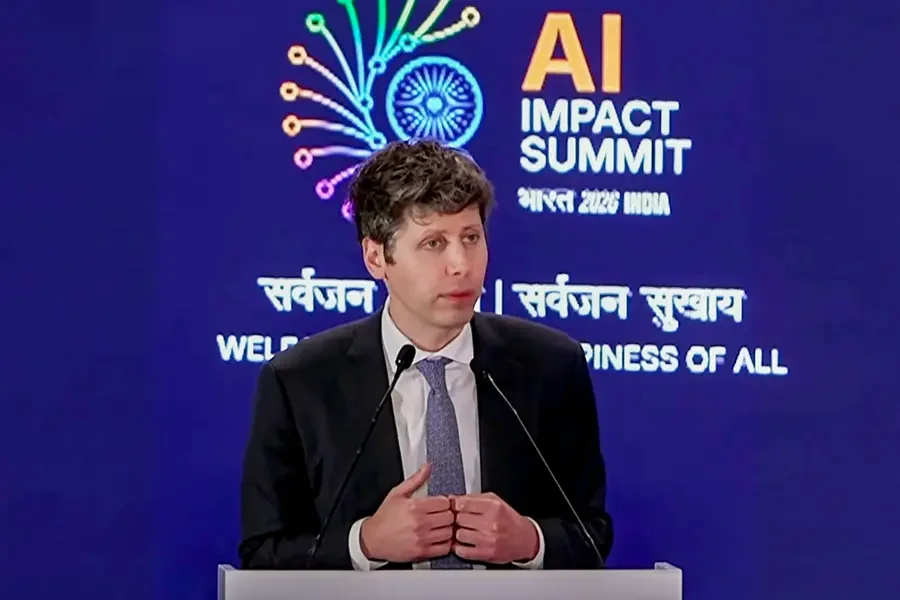
OpenAI Chief highlights India’s strategic role in global AI development, emphasising compute investment, safety frameworks, and population scale deployment across critical sectors.
Sam Altman delivered one of the most closely watched addresses at the AI India Impact Summit 2026, setting out a clear framework for how nations and enterprises should navigate the next phase of artificial intelligence development.
AI As A Foundational Shift
Altman described AI as a transformative general purpose technology that will influence nearly every sector of the economy. He noted that progress in large scale models, multimodal systems, and autonomous agents is accelerating faster than previous technology cycles, compressing timelines between research breakthroughs and real world deployment.
He emphasised that AI is not simply a software upgrade but a structural shift in how knowledge is generated, decisions are made, and productivity is unlocked.
India’s Moment In The AI Economy
A significant portion of the speech focused on India’s strategic positioning. Altman acknowledged India’s vast developer base, strong startup ecosystem, and public digital infrastructure as critical enablers for AI adoption at population scale.
He suggested that India has the opportunity to lead in applied AI use cases across:
Public healthcare systems
Agricultural advisory services
Financial inclusion and digital credit
Multilingual AI tools for diverse populations
Rather than replicating Western deployment models, he encouraged India to build context specific solutions that can serve as global benchmarks.
Compute, Infrastructure And Open Innovation
Altman underscored that compute capacity will define competitive advantage in the AI era. He called for sustained investment in high performance infrastructure, data centres, and research collaborations to ensure emerging economies are not excluded from frontier development.
He also spoke about the importance of partnerships between governments and AI labs to accelerate safe experimentation and applied innovation.
Safety And Governance As Enablers, Not Barriers
Addressing concerns around risk, Altman advocated for practical governance frameworks that encourage responsible scaling. He stressed that safety alignment, transparency, and regulatory clarity are essential for long term public trust.
He argued that well designed guardrails can accelerate enterprise adoption by reducing uncertainty and strengthening accountability.
Human Capability At The Centre
A recurring theme was augmentation rather than displacement. Altman maintained that AI’s long term impact should be measured by how effectively it enhances human productivity, creativity, and problem solving capacity.
He urged leaders to invest in reskilling and education systems that prepare professionals to work alongside increasingly capable AI systems.
The Broader Significance
Altman’s presence at the AI India Impact Summit 2026 reflected India’s growing influence in shaping global AI discourse. His address reinforced a central takeaway from the summit: the trajectory of AI will depend less on isolated breakthroughs and more on coordinated action across borders.
The message was decisive. AI progress is inevitable. Equitable impact is not. The responsibility now lies with governments, enterprises, and technology creators to ensure that scale is matched by accountability.
— Ankit Kankar (ankit.kankar@mmactiv.com)