Friday, 3 July 2026

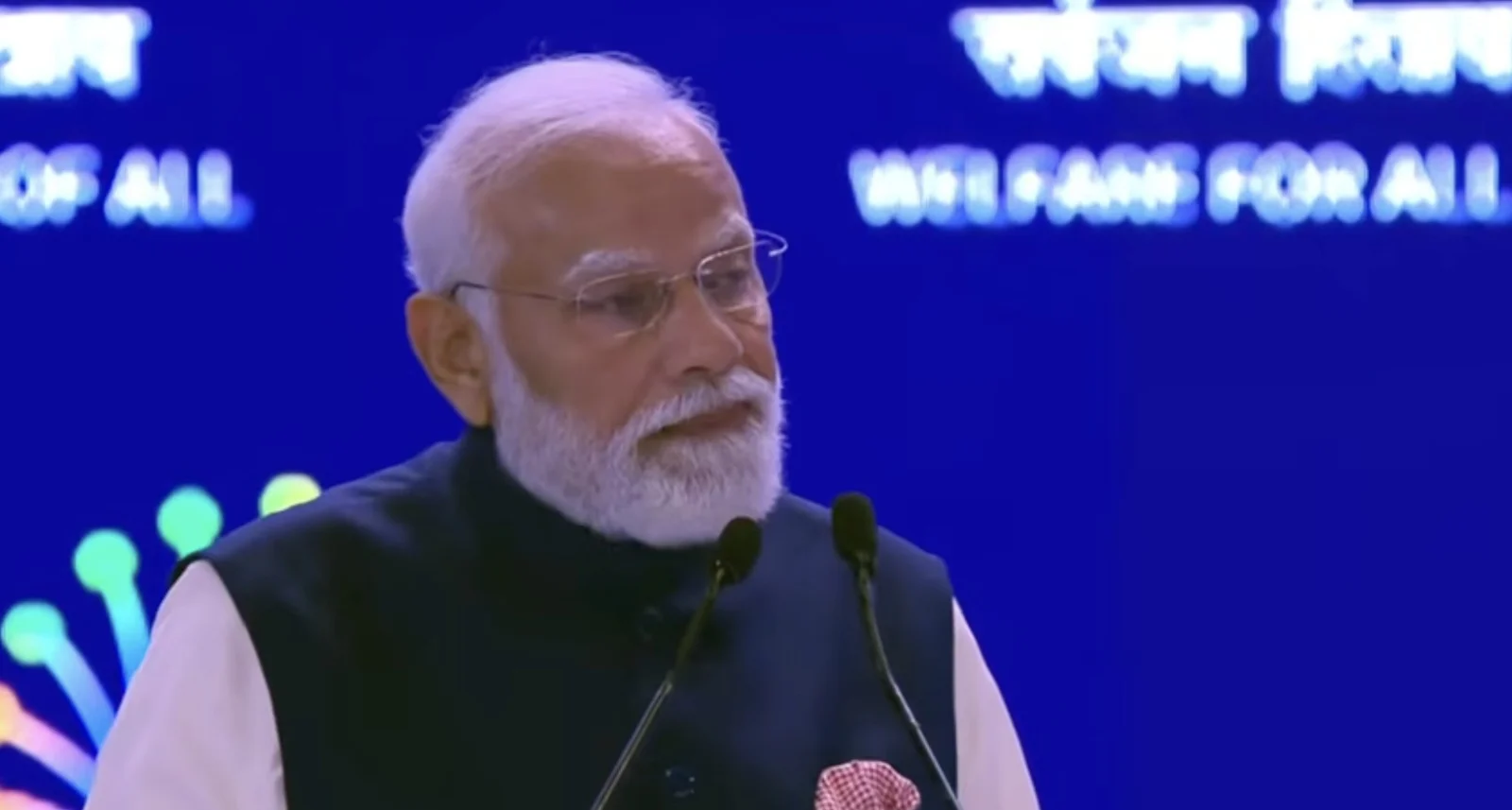
Drawing parallels with historic breakthroughs from written knowledge to wireless connectivity, Modi positions artificial intelligence as a systemic transformation demanding scale, stewardship and human centred governance.
Prime Minister Narendra Modi delivered a powerful and reflective address, positioning artificial intelligence as one of the most consequential transformations in human history and urging nations to match ambition with responsibility as the world enters the age of intelligent systems.
Describing the current moment as a civilisational turning point, the Prime Minister drew parallels with historic inflection points that reshaped humanity. When spoken language was first converted into script, few could foresee that written knowledge would become the backbone of governance, law and education. When the first wireless signals were transmitted, the architects of that breakthrough could not have imagined a world defined by real time global connectivity.
“History shows us that when transformation unfolds, its full impact is rarely visible to those living through it,” he observed. Artificial intelligence, he asserted, represents a similar moment. Its consequences will extend far beyond immediate technological applications.
In addition, the Prime Minister placed strong emphasis on workforce transformation and talent readiness. He stated that the future of AI will not be defined solely by infrastructure or algorithms, but by people. India is investing in large scale skilling initiatives, research ecosystems and startup incubation to prepare its youth for roles in advanced computing, data science and applied AI innovation. The objective is clear: ensure that the next generation are not passive users of intelligent systems but active creators shaping them responsibly.
He further articulated India’s strategic approach to artificial intelligence as open, collaborative and globally shareable. India’s AI vision, he said, is not inward looking or protectionist. The country seeks to develop platforms, frameworks and open technologies that can be adapted and deployed by nations across the world, particularly emerging economies. By encouraging open standards, interoperable systems and shared research, India aims to contribute to a global AI architecture that is inclusive, accessible and aligned with collective progress rather than concentrated power.
The Prime Minister also urged the global community to prioritise authenticity and transparency in the age of generative intelligence. Just as food products carry clear labels informing consumers of their ingredients and origin, he suggested that digital content should carry visible disclosures identifying whether it has been generated by artificial intelligence or created by a human being. In an era where synthetic media can closely replicate reality, such labelling mechanisms would help preserve trust, protect democratic discourse and prevent misuse. Transparency, he stressed, is not a constraint on innovation but a foundation for credibility in the digital age.
The Prime Minister also underscored the urgent need to prioritise child safety in the evolving AI ecosystem. As intelligent systems become embedded in education platforms, entertainment content and social media environments, safeguarding young users must be non negotiable. He called for age appropriate design standards, stronger content moderation frameworks and proactive safeguards against manipulation, exploitation and harmful exposure. Protecting children in the digital age, he emphasised, is not solely a regulatory obligation but a moral imperative. Artificial intelligence must create safer learning environments and empower young minds, not expose them to unseen risks.
The Prime Minister observed that the world today appears divided into two kinds of people: those who fear artificial intelligence and those who see opportunity in it. Some view AI as a disruptive force that threatens employment, privacy and stability. Others recognise it as a transformative engine capable of unlocking unprecedented progress. He made it clear that India belongs firmly in the second category. For India, artificial intelligence is not a threat to be resisted but a future to be shaped. It represents opportunity, innovation and national advancement. By embracing AI with confidence, responsibility and strategic intent, India aims to convert technological disruption into inclusive growth and long term prosperity.
The Prime Minister observed that the world today appears divided into two kinds of people: those who fear artificial intelligence and those who see opportunity in it. Some view AI as a disruptive force that threatens employment, privacy and stability. Others recognise it as a transformative engine capable of unlocking unprecedented progress. He made it clear that India belongs firmly in the second category. For India, artificial intelligence is not a threat to be resisted but a future to be shaped. It represents opportunity, innovation and national advancement. By embracing AI with confidence, responsibility and strategic intent, India aims to convert technological disruption into inclusive growth and long term prosperity.
The Prime Minister also highlighted India’s foundational investments in semiconductors, data centre hubs and secure AI infrastructure as critical enablers of long term technological sovereignty. He emphasised that trusted hardware supply chains, resilient data storage ecosystems and robust cybersecurity frameworks are essential to building reliable intelligent systems. India’s semiconductor initiative and expanding network of data centre hubs, he noted, are designed not only to power domestic innovation but to strengthen global supply resilience.
He further underlined the importance of secure AI, advocating for systems that are transparent, resilient and protected against misuse. Data security, he stressed, is inseparable from economic prosperity and democratic stability. As AI systems scale across borders, safeguarding information must remain a shared global priority.
Pointing to India’s demographic strength and diversity of talent, the Prime Minister described the country’s young and skilled population as a strategic advantage in the AI era. A diverse talent pool fosters inclusive innovation, reduces bias in system design and ensures broader societal representation in technological development.
He also reaffirmed that India’s democratic framework shapes its AI philosophy. Openness, accountability and pluralism are not peripheral values but structural strengths. By combining secure infrastructure, semiconductor capability, talent diversity and democratic governance, India aims to contribute to a global AI ecosystem that promotes both security and shared prosperity.
The Prime Minister also articulated a clear ambition: artificial intelligence must be designed and developed in India, and delivered to the world for the benefit of humankind. He emphasised that India’s innovation ecosystem is moving beyond adoption towards original creation, building foundational models, platforms and applications rooted in Indian talent and values. The objective is not isolation but contribution. Solutions conceived in India should be scalable, interoperable and accessible to other nations, particularly developing economies seeking inclusive growth. By combining domestic capability with global responsibility, India aims to ensure that technology created within its borders advances prosperity not just nationally, but across the world.
From Learning Machines To Living Systems
The Prime Minister described AI not simply as a technological advancement but as an acceleration of human capability. Machine learning systems now operate at unprecedented speed and scale, compressing cycles of discovery and decision making that once took years into seconds.
Unlike earlier revolutions whose influence unfolded gradually, artificial intelligence is reshaping economies, governance structures and social interactions in real time. It is altering how societies predict risk, allocate resources and deliver services.
This, he emphasised, is not incremental change. It is systemic transformation.
AI As A Multiplier Of Human Potential
At the heart of the address was a clear principle: artificial intelligence must strengthen humanity, not substitute it.
The Prime Minister underscored that intelligent systems multiply human capability many times over. From predictive healthcare diagnostics to precision agriculture and smart governance, AI has the power to expand reach, improve efficiency and deepen insight.
He positioned India’s expanding digital public infrastructure and robust data ecosystem as foundational to this journey. With a vast innovation base and a rapidly growing technology workforce, India is uniquely placed to deploy AI solutions at population scale while remaining anchored in inclusive growth.
Scale Demands Responsibility
Yet he issued a firm caution. Scale without responsibility, he warned, is unsustainable.
Technologies of transformative power require foresight. He drew comparisons with earlier breakthroughs such as nuclear energy, which necessitated global frameworks and ethical clarity to prevent misuse. Artificial intelligence, he suggested, requires similar stewardship.
“The question is not only what AI can achieve,” he stated, “but what humanity chooses to achieve with AI.”
Governance, transparency, accountability and fairness must evolve alongside innovation. Systems designed today will influence economic opportunity, social mobility and democratic resilience for generations.
India’s Role In The Global AI Landscape
Positioning India as a responsible and forward looking stakeholder, the Prime Minister reaffirmed the country’s commitment to ensuring that AI bridges divides rather than widens them.
Innovation, he stressed, must remain aligned with public good. AI applications should enhance healthcare access, strengthen education systems, empower farmers, enable entrepreneurs and modernise governance. Performance metrics must extend beyond technical benchmarks to measurable societal benefit.
India, he declared, intends to shape the global AI trajectory through collaboration, inclusivity and ethical leadership.
A Transformation We Must Shape Consciously
In his closing remarks, the Prime Minister framed the present era as one of profound reset. Intelligent systems are becoming embedded across institutions, industries and daily life. The choices made now will determine how this intelligence evolves.
“What we build today,” he said, “will define the intelligence that serves the next generation.”
The address positioned artificial intelligence not as a distant horizon but as an unfolding present. With its unmatched speed and reach, AI represents a defining chapter in human history. India’s message to the world was clear: this transformation must be guided with both scale and responsibility, ambition and conscience.
— Ankit Kankar (ankit.kankar@mmactiv.com)