Saturday, 18 July 2026

Resilience, efficiency & prosperity
As Finance Minister Nirmala Sitharaman unveils Budget 2026, the nation demands more than routine allocations. Indian agriculture is at a historic inflection point. This Budget is expected to operationalise the Viksit Bharat 2047 vision, aiming to transform farming from a low-margin, input-heavy, staple-focused sector into a high-productivity, high-value, globally competitive engine. Economists, industry leaders, and multilateral agencies concur: Incremental tweaks have run out of runway, and structural reforms are imperative to bridge productivity gaps, restore soil and water health, and secure farmers’ livelihoods.
“Budget 2026 must signal a decisive move from blanket input subsidies to outcome-linked support that rewards water-use efficiency, balanced fertilisation, and low-emission practices at the farm level,” asserts Prof. Ramesh Chand, Member (Agriculture), NITI Aayog.
Dr Ashok Gulati, Infosys Chair Professor for Agriculture at the Indian Council for Research on International Economic Relations (ICRIER)and former Chairman, Commission for Agricultural Costs and Prices (CACP), echoes the call for digitally verifiable, efficiency-led support: “Linking direct benefit transfers with soil health cards, precision nutrient management, and diversified cropping will reduce fiscal stress while lifting total factor productivity across both rainfed and irrigated systems.”
The imperative is clear: Budget 2026 must transition from fragmented schemes to a coherent, science-led, productivity-centric agricultural strategy — a structural foundation for a globally competitive, climate-smart, and high-income Indian agriculture.
The Foundation of 2025: From Intent to Implementation
Budget 2025 laid important groundwork, signaling a shift from stop-gap support toward structural measures aimed at productivity and resilience. The launch of the Prime Minister Dhan-Dhaanya Krishi Yojana, targeting 100 low-productivity districts, marked the start of district-level agricultural renewal. Coupled with a six-year protein security initiative under the Mission for Aatmanirbharta in Pulses, it created stable procurement for tur, urad, and masoor, reducing India’s import dependence in key pulses.
“Budget 2026 must accelerate India’s shift to a climate-resilient, value-enhanced agri-economy by scaling biologicals and unlocking the waste-to-wealth opportunity. Targeted fiscal support for biosolutions, soil health and circularity can boost productivity while reducing chemical dependence. ’’ — Krishna Mohan Puvvada, Regional President, (Middle East, India and Africa), Novonesis
Experts argue the next step must embed climate intelligence into farm-level decisions. “Budget 2026 must fund monsoon-contingent nutrition advisories at scale — using rainfall analytics and soil data to dynamically adjust fertiliser recommendations — so farmers can shift from fixed schedules to climate-responsive feeding of crops,” says Dr Manish Singh, AVP–Technical & Marketing, Transworld Furtichem Limited. He proposes a unified Nutrient Efficiency Index (NEI), integrating soil-test data, cropping patterns, water use efficiency, and fertiliser balance. “Budgets and subsidies should be allocated based on NEI improvement, not fertiliser consumption. This drives balanced nutrition and scientific fertiliser use rather than volume-driven demand,” he added.
“Budget 2026 must signal a decisive move from blanket input subsidies to outcome-linked support that rewards water use efficiency, balanced fertilisation and low-emission practices at the farm level.” — Dr Ramesh Chand, Member (Agriculture), NITI Aayog
Budget 2026 also sought to ease liquidity bottlenecks by raising Kisan Credit Card limits from Rs 3 lakh to Rs 5 lakh, supporting smallholders, dairy farmers, fishers, and allied producers. Sectoral reforms — from the National Mission on High-Yielding Seeds and a five-year cotton revitalisation plan to institutions like Bihar’s Makhana Board — aimed to modernise production, while allocations for storage, logistics, and market infrastructure addressed post-harvest losses.
“Budget 2026 must prioritise digital infrastructure, credit linkages, and rural capacity building to scale precision agriculture. Agri-drones, IoT and data analytics can boost yields, conserve resources and strengthen climate resilience. Targeted subsidies, public–private partnerships and R&D incentives will accelerate adoption, integrate technology with national agricultural databases, and shift India from subsidy dependence to self-reliant, innovation-led farming.” – Agnishwar Jayaprakash, Founder and CEO of Garuda Aerospace
Yet, experts insist these gains must now converge into a coherent resilience architecture. “The next Budget should consolidate irrigation, watershed, soil health, and climate missions into a single ‘National Resilient Farms Mission’ with district-level targets for water productivity and soil organic carbon,” says Dr V. K. Singh, Director, ICAR–Central Research Institute for Dryland Agriculture (CRIDA).
“Linking direct benefit transfers with soil health cards, precision nutrient management and diversified cropping will reduce fiscal stress while lifting total factor productivity across rainfed and irrigated systems.” — Dr. Ashok Gulati, Infosys Chair Professor for Agriculture at the Indian Council for Research on International Economic Relations (ICRIER) and former Chairman, Commission for Agricultural Costs and Prices (CACP)
Dr Himanshu Pathak, Director General of the International Crops Research Institute for the Semi-Arid Tropics (ICRISAT), adds, “Every rupee for irrigation must be co-anchored with micro-irrigation, fertigation-ready soils, and climate-resilient varieties so public investment translates into real resilience on farmers’ fields.”
Budget 2026 will ultimately be judged on whether it can convert these incremental foundations into a mission-driven, 2047-ready agricultural architecture that delivers genuine resilience, competitiveness, and prosperity for India’s farmers.
Fixing the Foundations: The Budget That Must Rewire Subsidies, Markets and Science
As Budget 2026 approaches, it is evident that Indian agriculture stands at a pivotal crossroads. The long-standing promise of doubling farmers’ incomes, once a political mantra, now demands a sober re-examination. Structural pressures—from climate volatility and shrinking margins to global competitiveness and rising nutritional expectations—have made incrementalism insufficient.
“The allocation of the budget should be done across three horizons: the immediate year, the next five years, and the long-term vision through 2047,” asserts Sandeepa Kanitkar, Chairman of BASAI and Managing Director of Kan Biosys, highlighting that India’s agricultural budget—barely 2 per cent of total expenditure—is glaringly inadequate for a sector that contributes 17 per cent of GDP, sustains 55 per cent of the population, and underpins the nutrition of 140 crore citizens.
“The next Budget should consolidate irrigation, watershed, soil health and climate missions into a single ‘National Resilient Farms Mission’ with clear district targets for water productivity and soil organic carbon.” — Dr V. K. Singh, Director, ICAR–CRIDA
The inefficiencies of current spending are stark when viewed through the prism of subsidies. India invests roughly Rs 1.75 – 2 lakh crore annually on fertilisers, electricity, MSP procurement, crop insurance, and other input-linked supports, yet the returns in productivity, soil health, water security, and farmer incomes remain worryingly low.
“Subsidies have historically encouraged consumption rather than efficiency,” Sandeepa notes. Cheap urea drives over-application, subsidised electricity has accelerated groundwater depletion, irrigation grants rarely incentivise precision water use, and MSP procurement entrenches cropping patterns that undermine soil regeneration.
For sectoral leaders, Budget 2026 must mark a decisive philosophical pivot—from input-heavy, subsidy-driven policies to a science-led, technology-driven, and outcome-oriented framework.
Every rupee for irrigation must be co-anchored with micro-irrigation, fertigation-ready soils and climate-resilient varieties so that public investment translates into real resilience on farmers’ fields.” — Dr Himanshu Pathak, Ex- Director General, ICAR & Secretary, DARE
S. Soundararadjane, CEO of HyFarm, points to the potato sector as a model: “India could build the world’s most advanced, predictable, and globally competitive potato ecosystem through a National Potato Innovation Mission. CRISPR-edited varieties, AI-powered breeding, drone-led phenotyping, and mass deployment of True Potato Seeds can transform production while reducing costs and disease risks. Region-specific varieties are not optional anymore—they are strategic imperatives.”
“Budget 2026 must reform subsidies by shifting from consumption-based support to science-led, Package of Practice–linked incentives tied to production outcomes. Performance-based support will improve soil health, enhance resource efficiency, and raise farmer incomes. Mechanisation assistance should be delivered via DBT and limited to FMTTI/BIS-approved equipment to ensure quality, effectiveness, and measurable impact on the ground.” – Ravindra Agrawal, Chairman, KisanKraft Ltd
Sandeepa further advocates restructuring through Direct Benefit Transfers (DBT). “Subsidies must be given through DBT to farmers and allow them to use this money as per their wish. This has started with Kisan Samman Nidhi but must be extrapolated by diverting subsidies given for insurance, fertilisers, electricity, and water to DBT,” she explains. Such a shift would correct long-standing distortions, empower decision-making, sharply reduce leakages, and create the fiscal headroom necessary to invest in science, innovation, and climate resilience.
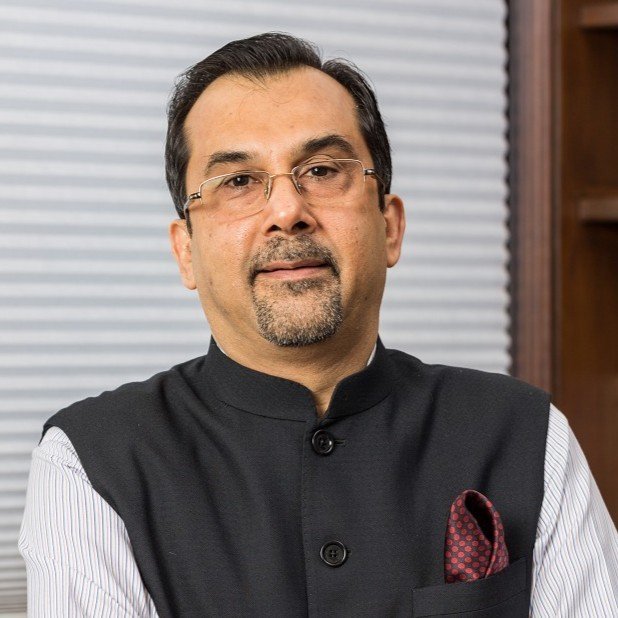
“To truly raise farm incomes, storage, grading, logistics and digital marketplaces must be treated as core agricultural infrastructure, not peripheral add-ons.” — Sanjiv Puri, Managing Director, ITC Ltd
“A key priority must be efficiency-driven subsidy reform. We need to shift from consumption-based subsidies to scientifically designed, Package of Practice (PoP)–linked incentives tied directly to production outcomes. Performance-based support improves soil health, enhances resource efficiency, and strengthens farmer incomes. Mechanisation support should be delivered through DBT and restricted strictly to FMTTI/BIS-approved equipment to ensure quality and impact in the field,” says Ravindra Agrawal, Chairman, KisanKraft Ltd, emphasizing that combining DBT with outcome-linked incentives can amplify impact across mechanisation, inputs, and farm management practices.
“India’s next big leap will come from shifting towards processed, residue-compliant, traceable and climate-smart agri-exports rather than relying mainly on bulk commodity shipments.” — Abhishek Dev, Chairman, APEDA
Markets, too, are evolving in ways that demand more sophisticated production systems. The rising domestic and global appetite for residue-free food is already accelerating India’s biopesticide segment. Sandeepa emphasises that a formal residue-free label—jointly administered by the Ministries of Health and Agriculture—could unlock higher farmer incomes through premium market categories. “Blanket reduction on CIB-registered biopesticides must be done at the earliest to 5 per cent,” she cautions, noting that inconsistent GST categorisation is harming both growers and industry participants seeking safer input adoption.
“Targeted support for FPOs, agri-startups and interoperable e-market platforms can cut post-harvest losses, stabilise prices and make climate risk more manageable for smallholders.” — Dr. Ashok Dalwai, Chairman, Board of Governors of the Institute for Social and Economic Change (ISEC); Chairman, Karnataka Agriculture
The export ecosystem is entering a decisive phase. “India must position itself as a trusted global supplier,” says Kuchibhotla Srinivas, Partner, Deloitte. Strategic export corridors, residue-free clusters, bilateral agreements, and harmonisation with global standards, he argues, can convert India’s scale into global influence.
“If India wants to lead in exports, supply chains must embed traceability, quality assurance, and sustainable input use,” adds Ankur Aggarwal, Executive Chairman, Crystal Crop Protection.
The global opportunity is clear. “India’s next big leap will come from shifting towards processed, residue-compliant, traceable, and climate-smart agri-exports rather than relying mainly on bulk commodity shipments,” says Abhishek Dev, Chairman of Agricultural and Processed Food Products Export Development Authority (APEDA).
“The agri sector needs a unified national framework, science-based standards, and simplified licensing to enable innovation in high-value micronutrients and specialty fertilisers. Streamlined regulation will accelerate advanced nutrition technologies, strengthen soil health, and unlock productivity and profitability gains essential for truly transformative agricultural reform.” — Dr. Rahul Mirchandani, President, IMMA
Value addition must become central to India’s strategy, particularly in crops like sugarcane. “Exports of sugar quota have to be restricted to further increase production of alcohol for oil substitution. Value addition is the key. Targets of 20 per cent plus substitution have to be the new target for easing some oil dollars. The money thus freed up can be used to improve irrigation, research, and perfecting models which are customised for Indian agriculture,” adds Sandeepa.
Circularity, too, must become integral. Krishna Mohan Puvvada, Regional President, (Middle East, India and Africa), Novonesis stresses, “Adequate support must be provided for harnessing the waste-to-wealth potential in agriculture, including robust logistics for storage and transportation of agricultural waste feedstocks that can be transformed into fertilizers and bioenergy.”
“A direct benefit transfer model for fertilisers—sold at full cost with farmers claiming subsidy via POS authentication—can be a game-changer. It ensures manufacturers receive full value, the government gains full GST, markets maintain adequate supply, leakages and black-marketing are curbed, and subsidy outlay reflects actual use. Budget 2026 should prioritise this transparent, efficient reform.” – Vinod Goyal, CEO, Agricare Corporation
Domestic market architecture requires equal attention. Dr Ashok Dalwai, Chairman, Board of Governors of the Institute for Social and Economic Change (ISEC) and Chairman, Karnataka Agriculture Price Commission, notes, “Targeted support for FPOs, agri-startups, and interoperable e-market platforms can cut post-harvest losses, stabilise prices, and make climate risk more manageable for smallholders.” Institutional strengthening, he stresses, is vital for farmers to remain competitive amid market volatility.
Budget 2026, therefore, must reimagine subsidies, shifting from input-centric to outcome-centric frameworks. “Water, soil and climate must be planned as one ecosystem. Budget 2026 should institutionalise watershed-scale irrigation planning, incentivise soil regeneration, and embed climate-risk analytics into district planning. This is not sustainability for compliance; it is sustainability for survival,” says Srinivas.
“Budget 2026 can back a flagship ‘Sulphur- and Potash-Secure India’ initiative that promotes sulphate-based potash and balanced secondary nutrients, improving taste, colour, shelf-life and exportability of fruits, vegetables and plantation crops while reducing import vulnerability.”
–Dr. Manish Singh, AVP-Technical & Marketing, Transworld Furtichem Limited
“For a water-starved nation like India, drip should be made compulsory. This would conserve soils along with improving the area of irrigation. The river-joining project must have allocation for short, medium, and long term. Bonds must be raised to mobilise domestic and World Bank funds,” adds Sandeepa.
Structural gaps in specialised inputs also demand urgent attention. Dr Rahul Mirchandani, President, Indian Micro-Fertilizers Manufacturers Association (IMMA) observes, “India’s agricultural ecosystem is at an inflection point, yet not structurally prepared for large-scale reforms. One major gap lies in the micronutrients and specialty fertilizer industry, which remains outside mainstream policy despite its direct link to soil health, crop quality, and farmer income. Fragmented licensing under FCO, uneven state compliance frameworks, and the absence of a unified national policy slow innovation, restrict ease of doing business, and prevent rapid scale-up of advanced nutrition technologies like chelates, water-soluble fertilizers, and fortified micronutrient blends.”
“Budget 2026 must anchor a long-term Viksit Bharat Kheti Vision 2047 by reforming fertiliser use. Mandating a 25:15:5 co-pack of chemical, organic and biofertilisers—and supporting OF/BF manufacturing through PLI—can strengthen soil health, raise nutrient-use efficiency, expand acreage coverage and build climate-resilient productivity. It is time subsidies drive transformation, not perpetuate inefficiency ” — Sandeepa Kanitkar, Chairman of BASAI and Managing Director of Kan Biosys
Dr Singh underscores the strategic imperative: “Budget 2026 can back a flagship ‘Sulphur- and Potash-Secure India’ initiative that promotes sulphate-based potash and balanced secondary nutrients, improving taste, colour, shelf-life, and exportability of fruits, vegetables, and plantation crops while reducing import vulnerability.”
Complementing this, Vinod Goyal, CEO, Agricare Corporation advocates a pragmatic DBT-based reform: “Fertilizers shall be sold on full cost price at dealer shops—farmers register purchases on a Point of Sale (POS) machine at the time of pick-up, and subsidies are directly transferred to their bank accounts.”
“Budget 2026 must treat water, soil and climate as one ecosystem by institutionalizing watershed-scale irrigation, incentivising soil regeneration and embedding climate-risk analytics in district planning. Equally critical is a legally robust Digital Land Ledger, interoperable with crop and credit data, to unlock formal finance, insurance and market access for millions of farmers still excluded from the system ” — Kuchibhotla Srinivas, Partner, Deloitte
Sandeepa adds, “Chemical fertilizers should be bundled with organic and biofertilisers—25 kg of CF, 15 kg of OF, and 5 kg of BF per bag. This allows fertilizer to cover 30 per cent more land with improved use efficiency. Organic and biofertilizer industries can be supported through PLI schemes to attract private investment, improve soils, and build climate resilience.”
As multiple industry leaders emphasise, this reform will determine whether Indian agriculture can truly align with the aspirations of Viksit Bharat 2047, delivering prosperity, sustainability, and global competitiveness for generations to come.
Tech, Traceability, and Transformation: Budget 2026’s Agri-Vision
Budget 2026 is not merely a fiscal exercise—it represents a strategic inflection point for Indian agriculture, an opportunity to pivot from incremental measures to transformative, technology-driven reforms.
“Agri-drones are no longer a novelty; they are an important part of the agritech landscape. Subsidies, public-private partnership models, and targeted R&D incentives can accelerate manufacturing and deployment, creating rural employment while increasing productivity. We must also potentially look at integrating drone data with national agricultural databases to enable smarter crop planning, soil monitoring, and weather resilience strategies,” says Agnishwar Jayaprakash, Founder and CEO of Garuda Aerospace.
“ Fertiliser purchases must be linked to a unified Digital Farm ID, which allows tracking of nutrient use efficiency, preventing over-application and enabling customised advisory. It builds India’s first data-driven nutrient intelligence system’’ — Yogesh Chandra, VP-Sales & Marketing, Transworld Furtichem Limited
Echoing this vision, Soundararadjane, stresses that Budget 2026 should introduce a Digital Farming Acceleration Subsidy—shifting support from traditional inputs to IoT and automation tools such as soil moisture sensors, disease-warning IoT nodes, digital soil intelligence kits, smart irrigation systems, automated grading and sorting units, and low-cost climate stations for cold stores. “A 40–60 per cent capital subsidy will democratise access and unlock predictive, precision farming at scale,” he asserts.
Equally critical is the foundation of clear land rights and reliable credit. “When a farmer has clear land ownership and predictable finance, they can finally shift from reactive decisions to planned, technology-led farming,” observes Ankur.
“Budget 2026 must accelerate digital land records and frictionless credit so farmers can plan, invest and adopt modern crop protection responsibly. To compete in global markets, India’s supply chains need embedded traceability, quality assurance and sustainable input use. Strategic public–private collaboration can fast-track safe pesticide practices, surveillance systems and next-generation, environmentally responsible formulations ” — Ankur Aggarwal, Executive Chairman, Crystal Crop Protection
Srinivas adds, “The Budget should focus on the two biggest unlocks for farmer prosperity: clean digital land records and frictionless credit. A legally robust Digital Land Ledger, interoperable with crop data and credit scoring, can unlock formal finance, insurance, and market contracts for millions of farmers currently outside the system.”
The systemic importance of logistics and digital marketplaces is reinforced by Sanjiv Puri, Managing Director, ITC Ltd: “To truly raise farm incomes, storage, grading, logistics, and digital marketplaces must be treated as core agricultural infrastructure, not peripheral add-ons.”
“Budget 2026 should launch a National Potato Innovation Mission to transform India into a globally competitive processing potato hub. A strong public–private R&D partnership must fast-track CRISPR-based climate-resilient varieties, AI-driven breeding, drone phenotyping, automated trials and True Potato Seeds. This science-led upgrade is essential for predictable supply, higher productivity and world-class processing quality.” – S. Soundararadjane, CEO of HyFarm
Nutrient management, too, must be integrated. Yogesh Chandra, VP-Sales & Marketing, Transworld Furtichem Limited, explains, “Fertiliser purchases must be linked to a unified Digital Farm ID, allowing tracking of nutrient use efficiency, preventing over-application and enabling customised advisory. It builds India’s first data-driven nutrient intelligence system.”
Budget 2026 must therefore deliver measurable, integrated reforms—embedding science, finance, technology, and policy into a unified, farmer-centric framework. It is the launchpad for the Viksit Bharat Kheti Vision 2047, enabling high-productivity, high-value, climate-smart agriculture and positioning India as a globally competitive agri-economy.
—– Suchetana Choudhury (suchetana.choudhuri@agrospectrumindia.com)