Sunday, 21 June 2026

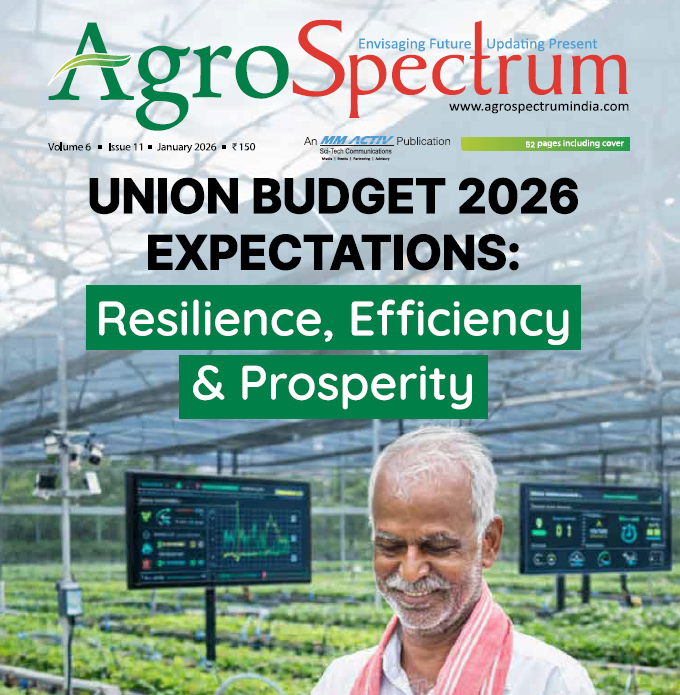
From input-heavy subsidies to outcome-led, climate-smart farming—why this Budget could define India’s agri-economy on the road to Viksit Bharat 2047
As Finance Minister Nirmala Sitharaman prepares to unveil Budget 2026, Indian agriculture stands at a decisive inflection point. With the Viksit Bharat 2047 vision as its north star, the Budget is expected to move decisively beyond incremental allocations toward structural reform—rewiring subsidies, markets, and science to transform farming from a low-margin, input-heavy system into a high-productivity, climate-resilient, and globally competitive engine of growth. Experts across policy, academia, and industry converge on a common message: blanket input subsidies have exhausted their utility, and the future lies in outcome-linked support, digitally verifiable efficiency, and science-led interventions that restore soil and water health while securing farmer livelihoods.
Building on the foundations laid in Budget 2025, Budget 2026 must converge fragmented schemes into a mission-driven architecture—integrating climate intelligence, precision nutrition, digital land records, traceability, and value-added exports. From DBT-based subsidy reform and nutrient efficiency indices to agri-drones, digital farm IDs, resilient irrigation, and residue-free market systems, the Budget’s success will be judged by its ability to align public spending with measurable productivity, sustainability, and income outcomes. If executed with coherence and ambition, Budget 2026 can become the launchpad for a 2047-ready agricultural economy—one that delivers resilience, prosperity, and global leadership for India’s farmers.
To read the full story click : https://online.anyflip.com/unmb/lktg/mobile/index.html