Friday, 3 July 2026


ICRISAT launches digital-first workstream under global consortium to shift pest control from reaction to prediction
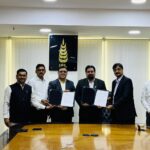
Digital innovation moved to the forefront of the global battle against the Red Palm Weevil (RPW) as ICRISAT hosted the launch of Workstream 3 – Digital Innovations under the Consortium for Red Palm Weevil Control (C4RPWC) at its Hyderabad headquarters. Supported by The Presidential Court of the UAE and The Gates Foundation, the three-year, multi-institutional programme aims to close one of the most persistent gaps in RPW management: early detection and predictive early warning.
The initiative signals a strategic shift away from damage control toward anticipatory, data-driven prevention of a pest that has devastated date palm systems across the Middle East, North Africa, and parts of Asia—threatening livelihoods, cultural heritage, and fragile dryland ecosystems.
“In many communities in the Middle East, date palms are spoken of as a mother—so we can imagine the devastation when this pest destroys them,” said Dr Stanford Blade, Deputy Director General – Research and Innovation at ICRISAT. “Through this consortium, we’re directing science to transform this crisis into practical, scalable solutions.”
From visible damage to invisible risk
Led by ICARDA (International Center for Agricultural Research in the Dry Areas), the C4RPWC is structured around five integrated workstreams: innovative bio-based solutions, biotechnological innovations, digital innovations, good agricultural practices (GAP), and driving adoption and scale-up. The Hyderabad event marked the formal launch of Workstream 3, which will focus on developing and validating digital monitoring, prediction, and early warning systems capable of detecting infestation well before symptoms become visible.
“Despite decades of research and investment, we still do not have a single solution that can contain this pest,” said Dr Ajit Govind, Senior Climate Scientist and Systems Modeler at ICARDA. “This consortium is therefore both timely and necessary.”
That urgency was echoed by Prof Christian Nansen, Professor at the University of California, Davis, and Founder of Spectral Analytix, who framed the challenge in stark terms. “If we keep looking for the problem only where it is visible, we will always be late,” he said. “The ambition here is to detect ‘stage minus two’—to identify vulnerability before infestation even begins.”
Building a unified digital warning system
As lead institution for the digital workstream, ICRISAT will draw on its strengths in remote sensing, IoT, citizen science, climate analytics, and dryland systems research to build a unified early-detection framework for RPW.
“By combining science with digital innovation and strong partnerships, we are focused on ensuring solutions remain affordable, operationally feasible, and ready for field deployment,” said Dr Srikanth Rupavatharam, Senior Scientist, Digital Agriculture, ICRISAT.
The workstream brings together experts from ICRISAT, ICARDA, and CGIAR’s Digital Transformation Accelerator, working closely with UC Davis and Spectral Analytix to reframe RPW management through prediction rather than post-infestation response.
From algorithms to field impact
The launch featured technical discussions spanning entomology, epidemiology, climate science, socioeconomics, indigenous knowledge, and farmer-centered design. Dr Debi Sahoo, Digital Agriculture expert at ICRISAT, presented a multi-stage digital methodology to track infestation progression from symptom-free early stages—highlighting how layered data streams can identify risk trajectories before irreversible damage occurs.
Reinforcing the real-world stakes, ElShafie Hamadttu, RPW expert at ICARDA, joined virtually to stress the narrow window available for intervention once visible symptoms appear.
Linking the initiative to CGIAR’s broader transformation agenda, Ram Kiran Dhulipala, Interim Director of the CGIAR Digital Transformation Accelerator, emphasized alignment with CGIAR’s 2030 Research and Innovation Strategy, underscoring how digital systems can integrate data, accelerate access, and improve delivery at scale.
A scalable blueprint for palm protection
Between 2026 and 2028, the consortium will move from algorithms to field trials, and from pilots to scalable platforms—integrating in-situ sensors, UAVs, satellite imagery, weather data, and analytical models to generate actionable early warnings. The end goal is a field-ready, affordable digital package that enables farmers, extension systems, and governments to prevent RPW outbreaks rather than react to them.
As palm systems face rising climate stress and biological threats, the launch of Workstream 3 positions digital innovation not as a supporting tool, but as a central pillar in safeguarding palms, livelihoods, and ecosystems worldwide.