Sunday, 12 July 2026

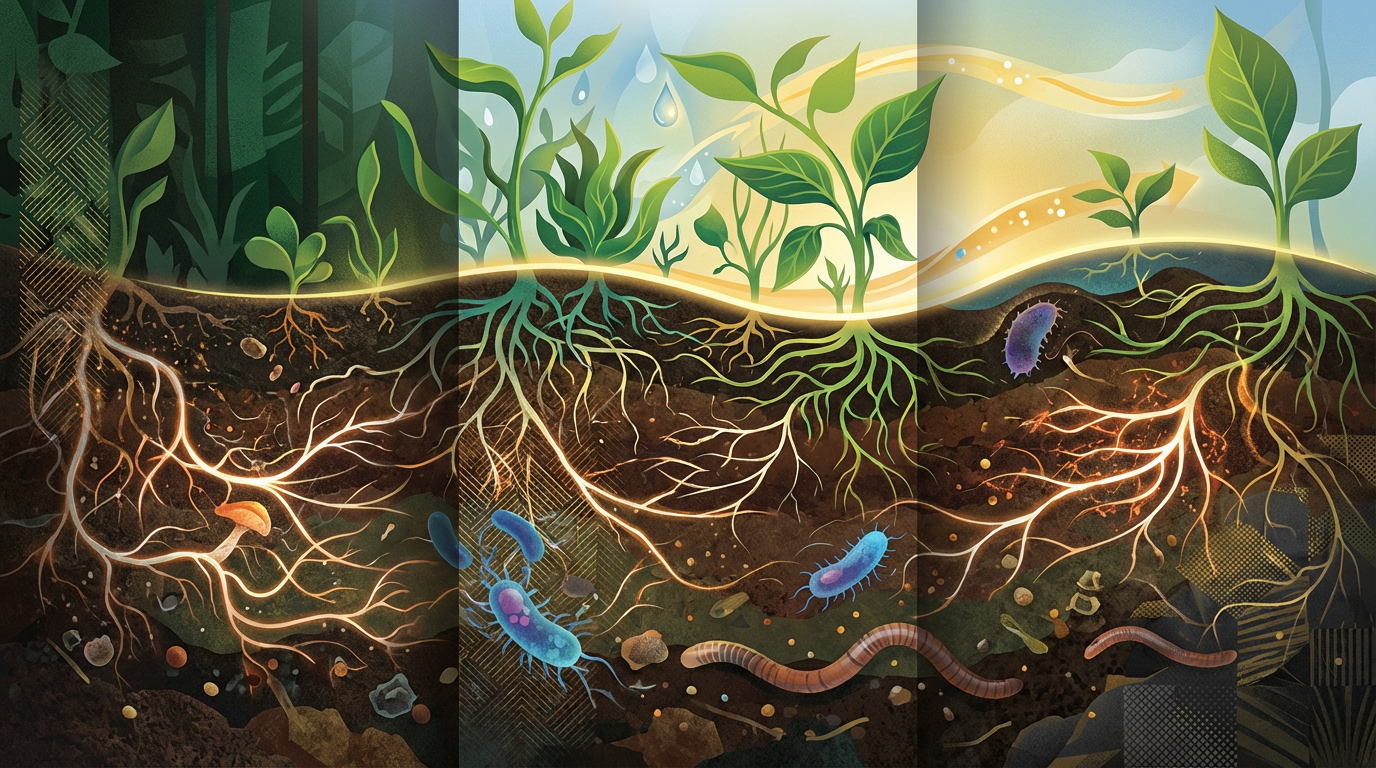
In 2025, India quietly but decisively reengineered soil health from a moral imperative into strategic infrastructure—using data-driven diagnostics, incentive-aligned fertiliser reform, and the mainstreaming of biologicals to anchor food security, climate resilience, and agricultural sovereignty.
In Indian agriculture, soil health has long been invoked as a virtue but rarely treated as a balance sheet. For decades, the discourse oscillated between productivity imperatives and environmental anxieties, with little institutional depth connecting the two. In 2025, that began to change—not dramatically, not noisily, but measurably. This was the year when soil health policy in India matured from rhetoric into systems.
What emerged over the year was not a single breakthrough, but a convergence: data-driven soil diagnostics, incentive-aligned fertiliser reform, expanding biological inputs, and a growing recognition that soil is not merely an agronomic input—it is strategic infrastructure.
The Balance Sheet Beneath the Farm
The government’s Soil Health Card (SHC) programme, launched in 2015, reached a significant inflection point in 2025. As of July, over 25 crore soil health cards had been issued, effectively covering nearly every farming household in the country. More importantly, the programme has evolved from a distribution exercise into a decision-support system.
Each card provides plot-specific, crop-linked nutrient recommendations, nudging farmers away from blanket fertiliser application toward calibrated use. To support this scale, India has quietly built one of the world’s largest soil diagnostics infrastructures. As of February 2025, over Rs 1,706 crore had been released to States and Union Territories, enabling the establishment of 8,272 soil testing laboratories—including 1,068 static labs, 163 mobile labs, 6,376 mini labs, and 665 village-level labs across 17 States and UTs.
Equally significant is the progress in soil intelligence. Soil fertility mapping has been completed on 290 lakh hectares across 40 aspirational districts, while over 2,000 village-level fertility maps have been generated for 21 States and UTs, enabling hyper-local interventions rather than district-level generalisations. This granular turn in soil governance represents a quiet but foundational shift: soil policy is no longer blind.
Organic Goes Organised
Organic farming promotion in India has continued steadily through two flagship schemes: Paramparagat Krishi Vikas Yojana (PKVY) across all States and UTs except the Northeast, and Mission Organic Value Chain Development for North Eastern Region (MOVCDNER) for the Northeast. Both schemes emphasise end-to-end value chain support—from production and certification to processing and marketing—rather than input substitution alone.
Under PKVY, organic farming is implemented through cluster-based models, each covering 500–1,000 hectares and involving around 500 farmers, prioritising small and marginal cultivators. Under MOVCDNER, 479 Farmer Producer Organisations (FPOs) have been formed, each averaging 500 farmers, creating aggregation power in fragile hill economies.
As of October 31, 2025, 16.9 lakh hectares have been brought under PKVY and 2.36 lakh hectares under MOVCDNER. Financial support is structured pragmatically: Rs 31,500 per hectare over three years under PKVY, including Rs 15,000 via Direct Benefit Transfer and Rs 46,500 per hectare under MOVCDNER, with Rs 32,500 allocated for organic inputs, including DBT support.
Demonstration clusters—such as those in Etawah and Fatehpur districts of Uttar Pradesh, benefiting over 1,500 farmers—illustrate how organic transitions work best when they are spatially concentrated and market-linked.
The Glue Holding India’s Soil Reforms Together
One of the most consequential soil policy developments of recent years is the PM-PRANAM scheme (Programme for Restoration, Awareness, Nourishment, and Amelioration of Mother Earth). Approved in June 2023 and operational through FY 2025–26, PM-PRANAM represents a philosophical shift in fertiliser governance—from subsidising consumption to incentivising restraint.
Its ambition is explicit: A Rs 20,000 crore reduction in fertiliser expenditure, achieved not through abrupt withdrawal, but through balanced nutrient management. States are encouraged to reduce excessive use of urea, DAP, NPK, and MOP while integrating biofertilisers, organic inputs, and natural farming practices.
What sets PM-PRANAM apart is its incentive architecture. Fertiliser usage is tracked through the Integrated Fertilisers Management System (iFMS), with a State’s urea reduction measured against its own three-year historical average. Fifty percent of subsidy savings are returned to the State, of which 70 percent is earmarked for assets supporting alternative fertiliser technologies and 30 percent rewards farmers, panchayats, and local stakeholders driving fertiliser reduction and awareness. By 2025, PM-PRANAM had evolved into a connective policy layer—reinforcing Soil Health Card advisories, strengthening Integrated Nutrient Management, and recasting fertiliser efficiency as a governance metric rather than a political liability.
Microbes as Multipliers
Technology is reshaping soil management in India, but the deeper transformation underway in 2025 lies in biology rather than hardware. While IoT-enabled soil sensors, drones, and AI-driven advisory platforms are improving the precision with which moisture levels, nutrient availability, and crop responses are monitored, the real inflection point has come from a renewed focus on soil microbiology and nutrient-use efficiency.
At the heart of this biological turn is a growing policy and scientific consensus that bio-fertilisers are no longer optional inputs, but strategic instruments of national food and fertiliser security.
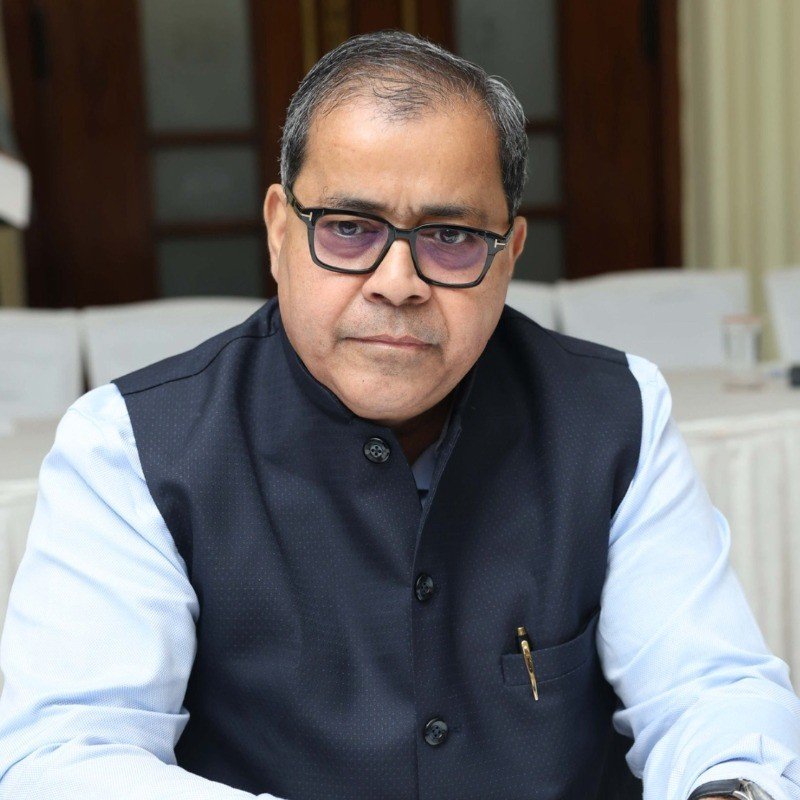
As Jayanta Chakraborty, Chairperson, Agri-Hori-Food Processing & Rural Development National Committee, Bengal Chamber of Commerce & Industry observed:
“Bio-fertilisers are no longer an ecological accessory; they are a strategic necessity. They build resilience against global fertiliser import shocks, restore soil function through microbial efficiency, and allow India to lower chemical doses without sacrificing yields. Crucially, they reduce subsidy pressure and emissions at the same time. India already has the R&D capacity, farmer networks, and policy scaffolding—from PM-PRANAM to DBT—to scale bio-fertilisers rapidly.”

Harsh Vardhan Bhagchandka, President, IPL Biologicals, reinforced the technical necessity:
“To promote systemic food resilience and reduce dependence on synthetic fertilisers, a strategic transition towards integrating bio-fertilisers into cropping systems is technically essential. These microbial inoculants enhance nutrient solubilisation in the soil and improve nutrient absorption in plants through higher Nutrient Use Efficiency. Bio-fertiliser applications can supplement 25–40 percent of a soil’s fertiliser requirements, making them critical for mitigating uncertainties in global fertiliser markets.”
Shanmugam Sambanthan, Head–Agriculture, Middle East, South Asia and Africa, Novonesis, added an industry perspective:
“A fertiliser subsidy is largely designed to make inputs affordable for farmers and enable productivity. However, on the flip side, it inadvertently curbs innovation in the fertiliser industry. Fixed pricing and margins limit manufacturers’ ability to invest in advanced formulations and incremental innovation. High subsidies for chemical fertilisers have also discouraged the adoption of organic and biological inputs. Globally, the trend is shifting towards fortification of fertilisers with biologicals—such as microbes, bioactive components, and biostimulants like seaweed extracts and humic acids—alongside conventional nutrients to enhance efficiency and soil health.
Combining biosolutions with chemical fertilisers creates a powerful synergy that enhances nutrient availability and soil health while reducing reliance on synthetic inputs. We should look at policy frameworks that enable and incentivise incremental and sustainable innovation in the fertiliser industry. Encouraging manufacturers to incorporate biosolutions—such as microbes, enzymes, and biostimulants including cell-free microbials, protein hydrolysates, and amino acids—into chemical fertilisers during production, supported by subsidies and capacity development, would unlock the best of both worlds for farmers.”
The 2025 year also demonstrated how precision soil management can yield immediate, measurable benefits.
Dr. Rahul Mirchandani, Chairman & Managing Director, Aries Agro Limited, highlighted Karnataka’s Bhoochetana project:
“In Karnataka, the Bhoochetana project, a public–private partnership between the state government and ICRISAT, created a geo-referenced soil fertility atlas of the entire state, identifying micronutrient deficiencies district by district. Based on this, area-specific blends were rolled out — for instance, boron for the nutrient-poor red soils in the north and zinc for the heavy black soils of central Karnataka. These blends, delivered alongside improved water management practices, boosted yields in pulses and oilseeds by 20–66 per cent, translating into significant farm-level income gains.”
The Economics Beneath the Harvest
The transformations in soil health in 2025 were subtle, dispersed, but cumulatively structural.
First, soil health became institutionalised infrastructure rather than a policy slogan. The proliferation of 8,272 labs, hyper-local fertility maps, and digital soil intelligence platforms created a framework for decision-making that was previously unavailable. Farmers, researchers, and policymakers could now make nutrient decisions at the field level, not district averages.
Second, fertiliser reform moved from arithmetic to behavioural economics. PM-PRANAM exemplifies this shift: subsidy incentives now reward efficiency rather than volume. States are measured against their historical usage, creating peer pressure and competitive improvement while linking financial returns to sustainable practices. The approach reframed fertiliser management from a centralised commodity issue to a performance-oriented governance metric.
Third, organic and biological inputs entered mainstream adoption. No longer niche interventions, bio-fertilisers, microbial consortia, and precision organic amendments became integral to soil health strategies, supported by financial, technical, and digital tools. Their scaling potential is now clear: they enhance nutrient-use efficiency, reduce chemical dependence, lower subsidy burdens, and mitigate import vulnerabilities.
Fourth, precision and geospatial soil intelligence reshaped crop recommendations. Karnataka’s Bhoochetana project showed how geo-referenced nutrient atlases combined with targeted fertiliser blends and improved irrigation could lift yields 20–66 percent. This demonstrates a clear pathway from digital soil data to income gains for farmers.
Finally, climate resilience became soil-centric. Extreme weather events—floods, heat waves, droughts—made it evident that soil health is the first line of defense. The combination of organic matter, microbial augmentation, and precision nutrient management now forms the backbone of a resilient agronomy strategy.
Taken together, these developments signal that soil is no longer a mere input; it is a national asset class, underpinning food security, climate adaptation, and rural incomes.
Challenges That Refuse to Recede: The 2025 Reality Check
Despite policy momentum, India’s soil recovery in 2025 remained patchy—concentrated in well-governed pockets and conspicuously absent in stress-prone geographies. On the ground, structural distortions continued to overpower technical solutions.
Urea dominance remained deeply entrenched.
Even in States with near-universal Soil Health Card coverage, fertiliser behaviour changed slowly. Urea continued to account for over half of total nutrient consumption, driven less by ignorance than by price signals. With urea retail prices frozen and phosphatic and potassic nutrients exposed to global volatility, farmers—especially tenant cultivators and smallholders—optimised for cash flow, not soil balance. In practice, SHC advisories were often overridden by affordability.
Monocropping persisted where procurement and risk structures rewarded it.
Punjab, Haryana, western Uttar Pradesh, parts of Telangana, and coastal Andhra Pradesh entered 2025 with little diversification despite decades of agronomic warnings. Paddy–wheat, cotton, and sugarcane systems continued to extract nutrients cyclically, depleting zinc, boron, sulphur, and organic carbon. Farmers recognised soil fatigue—but without assured markets or price discovery for alternative crops, diversification remained a theoretical option rather than an economic one.
Residue burning reflected institutional failure, not farmer defiance.
Post-harvest residue burning resurged in parts of north India in late 2025 despite mechanisation subsidies. On the ground, many smallholders reported delayed machinery availability, high rental costs, and narrow sowing windows exacerbated by erratic monsoons. Burning, while environmentally destructive, remained the fastest risk-management tool in a compressed cropping calendar—illustrating how soil degradation often emerges from time poverty rather than malice.
Climate shocks translated directly into soil damage.
The 2025 monsoon once again exposed soil fragility. Floods across Punjab, Haryana, eastern Rajasthan, Bihar, Assam, and parts of coastal Tamil Nadu deposited layers of sand and silt, stripping topsoil fertility and disrupting microbial populations. Punjab Agricultural University’s post-flood analyses quantified what farmers already felt: nitrogen and micronutrient losses, compaction, and declining water-holding capacity. These were not one-off disasters but recurring balance-sheet shocks to soil capital.
Organic carbon decline remained the silent crisis.
Across rainfed and irrigated systems alike, soil organic carbon continued to erode—particularly in intensively cultivated belts. While composting, green manuring, and crop residue incorporation were promoted, adoption lagged where livestock populations declined, labour costs rose, and short-term yield pressures dominated decision-making.
For smallholders, sustainability remained a luxury good.
On the ground, many farmers acknowledged the benefits of bio-fertilisers and microbial inputs—but access was uneven. Quality varied widely, counterfeit products persisted in informal markets, and extension support was thin. Credit systems favoured crop loans tied to conventional input packages, while biologicals were often excluded from institutional financing. In this environment, farmers defaulted to what was cheap, familiar, and immediately available—even if it compromised long-term soil health.
Extension remained the weakest link.
While soil diagnostics scaled rapidly, interpretation did not. Many village-level labs generated data faster than it could be translated into field-level practice. The absence of trained soil advisors meant recommendations often arrived without context—crop stage, irrigation pattern, or risk appetite—limiting behavioural change.
What 2025 revealed was a sobering truth: India does not suffer from a lack of soil knowledge or policy intent. It suffers from climate volatility and delivery gaps at the last mile.
The lesson is clear. Soil recovery will not be driven by advisories alone. It will be determined by whether sustainable practices can compete—financially and logistically—with extractive ones at the farm gate.
The Balance Sheet That Actually Feeds the Economy.
Soil health is no longer merely an agronomic issue; it is the foundation upon which India’s food security, climate resilience, and rural prosperity depend. Restoring the integrity of the nation’s soils requires a multi-pronged, systemic approach that goes beyond input optimisation. It demands aligned government policies that incentivise sustainable practices, enforce nutrient management protocols, and integrate soil health goals into broader agricultural development plans. The PM-PRANAM programme and Soil Health Card initiative exemplify how policy can shape behaviour, but scaling these interventions requires coordination across Ministries, state governments, and local governance structures.
Equally important is credible private-sector innovation. Fertiliser and bio-input companies, agri-tech start-ups, and digital advisory platforms must move from reactive service provision to proactive soil stewardship. This includes developing crop-specific formulations, combining chemical and biological solutions, and integrating IoT-enabled monitoring systems. Innovation should also focus on affordability and accessibility, ensuring that smallholders—who constitute the backbone of Indian agriculture—can adopt sustainable inputs without compromising short-term productivity.
Farmer-centric extension systems are the bridge between policy, innovation, and on-the-ground adoption. Capacity-building programmes, demonstration plots, and digital advisory tools must empower farmers with actionable soil intelligence. Hyper-local recommendations—tailored to individual plots, soil types, and cropping patterns—can shift decisions from intuition-based to evidence-driven, reinforcing both productivity and sustainability.
Investing in soil today is not only about conservation; it is about strategic sovereignty. Healthy soils reduce dependency on volatile global fertiliser markets, strengthen climate adaptation, and enhance rural livelihoods. They improve nutrient-use efficiency, stabilise yields against increasingly erratic monsoons, and enable participation in emerging carbon credit and sustainable produce markets. By 2025, India has demonstrated that systemic shifts—bio-fertiliser adoption, data-driven diagnostics, integrated nutrient management, and incentive-aligned policies—are both feasible and scalable.
Looking ahead, the pathway to resilient and sustainable agriculture must also address long-term ecological and economic outcomes. Soil health interventions should be linked to water conservation, biodiversity promotion, and climate-smart practices, creating landscapes that are regenerative rather than extractive. Policy, innovation, and extension systems must operate in tandem to ensure that these benefits are not confined to pilot projects but are embedded across millions of hectares of cultivable land.
Ultimately, the investment in soil is an investment in India’s agricultural sovereignty, environmental security, and economic future. By treating soil as a national asset, rather than a consumable input, the country can build a food system that is resilient, profitable, and climate-smart. The quiet yet profound transformations of 2025—shaping policy, practice, and perception—signal that India is finally ready to place soil health at the heart of its agricultural strategy.
—– Suchetana Choudhury (suchetana.choudhuri@agrospectrumindia.com)