Friday, 10 July 2026

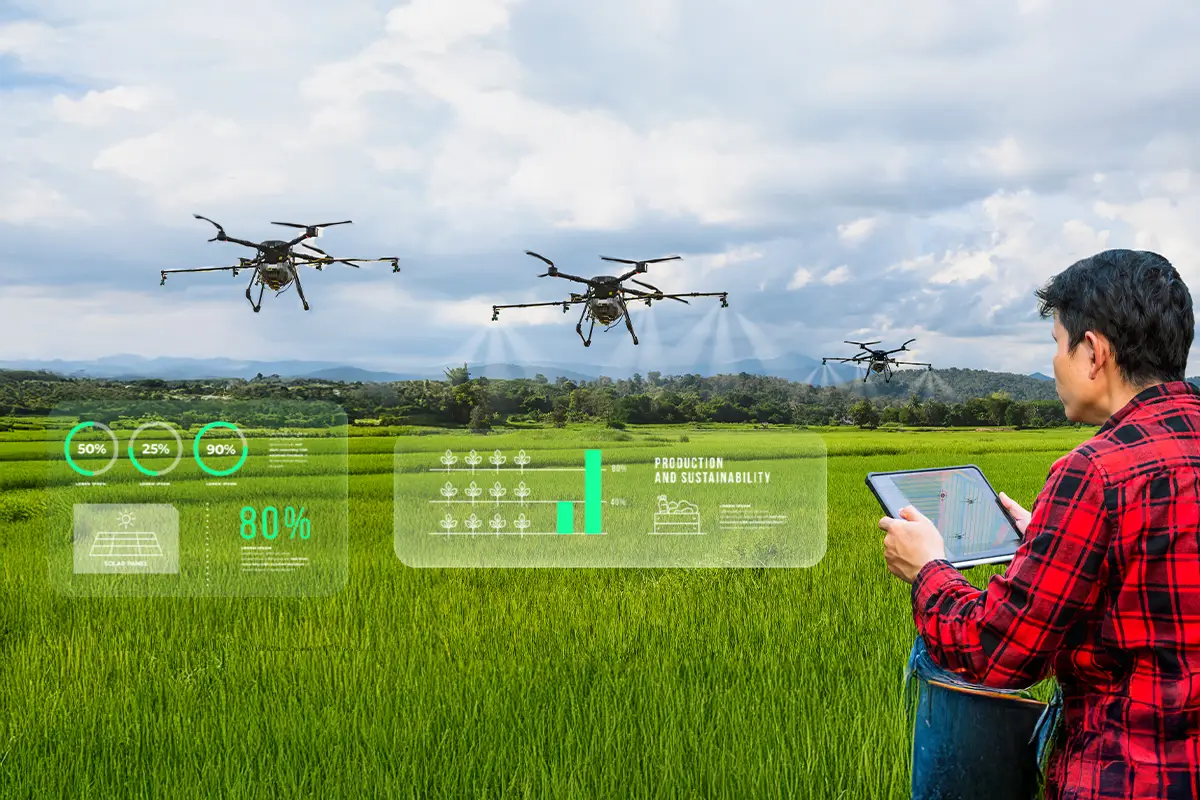
India’s agricultural universities are beginning to align more closely with the technologies shaping the future of farming. That shift took a concrete step forward with the inauguration of the first phase of an Agri Robotics Laboratory at Professor Jayashankar Telangana Agricultural University (PJTAU), formally launched by State Bank of India Chairman Challa Srinivasulu Shetty. The facility has been established with financial support from the SBI Foundation, positioning PJTAU at the forefront of unmanned and AI-driven agriculture research in the country.
University officials described the facility as the first advanced Agri Robotics Laboratory to be set up within an agricultural university in India, marking a significant institutional milestone as robotics, artificial intelligence, and automation move from pilot projects into mainstream agricultural education and research ecosystems.
Speaking at the inauguration, Shetty underscored the role of advanced technologies in reshaping both productivity and perception in agriculture. He noted that AI-based drones, robotics, and autonomous systems would be critical not only for improving farm efficiency but also for attracting younger generations to agriculture, a sector increasingly challenged by ageing farmer demographics and labour shortages.
The laboratory is expected to serve as a hub for research, training, and field-level innovation across robotics, unmanned aerial systems, sensors, and data-driven farm management tools. By embedding these capabilities within a public agricultural university, PJTAU aims to bridge the gap between academic research and real-world farm deployment.
PJTAU Vice-Chancellor Professor Aldas Janaiah highlighted that the trajectory of Indian agriculture is now inseparable from artificial intelligence and automation. He projected that between 2030 and 2035, technologies such as robots, drones, unmanned tractors, and sensor-based systems would see widespread adoption across the farm sector, fundamentally altering how crops are grown, monitored, and managed.
The launch of the Agri Robotics Laboratory reflects a broader recalibration underway in India’s agri-education and research institutions, as they respond to climate stress, labour constraints, and the need for precision-driven productivity gains. With backing from one of the country’s largest financial institutions, the initiative also signals growing alignment between agriculture, technology, and development finance.
As India looks to modernise its farm sector while sustaining livelihoods and food security, PJTAU’s move into unmanned farming technologies places it among a small but growing group of institutions preparing the next generation of agronomists, engineers, and entrepreneurs for a data- and automation-led agricultural future.