Monday, 6 July 2026

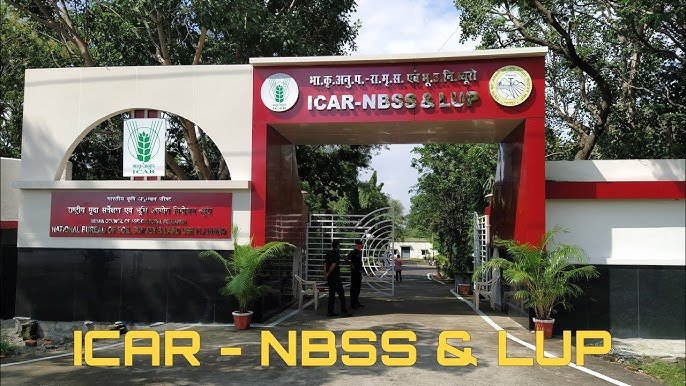
In a move that signals a shift from aspiration-led to evidence-led agricultural planning, the Tripura Agriculture Department on Wednesday signed a Memorandum of Understanding (MoU) with the Nagpur-based National Bureau of Soil Survey and Land Use Planning (NBSS&LUP), an ICAR institution, to undertake high-resolution land and soil mapping across the state.
The collaboration aims to build a scientific foundation for crop planning, productivity enhancement, and long-term foodgrain self-sufficiency—an area where Tripura has historically relied more on intent than data.
Speaking at a workshop on Land Resource Inventory of Tripura Using Geospatial Techniques at Pragya Bhawan, Agriculture and Farmers’ Welfare Minister Ratan Lal Nath underscored the centrality of land science in agricultural transformation. “We speak often of self-reliance in agriculture, but without scientific understanding of land, such goals remain rhetorical,” he said.
Nath pointed out that land quality remains the first determinant of agricultural outcomes, followed by seed quality, water availability and cultivation practices—yet systematic soil assessment was largely absent from earlier policy efforts.
The partnership builds on pilot surveys already completed in South Tripura and Gomati districts, where NBSS&LUP soil scientists conducted detailed assessments of soil layers and land capability. Following the submission of those findings, the scope of work has now been expanded to North Tripura, Dhalai and Unakoti districts. Surveys in West Tripura, Sepahijala and Khowai are expected to follow.
According to the Minister, the state government began laying the groundwork for this approach three years ago, preparing a roadmap to reposition Tripura’s agriculture around agro-ecological suitability rather than uniform crop promotion. “Earlier governments spoke of foodgrain self-sufficiency but lacked a concrete execution plan. Today, soil scientists can tell us precisely which crops—paddy, millets, rubber or oil palm—are best suited to which geographies,” Nath said.
He cited past missteps, including unsuccessful oil palm plantations at the Nagicherra Horticulture Research Centre, as examples of what happens when crop decisions are taken without rigorous land assessment.
Under the MoU, the Agriculture Department will now work closely with NBSS&LUP scientists to design district-wise and block-level crop strategies aligned to soil characteristics, with the aim of maximising yields while reducing farmer risk. “Our objective is not experimentation, but near-total success through informed planning,” Nath said.
The results are already visible, the Minister noted. Before 2018, only 22 blocks in Tripura were self-sufficient in foodgrain production. That number has since risen to 30, with five more blocks expected to achieve self-sufficiency in the current year. The state is also preparing to secure additional Geographical Indication (GI) tags for its agricultural products, strengthening market identity and farmer incomes.
Agriculture Department Secretary Apurba Roy, Director Fani Bhushan Jamatia, State Nodal Officer Uttam Saha and senior officials were present at the event.