Friday, 17 July 2026

Centre deepens multi-pronged approach to enhance productivity, reduce costs, promote diversification, and secure sustainable rural incomes
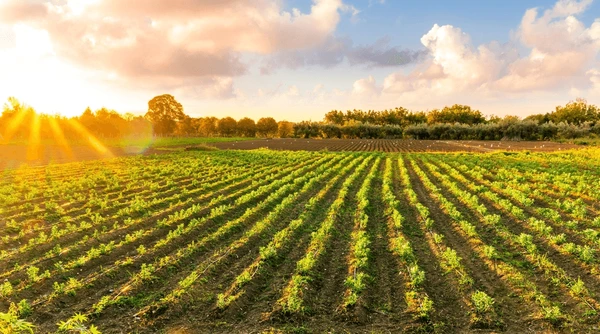
The Government of India has intensified its comprehensive strategy to expand alternative income opportunities for farmers, combining productivity enhancement, cost reduction, remunerative price assurance, agricultural diversification, post-harvest value addition, and climate-resilient practices into a unified national framework. Although agriculture is a State subject, the Centre continues to play a pivotal role through policy support and sharply expanded finances. The budget allocation for the Department of Agriculture & Farmers Welfare (DA&FW) has risen from Rs 21,933.50 crore in 2013-14 to Rs 1,27,290.16 crore in 2025-26—reflecting a sector-wide shift toward income security, resilience, and modernisation.
Flagship Schemes Drive Value Addition, Diversification, and Resilience
A wide array of central schemes now anchors India’s farmer-income architecture. PM-KISAN, PM-KMY, PMFBY/RWBCIS, the Modified Interest Subvention Scheme, and the Agriculture Infrastructure Fund are complemented by large-scale ecosystem enablers such as the 10,000 FPO formation programme, the National Beekeeping and Honey Mission, Namo Drone Didi, and the National Mission on Natural Farming. Missions on mechanisation, digital agriculture, agroforestry, oilseeds, oil palm, horticulture, and bamboo are widening the non-farm and para-farm income base, while Per Drop More Crop, Soil Health & Fertility, and Rainfed Area Development improve resource efficiency and long-term climate resilience.
MSP Policy Ensures Price Stability and Predictable Returns
To stabilise farm incomes, the government continues to notify Minimum Support Prices for 22 mandated agricultural crops and Fair & Remunerative Price for sugarcane, ensuring at least 50 per cent returns over all-India weighted average production cost. CACP recommendations account for demand-supply trends, global price movements, inter-crop parity, and resource efficiency.
MSPs have risen consistently: for KMS 2025-26, paddy (common) stands at Rs 2369 per quintal, jowar hybrid at Rs 3699, bajra at Rs 2775, ragi at Rs 4886, maize at Rs 2400, arhar at Rs 8000, moong at Rs 8768, and urad at Rs 7800. Cotton prices have increased to Rs 7710 (medium staple) and Rs 8110 (long staple), while oilseeds such as soybean (Rs 5328), sunflower (Rs 7721), and sesamum (Rs 9846) reflect strong government backing. Rabi MSPs for 2026-27 include Rs 2585 for wheat, Rs 2150 for barley, and Rs 6200 for rapeseed-mustard, signaling continued price reinforcement across seasons.
Rural Tourism Backed Through Parallel Infrastructure Initiatives
While DA&FW does not operate agri-tourism-specific schemes, rural tourism is being advanced through the Ministry of Tourism’s interventions under Swadesh Darshan 2.0, PRASHAD, and support to States and UTs for rural circuits, homestays, and destination development. These initiatives complement farm-level diversification efforts, opening new livelihood avenues for rural households.
A Shift Toward a Resilient, Diversified, Farmer-Centric Agricultural Model
Together, these measures underscore India’s long-term repositioning of its agricultural economy—toward a system that integrates technology, sustainability, market access, and income diversification. With rising MSPs, expanded mission-based schemes, and a strengthened rural ecosystem, the government aims to build an agriculture sector that secures farmer incomes while catalysing innovation and resilience across the value chain.