Saturday, 18 July 2026


ICARDA has been awarded the Almarai Prize for Creative Scientific Work in recognition of its flagship regional initiative, Enhancing Food Security in Arab Countries (EFSAC)—a 12-year, multi-country programme that has reshaped wheat-based food systems across the Middle East and North Africa.
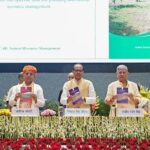
The honor was presented at a high-level ceremony in Riyadh attended by ministers, senior officials, and leading figures from the global scientific and development community. ICARDA’s Director General, Aly Abousabaa, and Principal Scientist Dr. Seid-Ahmed Kemal, who led the project, received the accolade alongside representatives from King Abdulaziz City for Science and Technology (KACST) and the Almarai Board of Directors.
Launched in 2010, EFSAC emerged in response to severe global food price shocks that underscored the region’s dependence on cereal imports. Over three phases and across ten Arab countries, the initiative systematically strengthened wheat and barley productivity, accelerated the release of climate-resilient varieties, modernised seed systems, and expanded national scientific capacity. Backed by major development partners including AFESD, OFID, KFAED, the Islamic Development Bank, and the Gates Foundation, the project delivered one of the region’s most significant agri-food transformations.
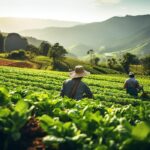
The programme recorded substantial impact across participating countries, achieving wheat productivity increases of up to 66 per cent, with regional averages rising 29 per cent, and delivering a 17.8 per cent boost in total wheat production—equivalent to $450 million in additional farmer income. Water productivity rose by 63–200 per cent in several countries, supported by improved agronomic practices and water-saving technologies.
More than 12 heat- and drought-tolerant wheat varieties were released, while training programs reached 128,000 farmers, extension agents, and young scientists, enabling over 2 million people to directly benefit from improved technologies. Research under EFSAC also provided a strong evidence base on how food loss and waste can be significantly reduced through targeted policy, institutional, and technological interventions.
EFSAC’s integrated model—combining climate-smart varieties, precision agronomy, water-efficient technologies, and strengthened research–extension linkages—has since become a reference point for food security strategies in dryland environments worldwide.
With three phases completed, ICARDA is now advancing Phase IV of EFSAC, which will scale proven innovations, strengthen seed systems, deepen research on food loss and waste, and expand support to smallholder farmers across a wider geography. The new phase aims to reinforce resilience in the face of escalating climate pressures and evolving food security challenges.
The Almarai Prize marks a milestone for ICARDA, underscoring the scientific leadership, regional collaboration and long-term impact that the organisation has built through more than a decade of partnership-driven research and innovation.