Friday, 5 June 2026

As biodiversity risks rise across Asia’s agricultural heartlands, pollinator health is emerging as a critical metric for food security, climate resilience, supply-chain stability and ESG performance
On a spring morning in Vietnam’s Central Highlands, a coffee farmer walks through rows of flowering coffee trees. The blossoms are brief, delicate and fleeting. For a few precious days, millions of tiny white flowers carpet the landscape, carrying within them the promise of next season’s harvest.
The farmer knows the rains matter.
He knows temperatures matter.
He knows fertilizer prices matter.
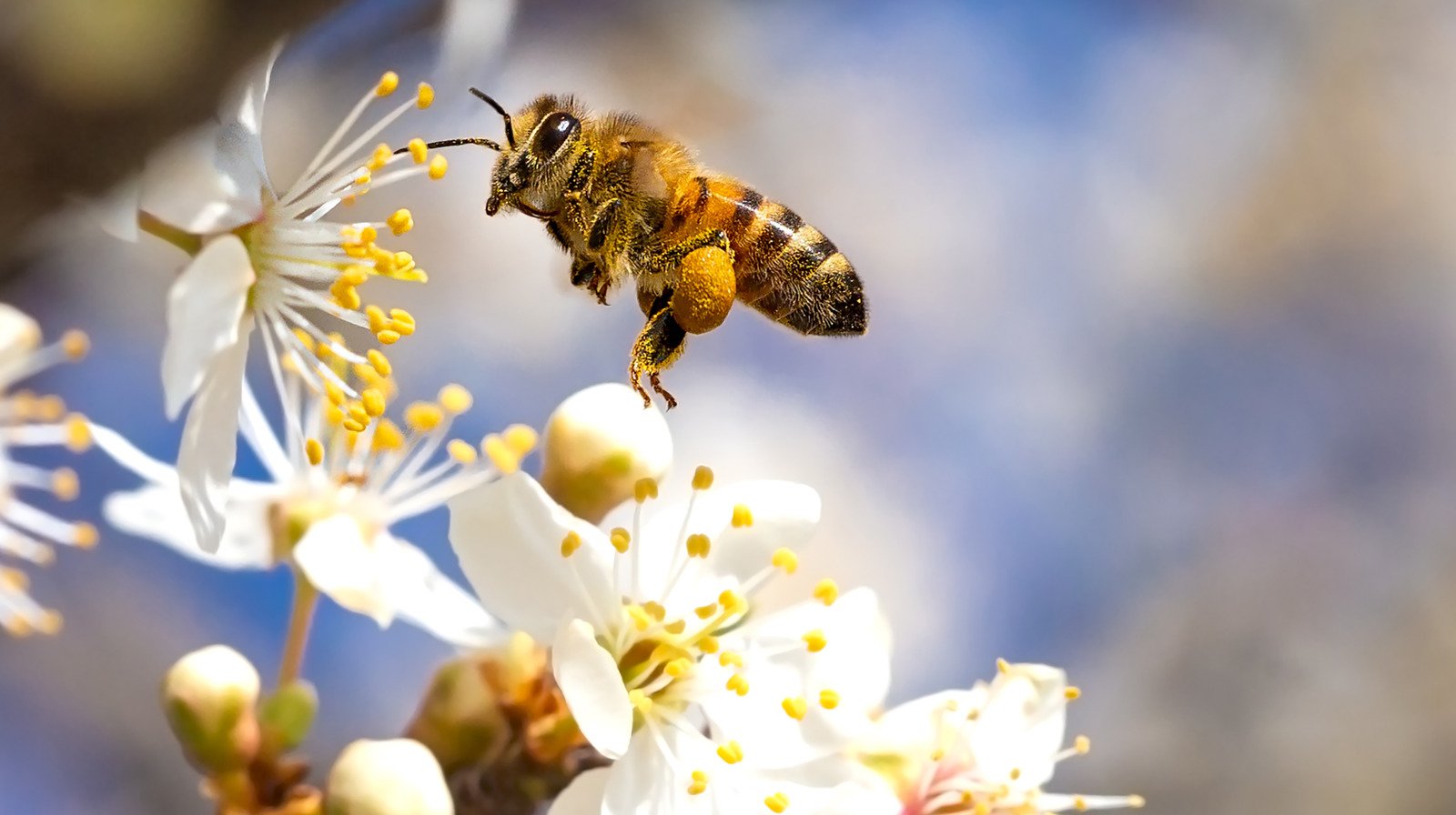
What he may not fully realise is that the future of his crop also depends on a workforce that arrives silently each morning and leaves without sending an invoice.
The bees.
Thousands of kilometres away, the same quiet drama unfolds across Asia. In China’s apple orchards, India’s mustard fields, Thailand’s tropical fruit plantations, Indonesia’s cocoa farms and the oilseed-growing regions of Central Asia, billions of pollinators move from flower to flower, performing one of the most valuable yet least visible economic functions in modern agriculture.
They are neither listed on company balance sheets nor tracked in commodity markets. Yet their daily labour supports food systems worth hundreds of billions of dollars, sustains rural livelihoods, underpins agricultural exports and helps maintain the biodiversity upon which entire ecosystems depend.
For decades, pollinators occupied the margins of policy discussions. Climate change dominated environmental debates. Carbon emissions became the defining sustainability metric. Biodiversity, though acknowledged, was often treated as a secondary concern.
That era is rapidly coming to an end.
As climate shocks intensify, supply chains become more fragile and investors increasingly scrutinise nature-related risks, bees are emerging as a powerful symbol of a broader transformation taking place across global agriculture. The conversation is no longer simply about reducing emissions or improving productivity. It is about protecting the ecological infrastructure that makes food production possible in the first place.
Nowhere is this more relevant than in Asia.
Home to nearly 60 per cent of the world’s population and the largest agricultural economy on the planet, Asia sits at the centre of a growing paradox. The region must simultaneously produce more food, strengthen climate resilience and preserve biodiversity. At the heart of that challenge lies an often-overlooked reality: without healthy pollinator populations, the future of agriculture itself becomes increasingly uncertain.
That is why bees are no longer just an environmental story. They are rapidly becoming an economic story, a food security story and, increasingly, one of the most important ESG stories of the decade.
Asia’s Pollinator Powerhouse
The scale of Asia’s relationship with pollinators becomes apparent when viewed through the lens of global apiculture. According to estimates from the United Nations Food and Agriculture Organization (FAO), the global honey bee population reached approximately 101.7 million colonies in 2024, representing a 46.6 per cent increase from 69.4 million colonies in 1990.
At the heart of this expansion lies Asia.
The continent today hosts approximately 45.2 million honey bee colonies, accounting for nearly 45 per cent of the global total and making it by far the world’s largest reservoir of managed pollinators. Europe, by comparison, houses 25.4 million colonies, while Africa accounts for 18.5 million and the Americas 11.6 million.
Even more remarkable is the pace of growth. Asia’s managed bee population has nearly doubled over the past three decades, rising from 23.1 million colonies in 1990 to 45.2 million in 2024. Western Asia recorded a staggering 207.4 per cent increase in bee colonies during this period, while Southeast Asia expanded by 203.9 per cent. Central Asia grew by 148.1 per cent, Southern Asia by 84.1 per cent and Eastern Asia by 43.8 per cent.
These figures tell a larger story about the evolution of Asian agriculture. As farming systems have diversified beyond staple grains into horticulture, fruits, vegetables, nuts, spices and plantation crops, the economic value of pollination services has increased dramatically. Every additional bee colony represents not only honey production but also enhanced crop productivity, improved quality and stronger farm incomes.
The honey economy itself reflects Asia’s dominance. Global honey production reached approximately 2 million tonnes in 2024. China remained the world’s largest producer with 456,000 tonnes, while India ranked second with 146,000 tonnes. Together, the two countries accounted for more than 30 per cent of global honey production, reinforcing Asia’s position as the centre of the world’s apiculture economy.
The Pollination Economy Few Balance Sheets Capture
Pollination is among the most valuable ecosystem services on the planet, yet it remains largely invisible in traditional economic accounting.
The Food and Agriculture Organization estimates that approximately 75 per cent of global food crops depend, at least partially, on pollination. In Asia, that dependence is particularly pronounced because much of the continent’s agricultural value comes from pollinator-dependent crops rather than cereals alone. China’s apple orchards, Vietnam’s coffee plantations, Thailand’s fruit exports, Indonesia’s cocoa farms, India’s mustard fields and Malaysia’s tropical fruit industry all rely heavily on healthy pollinator populations.
According to the Intergovernmental Science-Policy Platform on Biodiversity and Ecosystem Services (IPBES), pollinator-dependent crops contribute between $235 billion and $577 billion annually to global agricultural production. A substantial share of this value originates in Asia.
Yet pollination remains one of the world’s largest unpaid economic services. It does not appear on company balance sheets. It is rarely incorporated into commodity pricing models. It remains largely absent from agricultural policy discussions. The result is a striking paradox: some of the world’s most valuable economic assets continue to operate without formal recognition.
The Great Biodiversity Contradiction
Despite record numbers of managed honey bee colonies, pollinator ecosystems are facing unprecedented pressure.
The rise in managed bee populations can create a misleading impression that pollinator health is improving. Scientists increasingly caution that honey bees represent only one component of a much broader pollinator network that includes wild bees, butterflies, moths, hoverflies, beetles, birds and bats.
Many of these species are declining.
Across Asia, rapid urbanisation, agricultural intensification, habitat fragmentation and pesticide exposure are reshaping landscapes at extraordinary speed. The region’s agricultural success has undoubtedly improved food availability and rural incomes, but it has often come at the expense of ecological diversity. Monoculture farming systems have expanded, natural habitats have contracted and pollinator-friendly landscapes have steadily disappeared.
Climate change is intensifying these pressures. Rising temperatures, erratic rainfall, prolonged droughts and shifting flowering seasons are disrupting the delicate synchronisation between plants and pollinators that underpins agricultural productivity. Scientists warn that these disruptions could reduce both pollinator abundance and pollination efficiency across some of Asia’s most important food-producing regions.
The paradox is striking. The world has never managed more honey bee colonies, yet the biodiversity systems that sustain pollination are becoming increasingly fragile.
Why Investors Are Finally Paying Attention
For much of the past decade, ESG conversations focused overwhelmingly on carbon emissions.
Carbon could be measured. Energy use could be quantified. Climate targets could be benchmarked. Biodiversity, by contrast, often appeared too complex and difficult to translate into financial metrics.
That perception is changing rapidly.
The emergence of the Taskforce on Nature-related Financial Disclosures (TNFD) signals a broader shift in how investors view environmental risk. Nature loss is increasingly recognised as a material financial issue capable of disrupting supply chains, reducing productivity and undermining long-term asset values.
For businesses operating across Asia’s agricultural economy, pollinator decline is becoming a direct commercial concern. A coffee company sourcing from Vietnam, a cocoa processor operating in Indonesia, a fruit exporter in Thailand or a supermarket chain dependent on fresh produce all rely on healthy pollinator ecosystems.
When pollinators decline, production becomes less predictable. Yields fluctuate. Input costs rise. Supply chains become more vulnerable. What was once considered an environmental concern increasingly resembles a business continuity risk. In this context, bees have become more than ecological indicators. They are emerging as barometers of agricultural resilience and ESG performance.
The Business of Bees Is Growing
The commercial importance of pollination is also reflected in the growth of the global apiculture sector itself.
The global apiculture market is estimated to reach $13.32 billion in 2025 and is projected to grow to $17.15 billion by 2030, expanding at a compound annual growth rate of 5.1 per cent. Rising honey consumption, growing demand for bee-derived products and increasing recognition of pollination’s economic value are driving investment across the sector. Notably, Asia-Pacific remains the world’s largest apiculture market, while North America is emerging as the fastest-growing region.
Yet honey sales tell only part of the story. The true economic value of bees lies not in the products they generate but in the agricultural productivity they enable. Pollination remains the invisible infrastructure underpinning food systems across the continent.
From Biodiversity to Business Strategy
Asia’s challenge is no longer simply about protecting bees. It is about protecting the ecosystems that make pollination possible.
As the region grapples with climate change, population growth, resource scarcity and rising food demand, biodiversity can no longer remain a peripheral sustainability issue. It must become a core component of agricultural strategy, corporate governance and investment decision-making.
Protecting pollinators requires preserving habitats, encouraging regenerative farming, reducing landscape fragmentation and integrating nature-positive practices into agricultural value chains. It also requires expanding ESG frameworks beyond carbon to recognise biodiversity as a critical form of natural capital. The future of Asian agriculture will not be determined solely by how much food can be produced. It will increasingly depend on how effectively natural systems can be protected while production continues to grow.
Infact few natural systems matter more than pollination. For decades, bees have quietly sustained Asia’s agricultural rise. Today, they are sending a message that investors, policymakers and agribusiness leaders can no longer afford to ignore: the future of food security, climate resilience and sustainable growth may depend as much on biodiversity as it does on technology, capital or productivity.
In the emerging ESG era, protecting bees is no longer just an environmental responsibility. It is becoming an economic necessity.
— Suchetana Choudhury (suchetana.choudhuri@agrospectrumindia.com)