Friday, 5 June 2026

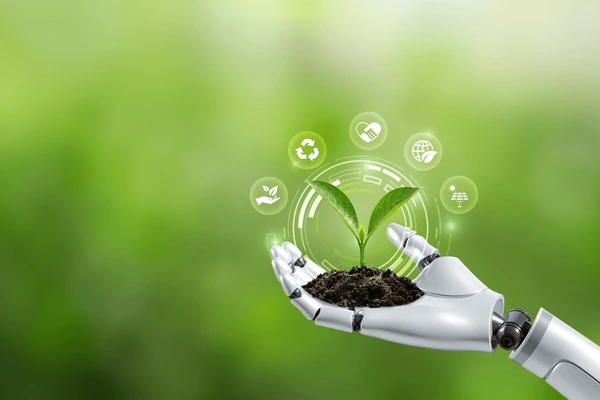
As climate change intensifies pressure on global food systems, artificial intelligence is emerging as a powerful tool to help agriculture balance productivity, resource efficiency, and environmental sustainability.

The urgency for sustainable agriculture has intensified over the past decade. Farmers today face a level of uncertainty that previous generations rarely experienced. The increasing frequency of droughts, heatwaves, floods, and unseasonal rainfall is disrupting traditional farming cycles. Climate phenomena such as El Niño have further amplified these challenges, often resulting in delayed monsoons, reduced rainfall, and moisture stress in key agricultural regions. For a country like India, where millions of farmers continue to depend on rainfall for cultivation, such disruptions directly impact crop productivity, farm incomes, and food security.
Scientific studies suggest that even a 1°C rise in global temperatures can significantly affect yields of major crops such as wheat, rice, and maize. Warmer temperatures also increase water demand, accelerate soil moisture loss, and create favourable conditions for pests and diseases. These realities make it clear that conventional approaches alone may no longer be sufficient to address the challenges of modern agriculture.
Building climate resilience through intelligent decision-making
One of the most promising contributions of AI lies in its ability to help farmers anticipate and adapt to climatic uncertainties. Agriculture has traditionally relied on historical weather patterns and farmer experience. However, in an era of unpredictable climate behaviour, real-time insights have become essential.
AI-powered weather forecasting systems can analyse vast amounts of meteorological data, satellite imagery, and historical climate records to generate highly localized forecasts. These insights enable farmers to make informed decisions regarding sowing, irrigation, nutrient application, and harvesting. More importantly, AI-driven early warning systems can alert farmers to potential threats such as droughts, floods, pest outbreaks, or extreme temperature events before they cause significant damage.
Such predictive capabilities are becoming increasingly valuable as climate variability intensifies. Instead of reacting to adverse events after they occur, farmers can proactively implement mitigation measures that protect both productivity and resources. This shift from reactive to preventive agriculture is critical for strengthening climate resilience and ensuring long-term sustainability.
AI is also transforming pest and disease management. Climate change is altering the behaviour and geographical distribution of several insect pests and pathogens. Warmer temperatures and changing humidity levels are enabling pests to survive longer and spread into previously unaffected regions. Using image recognition technologies and machine learning algorithms, AI can identify early signs of crop stress, disease symptoms, or pest infestations. Timely intervention allows farmers to adopt targeted management strategies, reducing crop losses while minimizing unnecessary chemical applications.
Optimising resources for sustainable growth
The future of agriculture will depend not only on producing more food but on producing it more efficiently. Resource optimization is therefore becoming a central pillar of sustainable farming, and AI is playing a pivotal role in enabling this transition.
Precision agriculture technologies powered by AI are helping farmers monitor field conditions with unprecedented accuracy. Sensors, drones, satellite imagery, and connected devices continuously collect information on soil health, moisture levels, crop growth, and nutrient requirements. AI systems process this data to generate actionable recommendations tailored to specific field conditions.
One of the most significant environmental benefits of this approach is the reduction of input overuse. Fertilizers, while essential for crop productivity, can become a major source of greenhouse gas emissions when applied excessively. Nitrogen fertilizers, in particular, contribute to the release of nitrous oxide, a greenhouse gas significantly more potent than carbon dioxide. By identifying the exact nutrient requirements of crops, AI enables farmers to apply fertilizers more precisely, reducing wastage and lowering agriculture’s environmental footprint.
Water conservation is another area where AI is delivering meaningful impact. Agriculture accounts for the majority of global freshwater consumption, making efficient water management essential for environmental sustainability. AI-enabled irrigation systems use real-time soil moisture data, crop requirements, and weather forecasts to determine the optimal timing and quantity of irrigation. Such precision not only conserves water but also improves crop health and reduces operational costs.
These efficiencies collectively contribute to a more sustainable agricultural ecosystem one that balances productivity with responsible resource management.
Advancing carbon-smart and regenerative agriculture
As discussions around climate action gain momentum, agriculture is increasingly being recognized not only as a contributor to greenhouse gas emissions but also as a potential solution. Carbon-smart agriculture and regenerative farming practices are emerging as powerful approaches to restore ecosystems while maintaining productivity, and AI is helping accelerate their adoption.
Regenerative agriculture focuses on improving soil health, increasing biodiversity, reducing soil disturbance, and enhancing the natural ability of ecosystems to sequester carbon. Healthy soils act as important carbon sinks, absorbing and storing atmospheric carbon dioxide while improving water retention and nutrient availability.
AI-powered soil analysis tools are enabling farmers to better understand soil composition, organic matter levels, and nutrient dynamics. Based on this information, farmers can adopt practices such as cover cropping, crop rotation, reduced tillage, and precision nutrient management. These practices not only improve farm productivity but also contribute to long-term environmental restoration.
Furthermore, AI-driven monitoring systems can measure the effectiveness of sustainability initiatives, helping farmers track improvements in soil health, water efficiency, and carbon sequestration. Such data-driven insights are becoming increasingly important as governments, industries, and global markets place greater emphasis on sustainable agricultural practices.
The integration of AI with regenerative agriculture creates a powerful synergy. While regenerative practices restore ecological balance, AI provides the intelligence needed to implement them more effectively and at scale.
A smarter path towards environmental stewardship
Technology alone cannot solve every challenge facing agriculture. Sustainable progress requires collaboration among farmers, policymakers, researchers, industry stakeholders, and technology providers. Investments in digital infrastructure, rural connectivity, farmer training, and innovation ecosystems will be essential to ensure that the benefits of AI reach farms of all sizes.
Yet the potential is undeniable. In a world facing mounting climate pressures, AI offers agriculture the ability to become more resilient, efficient, and environmentally responsible. It empowers farmers to make better decisions, optimize scarce resources, reduce emissions, and adapt to rapidly changing conditions.
As we observe World Environment Day, the message is clear: protecting the environment and ensuring food security are no longer separate objectives. They are interconnected goals that must advance together. AI-driven sustainable agriculture represents an important step in that direction, helping build a future where productivity, profitability, and environmental stewardship go hand in hand. By embracing innovation today, we can cultivate a greener, more resilient tomorrow for generations to come.