Monday, 25 May 2026

Joint studies by University of Leeds, IIT Kharagpur and global research partners warn of escalating urban waste and agricultural pollution challenges as India pushes toward its 2070 decarbonisation target
Researchers from the University of Leeds, IIT Kharagpur and several leading institutions across India, Hong Kong and the United Kingdom have unveiled two major studies highlighting the urgent need for systemic reforms in municipal and agricultural waste management to support India’s long-term climate and sustainability goals.
The studies examine the growing environmental and public health risks associated with urban household waste and agricultural residue burning, while outlining pathways for India to accelerate its transition toward a circular and low-carbon economy.
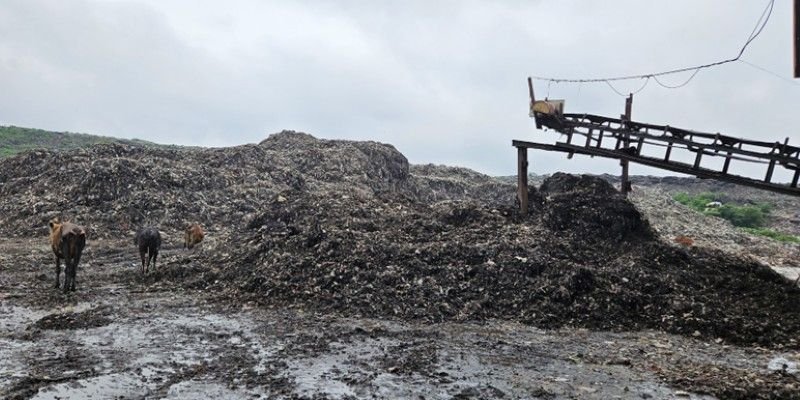
One of the studies, published in the Journal of Industrial Ecology, warns that municipal solid waste (MSW) generated in India’s urban areas could increase twelve-fold by 2050 if current consumption patterns continue unchecked. Researchers caution that the continued dumping, burning and poor segregation of household waste could intensify air pollution, contaminate water systems and increase the spread of infectious diseases across India’s rapidly expanding cities.
The study argues that India requires substantial investment in modern waste-management infrastructure capable of reducing harmful emissions and limiting human exposure to toxic substances. Recommendations include improved segregation at source, expansion of recycling and waste-processing facilities and a significant reduction in landfill dependency.
The researchers noted that these measures will be critical for India to achieve its net-zero target by 2070 and comply with the newly adopted Solid Waste Management Rules (2026), which focus on landfill reduction and improved source segregation practices.
The collaborative research effort brings together experts from the University of Leeds, King’s College London and the London School of Hygiene & Tropical Medicine, alongside Indian institutions including IIT Kharagpur and the CSIR-National Environmental Engineering Research Institute. Additional contributions came from Manipal Institute of Technology, Albokoes EnviroSustain Pvt Ltd and Hong Kong Baptist University.
Dr Daya Pandey, Assistant Professor in Energy Systems at the University of Leeds, said the nature of urban waste in India is rapidly changing alongside rising incomes and evolving consumption patterns.
“In the past, municipal solid waste in India was largely food waste. Today, due to rising household incomes and changing consumption habits, it now contains a higher proportion of dry solid waste such as packaging material,” said Dr Pandey.
He added that rapidly developing economies like India require waste-management systems that are locally adapted and policy-driven rather than relying on universal solutions.
“There is no silver bullet for tackling this ever-growing problem sustainably. Fast-developing countries like India therefore need waste-management systems that are locally adapted and shaped by policy,” he said.
A second study, published in the journal Biomass and Bioenergy, focuses on India’s agricultural sector, currently the country’s second-largest contributor to greenhouse gas emissions due largely to the widespread practice of in-situ crop residue burning.
The research demonstrates how agricultural waste can be transformed into renewable energy and high-value products through targeted policy reforms, technological innovation and circular bioeconomy approaches.
According to the study, sustainable crop-residue management could simultaneously reduce emissions, strengthen rural livelihoods and support India’s transition toward a greener and more resource-efficient economy.
Dr Vinay Yadav, Assistant Professor at IIT Kharagpur, warned that India’s urban waste crisis is rapidly becoming a multidimensional challenge extending beyond waste disposal itself.
“India’s cities are heading toward a severe waste crisis. This is not just about waste generation and its management, but also about public health, climate impact and the livability of our cities,” he said.
He added that stronger infrastructure, smarter policies and circular-economy practices could help India convert the crisis into a long-term sustainability opportunity.
The studies also highlight the growing importance of international academic collaboration in addressing climate and sustainability challenges. Researchers noted that UK institutions contributed expertise in public health, climate policy and net-zero modelling, while Indian partners brought critical insights into governance systems, financing structures and behavioural dimensions of waste management.
The collaboration builds upon the expanding academic partnership between the University of Leeds and IIT Kharagpur. A Memorandum of Understanding signed in 2024 established joint PhD supervision programmes across engineering, transport studies and biological sciences. The partnership was further strengthened during a June 2025 visit to New Delhi by a University of Leeds delegation led by Vice-Chancellor and President Professor Shearer West to advance research and education alliances spanning medicine, biotechnology, engineering and social sciences.