Monday, 22 June 2026

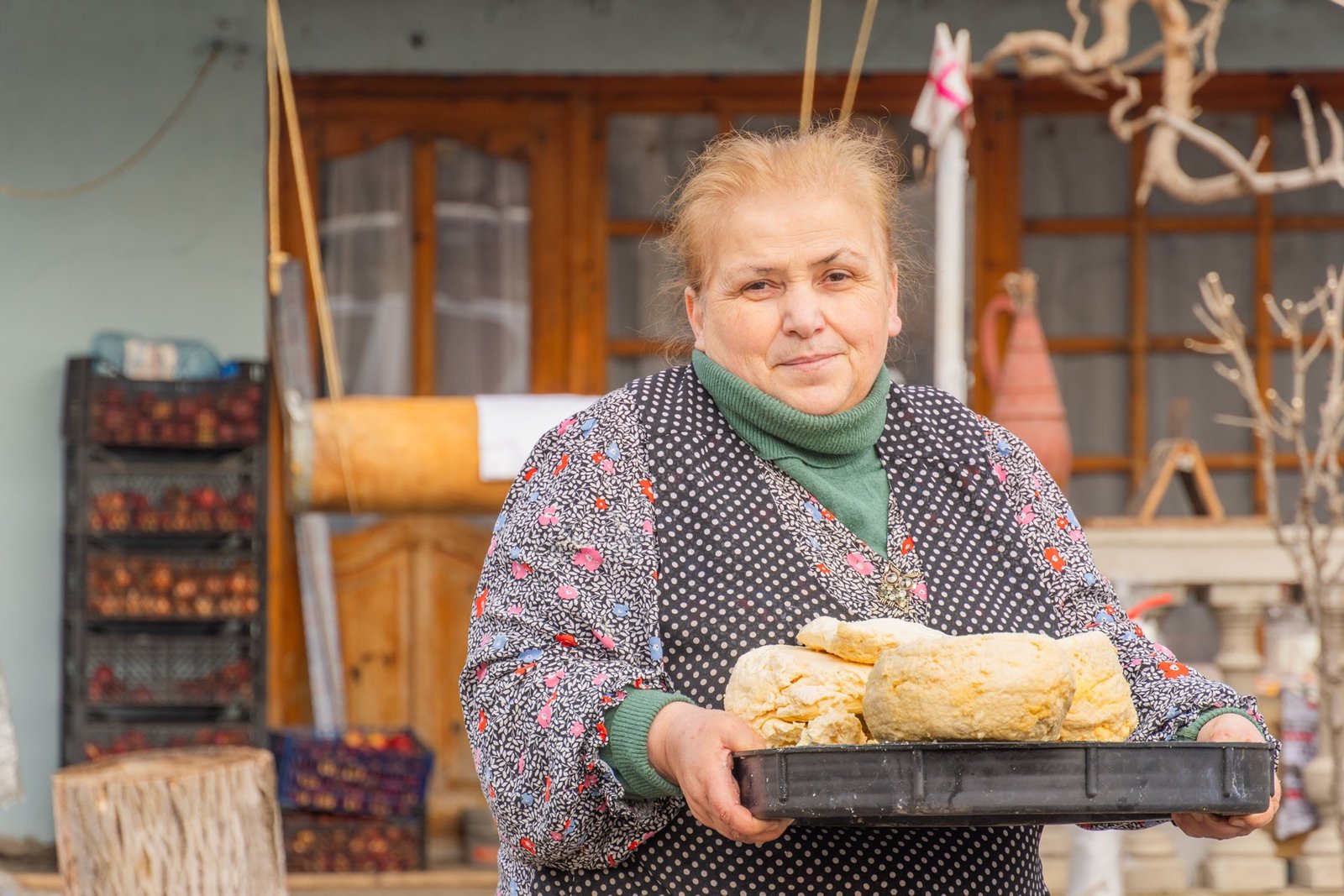
Photo source: FAO/Guram Saqvarelidze
Healthy rangelands and the tenacity of one woman farmer help revive a once-forgotten Georgian dairy product
From spring through autumn, while Nino Nugzarashvili’s husband guides their cattle across Kaspi’s communal rangelands in Georgia, she transforms the milk from her cattle and local sources into safe, high-quality dairy products. Though she herself rarely herds, it is access to these grazing lands that sustains their farm.
“Natural grazing is everything for us,” Nino says. “It keeps production affordable and gives milk a completely different quality. No stall-feeding system can match the flavour and quality of milk from open rangelands.”
“It was once believed that a woman could not go to pastures or manage livestock, but today women do all of that,” she adds, as she prepares milk from her cattle.
Nino once left her village years ago and learned the art of cheese-making from the locals in the mountainous Tsalka Municipality of Georgia. From them, she learned the secrets of making Georgian Sulguni, Imeruli and other more common cheeses.
When she returned six years ago, she started with two cows and immediately began producing cheese, butter, and Do—a rare, fermented milk product almost lost in Georgia. “Do has a tangy taste and a rich history,” she explains. “It was disappearing from our markets, and I wanted to bring it back, one scoop at a time.” Making Do is labour-intensive and demands significant effort from farmers, making it hard to sustain economically without the right equipment.
As word spread about her efforts to revive Do, the market responded and this nearly forgotten product quickly came into high demand. However, Nino still lacked the equipment needed to produce and process milk into Do.
With support from the Food and Agriculture Organization of the United Nations (FAO), through the European Union- and Sweden-funded ENPARD IV programme, Nino was able to access the production and food safety equipment she needed and get training to strengthen her knowledge on these tools and apply what she learned.
Access to rangelands
In Nino’s community, communal grazing lands are essential for rural survival. However, there is a growing concern about land availability. Families with just two or three cows rely almost entirely on open pastures. In some regions, many villages face increasing pressure from land sales, land degradation and limited access. Rangelands have already disappeared completely in some areas and some farmers have been forced to sell their cattle.
Rangelands also preserve far more than production systems. They sustain biodiversity, cultural traditions and food heritage. “Milk from natural grazing carries the flavour of the land. It connects us to our environment and our history,” she adds.
Soon after joining the training sessions, Nino also obtained a matching grant through FAO’s co-financing scheme, which enabled her to invest in modern equipment such as a pasteuriser, a milk cooler and milk analyser.
By combining traditional pasture-based farming with rigorous quality standards, she ensures that natural production remains both safe and sustainable. Her investment in better equipment not only improved food safety but also the quality and income potential of the products she makes.
“FAO’s help made it possible to combine old and new methods. I especially love the pasteuriser—it ensures children can safely enjoy my Do and cheeses,” Nino explains.
Now that Nino has slowly reintroduced the delicacy of Do to local markets, she plans to expand her production space and experiment with dairy and Do-based products. 1 100 other dairy women farmers have been supported by FAO through the matching grant programme in Georgia, enabling them to become business owners.
Women supporting each other
Beyond her own household, she actively supports other rural women by purchasing their milk and encouraging them to build independent incomes. Although challenges around recognition and access to information persist for women in agriculture, she sees steady progress. Nino believes when women gain economic independence, families and communities become resilient.
“Empowering women in agriculture strengthens families and communities,” Nino said. “When women succeed, everyone benefits.”
Looking ahead, Nino hopes that Georgia’s rangelands will be better protected and valued. “We must safeguard grazing lands today; the future of Georgia’s dairy families depends on these rangelands,” she emphasises. For Nino, protecting natural grazing means the survival of Georgia’s dairy traditions and pastoral communities.
To read the full story : https://www.fao.org/newsroom/story/where-cattle-graze-and-milk-becomes-tradition/en