Wednesday, 24 June 2026

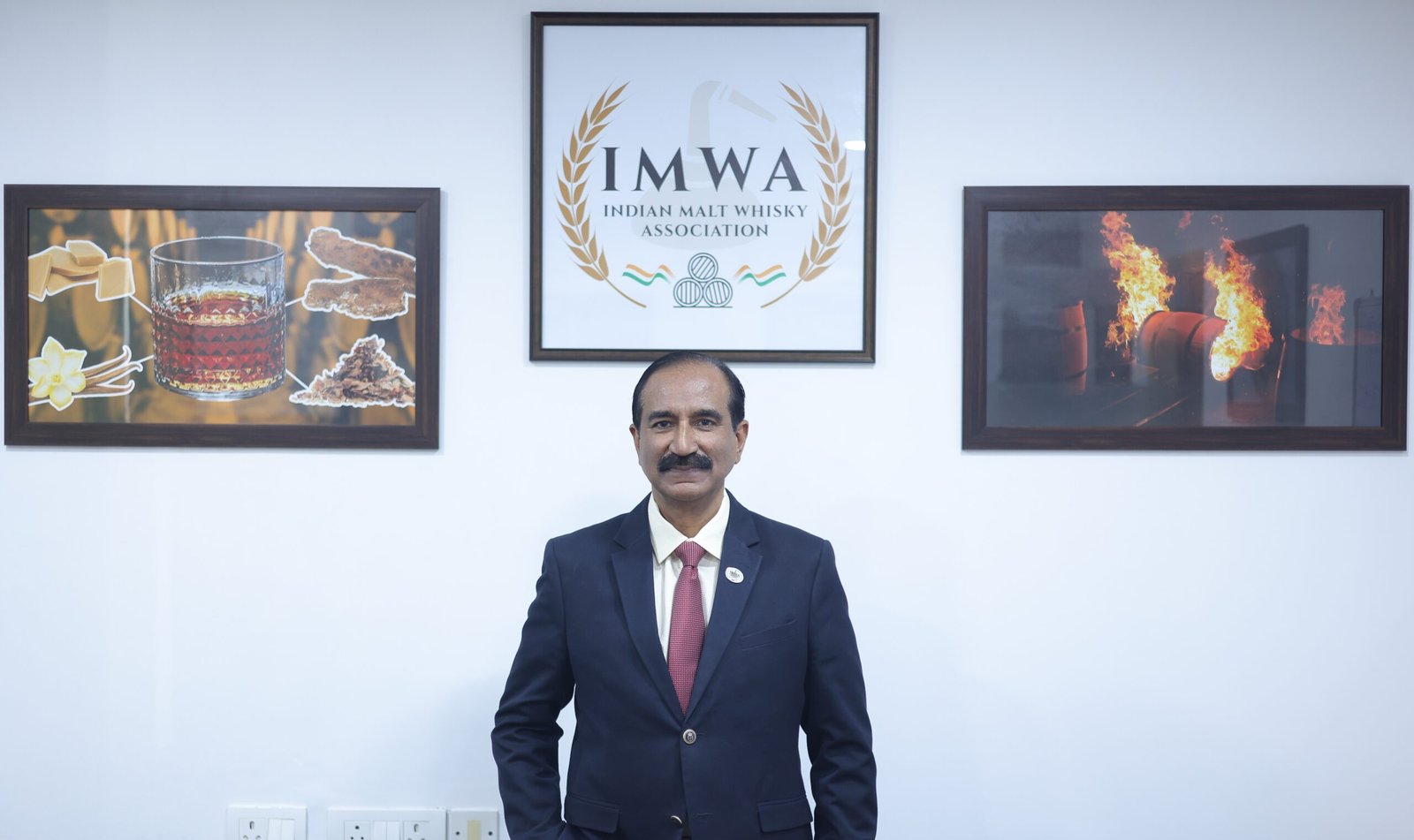
Authored by Maj Gen Dr Rajesh Chopra AVSM (Retd) Director General, Indian Malt Whisky Association (IMWA)
India’s single malt whisky boom is often framed through the lens of global awards, premiumisation, and export ambition. But the real story is unfolding far from tasting rooms and distillery tours. It begins in the fields, where barley, long treated as a modest winter crop, is being quietly repositioned as the foundation of a high-value, globally competitive industry.
At the heart of this shift is the Indian Malt Whisky Association, an industry body that is doing more than promoting Indian single malts. It is defining them. By codifying standards, 100% malted barley, single distillery production, and traditional distillation methods, the association is establishing a framework of authenticity that aligns India with global benchmarks while preserving its distinct identity. That move, seemingly technical, is having ripple effects across agriculture, supply chains, and rural economics.
From Commodity Crop to Premium Input
For decades, barley in India has been a low-margin, largely commoditised crop grown across states like Rajasthan, Haryana, and Uttar Pradesh. It was valued for volume, not precision. Single malt whisky is changing that equation. Unlike grain used for feed or mass-market alcohol, whisky-grade barley demands strict biochemical consistency, controlled protein levels, high starch content, and uniform grain size. These parameters are not negotiable because they directly influence malting efficiency, sugar extraction, and ultimately, the flavour of the spirit.
This has triggered a structural shift in how barley is grown and traded. Distilleries are increasingly moving towards contract farming and direct procurement models, working closely with farmers to ensure quality and traceability. What was once an anonymous commodity is becoming an identity-linked input, where the origin of the grain can shape the narrative of the final product. For farmers, this translates into a different economic equation—premium pricing tied to quality, more predictable demand, and long-term relationships that reduce exposure to volatile open markets.
To read more, click: https://online.anyflip.com/unmb/pewj/mobile/index.html