Friday, 10 July 2026

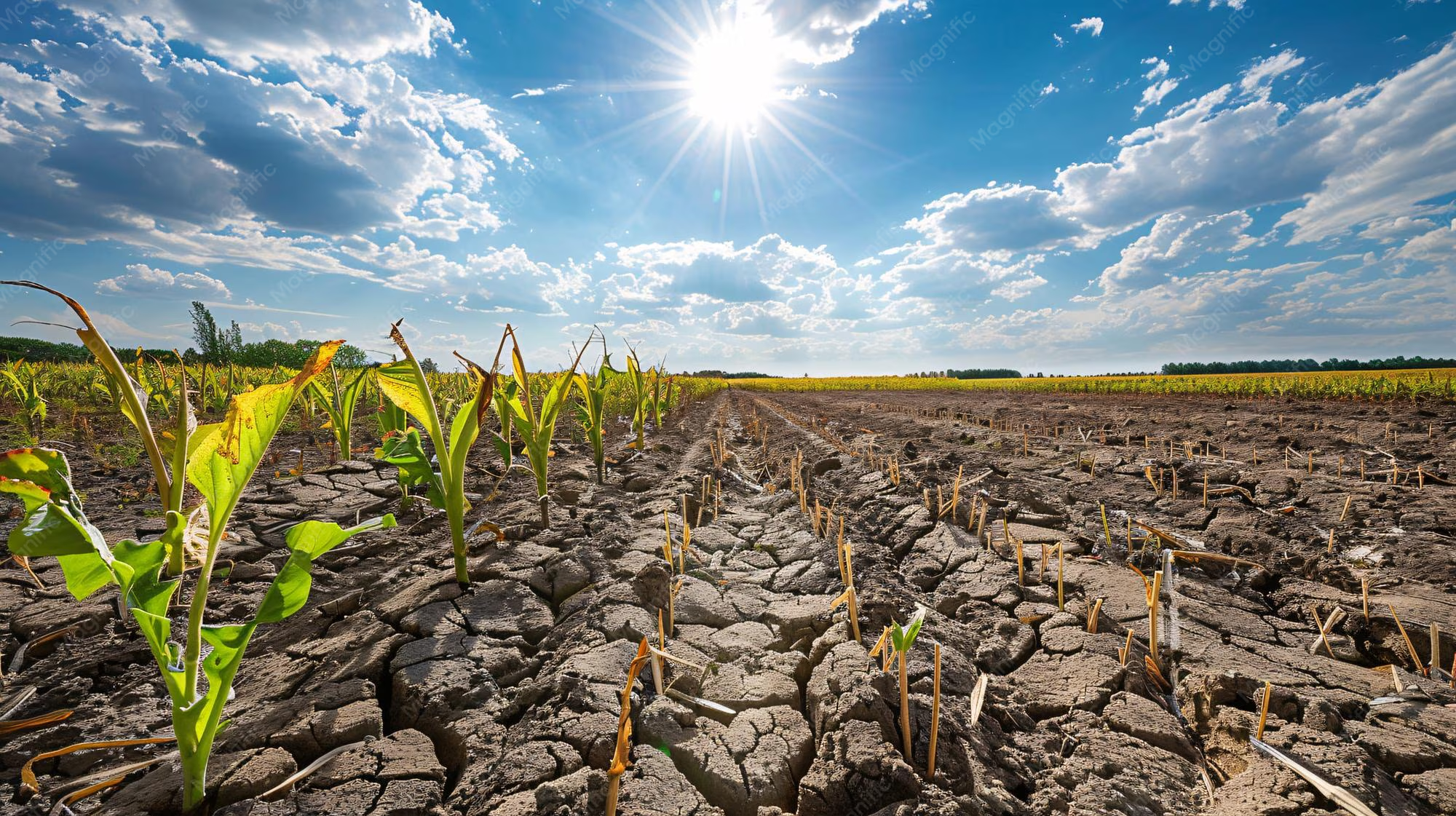
Above-normal rainfall may support kharif preparations, but rising heatwave risks and evolving El Niño conditions could intensify pressure on crops, irrigation demand, and farm resilience across key agricultural regions
India’s agricultural sector may enter the crucial pre-kharif transition period with improved rainfall prospects but growing concerns over heat stress, according to the latest monthly climate outlook released by the India Meteorological Department (IMD).
The forecast for May 2026 points to above-normal rainfall across much of the country, potentially supporting soil moisture recovery and early kharif preparations. However, the outlook simultaneously warns of elevated heatwave risks across several agriculturally significant regions, highlighting the increasingly complex climate conditions confronting Indian farming.
The IMD stated that rainfall during May 2026 is “most likely to be above normal,” exceeding 110 per cent of the Long Period Average (LPA), with broad regions expected to receive normal to above-normal precipitation. At the same time, above-normal heatwave days are forecast over parts of the Himalayan foothills, east coast states, Gujarat, and Maharashtra — regions that collectively account for substantial production of cereals, horticulture crops, and cash crops.
The outlook comes at a sensitive moment for India’s farm economy as growers prepare for summer crop management and early kharif operations amid evolving global climate patterns. IMD noted that ENSO-neutral conditions are currently transitioning toward El Niño conditions over the equatorial Pacific, with the agency’s climate models indicating possible El Niño development during the southwest monsoon season.
For agriculture, the implications are mixed. The IMD said normal to below-normal maximum temperatures across large parts of the country could reduce heat stress and support grain-filling and harvesting operations for late rabi crops in northern and northwestern India. However, localized above-normal temperatures in southern peninsular India, parts of the northeast, and northwestern regions may adversely affect reproductive stages of crops such as rice, maize, pulses, and vegetables, potentially leading to poor grain setting and flower drop.
The department also warned that elevated minimum temperatures across much of the country could increase respiration losses and reduce grain-filling efficiency in key crops including rice, maize, and pulses.
For horticulture, the risks may be more immediate. According to the IMD, intensified heatwave conditions across parts of the Gangetic plains, coastal India, and western regions may trigger severe moisture stress and increase evapotranspiration, potentially causing flower and fruit drop in crops such as mango, banana, tomato, and chilli, while also increasing risks of sunburn damage in fruits and vegetables.
The agency further cautioned that rapid depletion of soil moisture in heatwave-prone areas could sharply raise irrigation demand during the summer cropping cycle. At the same time, above-normal rainfall may improve soil moisture availability and support preparatory tillage and early kharif activities across several regions. Yet excessive rainfall could also create localized risks of waterlogging, poor soil aeration, and fungal disease outbreaks.
The climate outlook underscores a growing reality for Indian agriculture: weather variability is no longer limited to monsoon uncertainty alone. Instead, farmers are increasingly managing simultaneous extremes — heat stress, erratic rainfall distribution, rising irrigation demand, and shifting crop vulnerabilities. To mitigate risks, IMD advised farmers to adopt light and frequent irrigation during critical crop growth stages, particularly in heatwave-prone regions, while also recommending mulching, heat-tolerant crop varieties, efficient drainage systems, and preventive plant protection measures.
The agency also urged special preparedness measures for livestock management, including adequate hydration, ventilation, and heat protection. For policymakers and agribusiness stakeholders, the forecast highlights the increasing importance of climate-resilient agricultural planning as India balances food security goals with rising climate volatility.
The combination of potential El Niño development alongside a likely positive Indian Ocean Dipole later in the monsoon season could create complex rainfall and temperature dynamics over the coming months, making adaptive farm management and localized agrometeorological advisories increasingly critical to sustaining productivity.