Sunday, 12 July 2026

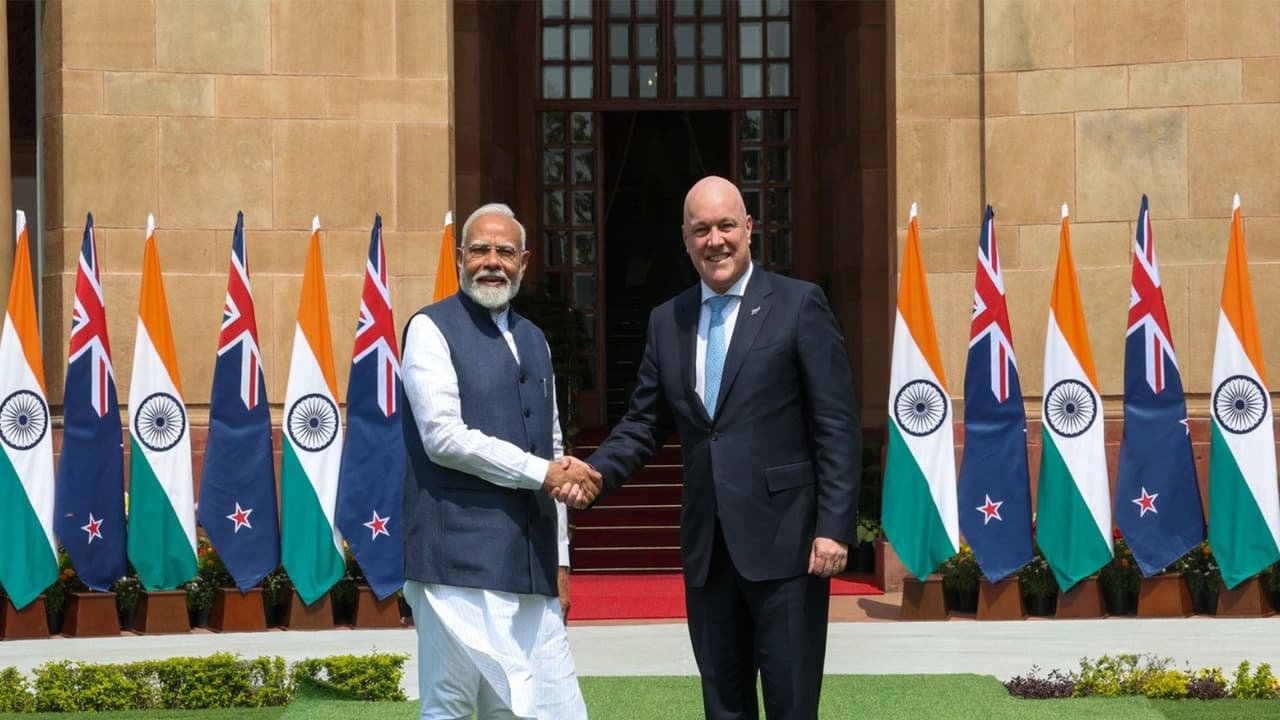
Sweeping pact eliminates tariffs on majority of New Zealand exports, deepens strategic ties and positions both nations for long-term economic growth
New Zealand and India have signed a landmark Free Trade Agreement (FTA), marking a major milestone in bilateral relations and opening the door to expanded trade, investment and strategic cooperation between the two countries.
The agreement, signed on April 27, 2026, is expected to significantly reshape trade flows between the two economies by reducing tariffs, improving market access and creating new opportunities across agriculture, technology, services, manufacturing and education.
The FTA comes at a time when India is rapidly emerging as one of the world’s most influential economic powers and New Zealand is seeking to diversify export markets amid shifting global trade dynamics.
New Zealand described India as a strategic priority because of its growing global influence, economic scale and regional importance, while Indian policymakers viewed the agreement as a critical step toward expanding international trade partnerships and strengthening supply chain resilience.
A Strategic Partnership Beyond Trade
Officials from both countries said the agreement extends beyond commerce and reflects a broader commitment to supporting a stable, rules-based trading order while advancing shared interests in prosperity, regional security and economic resilience.
A major pillar underpinning the relationship is New Zealand’s Indian diaspora, which now numbers around 300,000 people. Policymakers described the community as a “living bridge” connecting the two countries through cultural, commercial, educational and social ties.
Despite India being one of the world’s largest and fastest-growing economies, it currently ranks as only New Zealand’s 11th-largest goods and services export market. Total New Zealand exports to India stood at NZ$2.03 billion in the year ended December 2025, highlighting what both governments see as substantial untapped potential.
India-New Zealand two-way trade currently totals NZ$3.95 billion annually. The agreement also supports New Zealand’s broader economic strategy of doubling the value of exports over the next decade.
Major Tariff Reductions and Market Access
Under the FTA, 95 per cent of New Zealand’s current exports will either become tariff-free or benefit from sharply reduced tariffs over time.
More than half of New Zealand’s exports — 57 per cent — will receive full tariff elimination immediately upon the agreement entering into force. That figure will rise to 82 per cent once implementation is fully phased in.
The average tariff applied to New Zealand’s current exports to India is expected to decline dramatically to just 3 per cent.
Officials estimate tariff savings of NZ$43 million on day one, increasing to NZ$62 million annually based on current trade levels, with savings expected to grow further as trade volumes expand. The agreement is also designed to create a more level playing field for New Zealand exporters competing against countries that already have trade advantages in India through FTAs, including Australia, the United Kingdom and Chile.
India’s Expanding Middle Class Seen as Key Opportunity
The agreement provides New Zealand exporters with preferential access to India’s rapidly expanding middle class, which is projected within five years to exceed the entire population of either the European Union or ASEAN. India is currently the world’s fastest-growing G20 economy and is projected to become the world’s third-largest economy by 2030, with GDP expected to reach approximately US$7 trillion.
Its middle class is forecast to surpass 700 million people, creating significant long-term demand for premium food, beverages, agricultural products, tourism, education, gaming, fintech and technology services.
Key Export Gains Across Sectors
The FTA delivers broad-based benefits across multiple New Zealand industries.
Forestry
Forestry, one of New Zealand’s largest export categories to India, will see more than 95 per cent of exports enter India tariff-free immediately after the agreement takes effect. Tariffs on almost all existing forestry trade will be phased out over seven years.
Agriculture and Horticulture
Tariffs will be removed immediately on sheep meat, wool, coal and several other products. New Zealand secured valuable new quota access for apples and kiwifruit, with quota volumes beginning well above average recent trade levels and expanding over time.
New Zealand also becomes the first country to secure preferential access for apples under any Indian FTA and the first kiwifruit exporter to secure tariff-free access for kiwifruit alongside a 50 per cent tariff reduction outside quota limits. The agreement also provides phased tariff elimination for cherries, avocados, blueberries and persimmons.
Tariffs on mānuka honey will be reduced by 75 per cent over five years, making New Zealand the first country to secure preferential access for honey under an Indian FTA.
Fisheries and Seafood
Tariffs on New Zealand’s major fish and seafood exports will be phased out over seven years, creating expanded opportunities for seafood producers in the Indian market.
Wine
Tariffs on New Zealand wine will be reduced by between 66 per cent and 83 per cent over ten years. The agreement also includes a “future-proofing” clause ensuring that if India grants better market access terms to future FTA partners, those same concessions will automatically extend to New Zealand.
Dairy and Food Ingredients
Tariffs on bulk infant formula, dairy-based preparations and peptones will be phased out over seven years. Tariffs on albumins, a milk protein product, will be cut in half within a quota covering average recent trade.
The agreement also establishes a dedicated fast-track mechanism to facilitate duty-free exports of New Zealand dairy ingredients into India for manufacturing and re-export purposes. Officials said this provision could create significant opportunities for New Zealand companies to integrate into India’s growing export-oriented food manufacturing supply chains. India additionally committed that if it grants dairy access concessions to comparable countries in future agreements, it will consult with New Zealand regarding extending similar treatment.
Services and Technology Sectors to Benefit
The agreement offers expanded opportunities for New Zealand services exporters, particularly in fintech, professional services, environmental consulting, tourism, tertiary education and private education.
The deal is expected to provide New Zealand companies with more competitive access relative to international rivals already operating in India under preferential trade arrangements. The FTA also simplifies customs procedures and reduces transaction costs through streamlined border processes and increased regulatory transparency.
Under the agreement, Indian customs authorities will release goods within 48 hours, while perishable products and express consignments are expected to be cleared within 24 hours wherever possible.
Cooperation Beyond Trade
The FTA contains a significant cooperation and technical assistance component designed to foster long-term partnerships between Indian and New Zealand industries.
Areas identified for collaboration include forestry, horticulture, fisheries and aquaculture, apiculture and honey, livestock, wine, traditional knowledge and medicine, tourism, audiovisual production and sports. The agreement also includes a Treaty of Waitangi exception preserving the New Zealand Government’s ability to implement policies necessary to fulfil obligations to Māori.
Benefits for Consumers and Industry
New Zealand consumers are expected to benefit from lower prices and greater access to Indian-made electrical goods, machinery, textiles and manufactured products as tariffs are removed on Indian imports entering New Zealand.
Businesses in both countries are also expected to gain from improved supply chain integration, lower compliance costs and enhanced market certainty.
Existing Trade Relationship
In the year ended December 2025, New Zealand exported NZ$2.03 billion worth of goods and services to India.
Key exports included travel services worth NZ$1.14 billion, forestry exports of NZ$399 million, horticulture exports valued at NZ$114 million — including apples worth NZ$81 million and kiwifruit worth NZ$33 million — along with aluminium exports of NZ$86 million, iron and steel exports of NZ$80 million and wool exports of NZ$77 million.
India currently ranks as New Zealand’s 21st-largest goods export market and fifth-largest services export market. Officials from both countries said the economic benefits of the agreement are expected to increase steadily over time as India’s economy continues to expand and consumer demand rises.
The agreement is widely viewed as one of the most significant trade initiatives undertaken by New Zealand in recent years and signals India’s growing role as a central pillar in Indo-Pacific economic architecture.