Thursday, 14 May 2026

Crisil Ratings says resilient regional demand to offset Iran disruptions, while longer transit times may stretch exporters’ working capital cycles
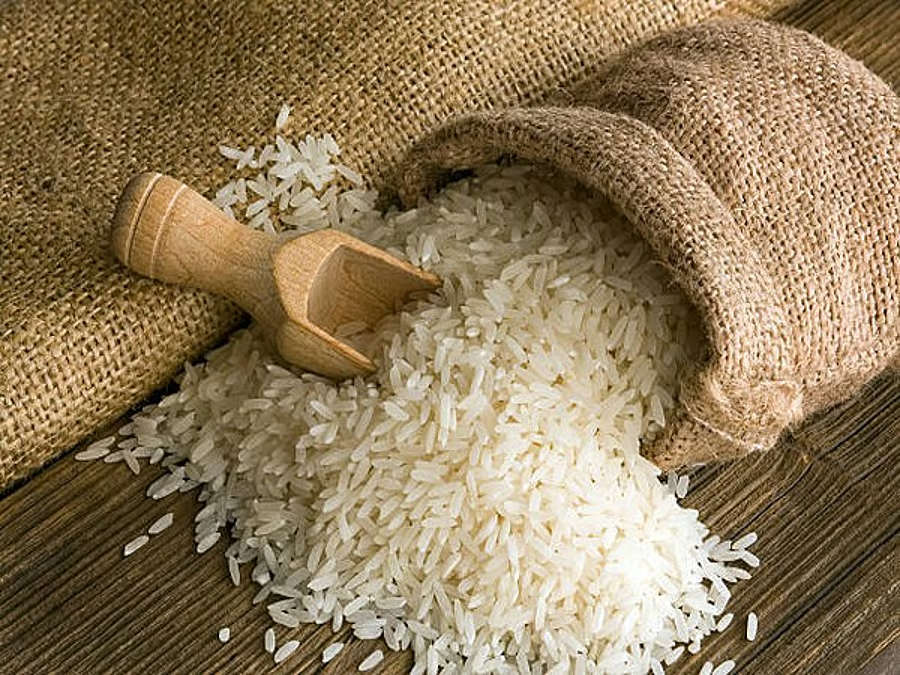
India’s basmati rice export volumes are expected to remain stable through the current fiscal and the next, despite geopolitical tensions in the Middle East affecting trade routes and supply chains. According to an analysis by Crisil Ratings, shipments could grow by up to 2 percent over the 6.06 million tonnes exported last fiscal, supported by stronger demand from key markets such as Saudi Arabia, Iraq, the United Arab Emirates and Yemen. While exports to Iran—a major buyer accounting for around 14 percent of shipments last fiscal—may face disruptions, increased demand from other West Asian markets is expected to offset the impact.
India remains the world’s largest producer and exporter of basmati rice, accounting for nearly 85 percent of global basmati trade. Exports constitute almost two-thirds of the country’s annual basmati rice sales by volume, making the sector particularly sensitive to geopolitical developments. The Middle East and other West Asian markets collectively account for 70–72 percent of India’s basmati rice exports, highlighting the region’s strategic importance for the industry.
Logistical disruptions linked to the ongoing conflict, particularly around the critical shipping corridor of the Strait of Hormuz, have led to concerns over shipment delays, restricted vessel availability and payment challenges. If these logistical hurdles persist for about a month, the basmati rice trade volume could decline by 3.5–3.7 lakh tonnes. However, sustained demand in the region—where basmati rice remains a dietary staple—should help maintain overall export momentum.
Commenting on the outlook, Nitin Kansal, Director at Crisil Ratings, said disruptions in the Strait of Hormuz could temporarily block cargo movement and delay payments from customers. Nevertheless, Indian basmati exports are expected to remain resilient due to a projected 5–6 percent increase in demand from countries including Saudi Arabia, Iraq, the United Arab Emirates and Yemen, which together account for more than half of India’s export volumes.
Despite steady demand, exporters may face operational challenges as they explore alternative shipping routes to avoid the Strait of Hormuz. These longer routes could increase transit times, putting pressure on the industry’s working capital cycle and raising borrowing needs. The working capital requirements of basmati exporters could rise by 10–15 percent due to longer shipping cycles and delayed payments.
According to Smriti Singh, Associate Director at Crisil Ratings, the extended transit periods and logistical constraints may push exporters to rely more on working capital debt. However, the ability of exporters to pass on higher freight and insurance costs to buyers is expected to protect operating margins and support financial stability.
An analysis of 47 companies rated by Crisil Ratings—representing roughly 60 percent of the Indian basmati rice industry’s revenue—suggests that balance sheets remain robust despite a likely rise in debt levels. Crisil expects the gearing ratio of these companies to remain around 0.8–0.9 times next fiscal, compared with an average of about 0.83 times over the past three fiscals. Interest coverage ratios are projected at around 3.5 times, slightly lower than the historical average of about 4.6 times but still indicating adequate debt servicing capacity.
Looking ahead, steady basmati rice realisations are anticipated in the next fiscal year due to resilient demand and near-stagnant production of basmati paddy in key growing regions following excess rainfall. While geopolitical uncertainties and evolving shipping dynamics will continue to influence the sector, the industry’s strong demand base and healthy financial profiles are expected to support stability in India’s basmati rice export landscape.