Wednesday, 1 July 2026

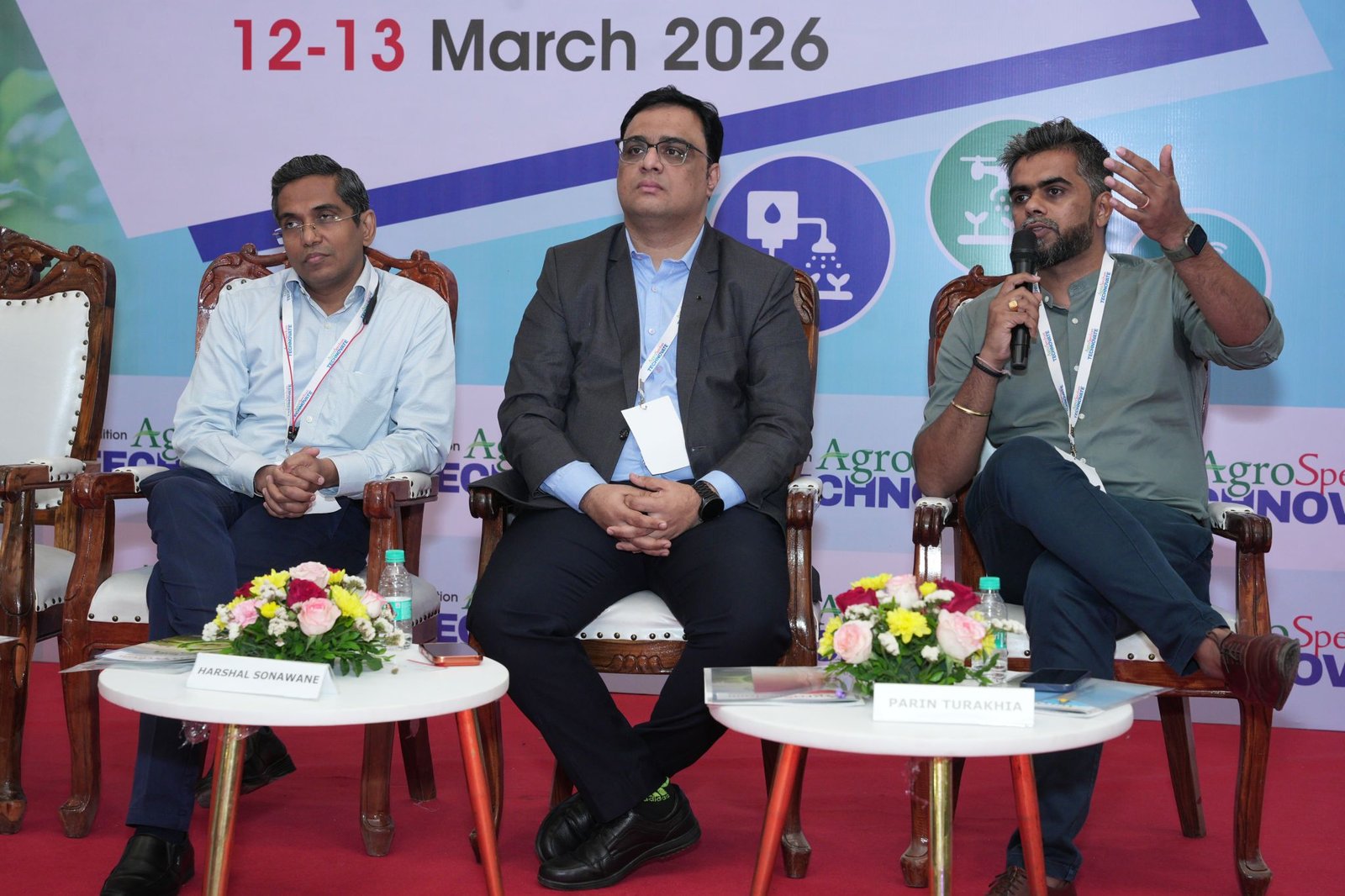
An impactful session at AgroSpectrum Technovate 2026 focused on “Carbon Credits & Measurement, Reporting & Verification (MRV) Technologies.” The panel was chaired by Karthikeyan B, Executive Director, Human Ventures, and featured Parin Turakhia, CTO, GrowIndigo, and Harshal Sonawane, Head – Sustainability, UPL SAS.
The discussion explored the adoption of carbon credit programmes in agriculture, the role of farmers in decarbonisation, and the importance of MRV technologies in enabling transparent climate action. Panelists highlighted that while carbon credits can act as an incentive for farmers, they should not be viewed as a primary income source. Instead, long-term transformation through sustainable practices, reduced tillage, digital tools, and regenerative agriculture will be key to building farmer resilience and improving returns over time.
Speakers also emphasised the need to translate complex climate science into practical methodologies that farmers can easily adopt, while initiatives such as model demonstration plots and risk protection programmes like Kavach can help farmers transition towards climate-smart agriculture.
B Karthikeyan, introduced the carbon credits as a mechanism to finance climate change activities, focusing on their application in agriculture and the role of digital MRV. Carbon credits represent 1 tonne of CO2 reduced, avoided, or removed, financing climate change activities.
Farmers adopt practices to improve soil health and carbon content, supported by project developers. The MRV (Measurement, Reporting, Verification) system ensures carbon changes are accurately tracked.
Digital MRV (DMRV) uses technologies like satellite imagery, remote sensing, and AI to make monitoring faster, cheaper, and more scalable. The session will feature two speakers discussing these technologies and their impact on the carbon credit market.
Parin Turakhia informed the audience that Grow Indigo, a joint venture, focuses on accelerating AG transformation and issuing carbon credits to smallholder farmers. They are the first company to issue carbon credits to smallholder farmers, with their project already approved. Company has 200,000 registered farmers, operating in seven states, with 1,000,000 acres in their carbon program.
He said, “DMRV process involves data collection, validation, and verification, built on five pillars: scientific rigor, farmer-first mindset, cost efficiency, standard alignment, and secure data flow. Data collection involves a multilingual mobile app used by Kisan advisors, with digital contracts and robust security. Data validation includes stringent QC processes, satellite imagery verification, and AI models to confirm practice adoption.”