Sunday, 12 July 2026

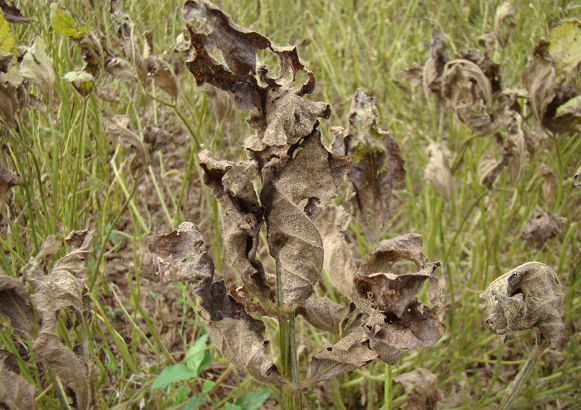
Photo Courtesy: Pedro Singer
Cloud-based system integrates climate data, agronomic parameters, and image analysis to improve disease detection and reduce fungicide use
Scientists at Embrapa (Brazilian Agricultural Research Corporation) have developed a cloud-based digital platform that helps farmers diagnose and manage Asian soybean rust, one of the most destructive diseases affecting soybean crops worldwide.
The system combines artificial intelligence, environmental sensor data, agronomic information, and digital image analysis to assess the risk of disease outbreaks and provide farmers with technical recommendations for crop management.
By integrating multiple sources of field data, the tool enables producers to make more informed decisions about disease prevention and treatment, potentially reducing unnecessary fungicide applications while protecting crop yields.
AI-Driven Disease Monitoring
The platform collects information from environmental sensors, digital images of soybean leaves, and agronomic variables such as crop cultivar, plant spacing, and sowing schedules. The data is processed in the cloud and presented through an online dashboard that allows farmers to monitor climate patterns and visualize plant health over time.
Researchers say the system classifies disease risk into three levels—low, medium, and high—based on the combination of environmental and agronomic variables associated with the progression of the disease.
“The technology allows diagnoses and prognoses for disease control with greater effectiveness and accuracy,” said Ricardo Alexandre Neves, a computer scientist who led the development as part of his doctoral research at the Federal University of São Carlos.
The project was supervised by Paulo Cruvinel, a researcher at Embrapa Instrumentation, and supported by funding from the São Paulo Research Foundation (FAPESP).
The research was published in July 2025 in the journal AgriEngineering.
A Major Threat to Soybean Production
Soybeans are one of the world’s most important agricultural commodities, serving as a key raw material for food products, animal feed, and biofuels.
In Brazil—the world’s largest soybean producer—the 2025–26 harvest is projected to reach 177.6 million tons, according to estimates from the National Supply Company (Conab), with cultivation covering roughly 49.1 million hectares.
However, Asian soybean rust, caused by the fungal pathogen Phakopsora pachyrhizi, can cause crop losses of up to 80 per cent and generate more than $2 billion in annual control costs.
The disease spreads rapidly through windborne spores, making containment difficult once infections begin. Farmers typically rely on chemical fungicides to control outbreaks, but increasing resistance to certain treatments has raised concerns about both environmental impact and rising production costs.
“To free a plantation of Asian rust, there can be excessive applications of fungicides,” said Cruvinel. “This can harm the environment and significantly increase production costs for farmers.”
Data Fusion Improves Diagnosis
To address these challenges, the Embrapa research team designed a system capable of integrating heterogeneous agricultural data into a single predictive model.
The platform evaluates environmental conditions known to favor fungal development, including extended leaf wetness periods, relative humidity above 90 per cent , and temperatures between 15°C and 28°C.
The system also processes digital images of soybean leaves, identifying color patterns such as green, yellow, and brown that correspond to different stages of disease progression.
To merge these diverse datasets, the researchers used a Hidden Markov Chain model, which demonstrated higher accuracy and reliability compared with traditional fuzzy logic approaches. According to the researchers, the model achieved 100 per cent accuracy in matching evaluated risk scenarios for Asian rust outbreaks during testing.
The research was conducted over four years using the conventional soybean cultivar BRS 536, with field trials carried out in georeferenced plots in the Poxoréu region of Mato Grosso. Each crop cycle generated more than 2 gigabytes of data, including climate readings and high-resolution leaf images.
Practical Decision Support for Farmers
The digital platform compiles analytical reports using two decades of historical agricultural data, helping farmers assess risk across different crop cycle stages.
The user interface allows producers to review climate trends, plant imagery, and disease risk assessments in a single dashboard. Reports also provide agronomic recommendations for disease management and link to Brazil’s AGROFIT database, which lists agrochemicals approved by the Ministry of Agriculture for controlling Asian rust.
According to Neves, the system enables more precise monitoring of disease risk across the crop lifecycle while supporting more targeted use of fungicides.
“The key point of the research was creating a method that integrates different types of data to provide a more reliable diagnosis,” he said. “Using only images or climate data separately can lead to false positives.”
Expert Validation
Plant pathologists Bernardo Halfeld‑Vieira and Katia Nechet of Embrapa Environment helped validate the system alongside other experts.
They say the model provides more accurate estimates of environmental conditions that favor disease progression and allows farmers to take preventive action before infections reach severe levels.
“In practice, the method enables control measures to be taken before the disease becomes severe,” the researchers said. “Farmers can decide earlier when to implement control strategies.”
Technology Meets Agricultural Education
Beyond its agricultural applications, the system has also been integrated into academic programs to demonstrate how digital technologies can solve complex farming challenges.
Neves, who is now a professor at the Federal Institute of São Paulo, says the research has become a practical teaching case that illustrates how computer science can support modern agriculture.
According to the researchers, the project highlights the growing role of data-driven agriculture in improving productivity, sustainability, and resilience in global food systems.