Saturday, 18 July 2026

A surge in imports and sweeping regulatory changes highlight the paradox of modernization in Indian agriculture
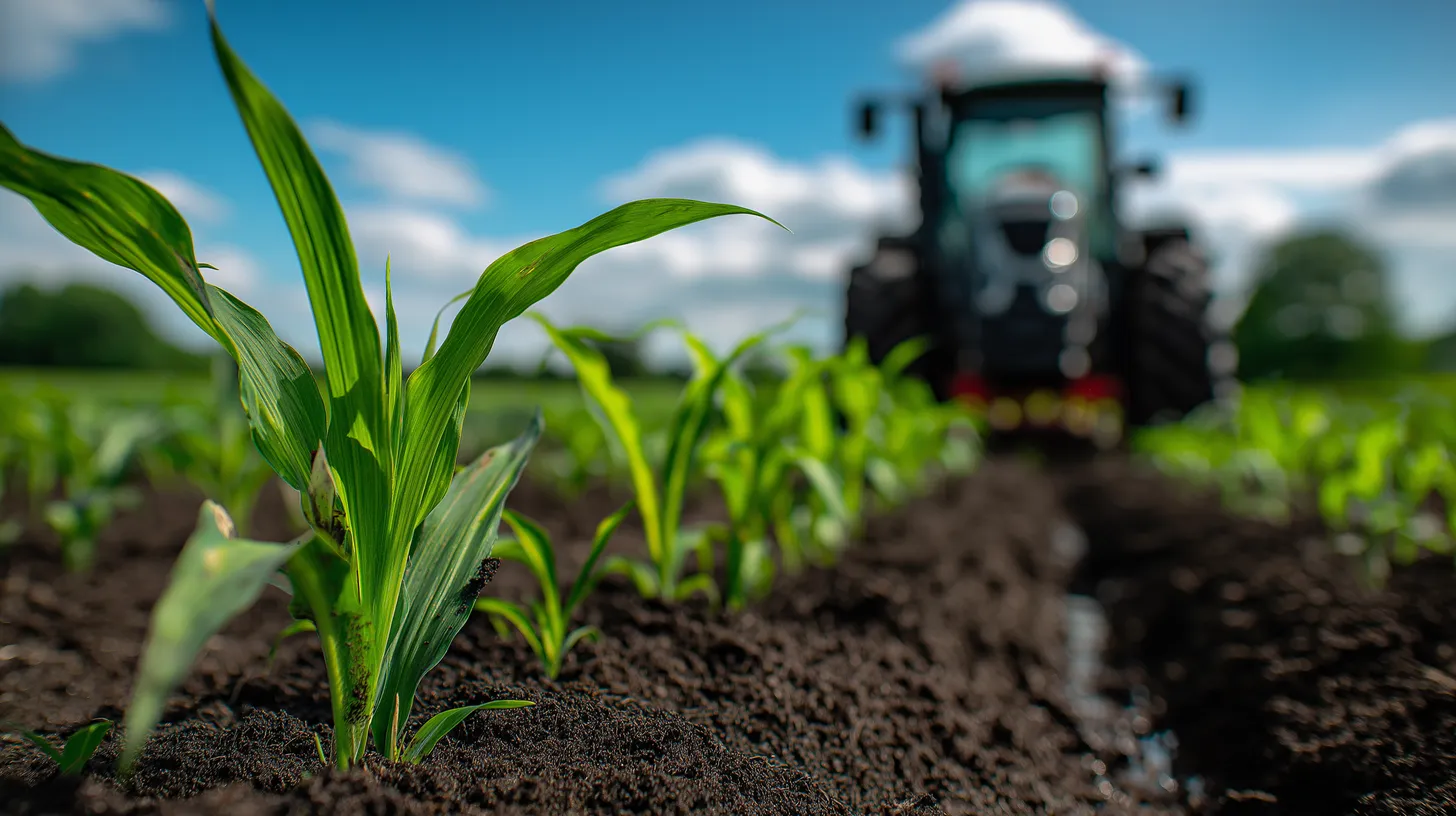
On a chilly January morning in Haryana, Rajesh Kumar walks through his wheat fields, the soil still moist from a generous monsoon. His crop looks promising, but his mind is elsewhere. “Last season, we faced a shortage of urea,” he recalls. “Prices didn’t rise, but the bags weren’t available when we needed them.”
Rajesh’s worry is not unique. Across India, farmers are grappling with the reliability of agricultural inputs — fertilizers, pesticides, and new-generation soil enhancers. These inputs are the lifeblood of productivity, yet their availability and regulation remain fraught with inefficiencies.
Against this backdrop, the government has unveiled two major reforms: the Draft Pesticides Management Bill, 2025, and sweeping amendments to the Fertiliser Control Order (FCO). At the same time, fertilizer imports have surged by 60 percent in April–November 2025–26, underscoring India’s dependence on global supply chains. Together, these developments reveal the contours of India’s agricultural paradox: rising demand, heavy dependence, and the urgent need for modernization.
Fertilizers: Dependence Meets Demand
India is the world’s second-largest consumer of fertilizers, supplying between 60 and 65 million tonnes annually, with a quarter to a third met through imports. In FY25, imports stood at 16 million tonnes. But in the first eight months of FY26 alone, shipments jumped to 17.37 million tonnes.
Urea imports soared by 120 percent to 7.17 million tonnes, di-ammonium phosphate (DAP) imports rose by 54 percent to 3.25 million tonnes, and imports of NPK variants nearly doubled to 2.71 million tonnes. Only muriate of potash (MOP) imports fell, dropping by 25 percent to 1.95 million tonnes.
This surge reflects robust sowing of winter crops and strong monsoon rains, but it also exposes structural dependence. India imports 20 percent of its urea, two-thirds of its DAP, and all of its potash. Domestic production remains insufficient, and raw materials like rock phosphate are sourced from Senegal, Jordan, South Africa, and Morocco.
The fiscal implications are staggering. Urea subsidies cost Rs 1.91 lakh crore in FY25, projected at Rs 1.95 lakh crore in FY26. Retail prices remain frozen at Rs 242 per 45 kg bag despite production costs exceeding Rs 2,600. The result is a triple distortion: fiscal strain, overuse of urea leading to soil degradation, and disincentives for domestic producers to innovate.
Pesticides: Regulatory Modernization
If fertilizers highlight dependence, pesticides highlight regulation. The Draft Pesticides Management Bill, 2025 seeks to modernize oversight with a unified framework covering manufacture, import, sale, use, and disposal.
At its core are two institutions: a Central Pesticides Board, advisory in nature, with representatives from Health, Environment, and Agriculture ministries, and a Registration Committee, the executive authority tasked with evaluating applications digitally within 12–18 months.
The bill emphasizes digital governance, mandating online platforms for licensing, inspections, and record-keeping. It requires accreditation of testing laboratories to ensure quality assurance and prescribes stricter penalties against spurious products. Inspectors are empowered to seize unsafe stocks and halt sales for up to 60 days pending lab results. Importantly, the bill decriminalizes petty offences, allowing compounding with fines — a move that reduces harassment of businesses and aligns with EoDB principles.
Fertiliser Control Order: Expanding the Regulatory Net
The Fertiliser Control Order (FCO), originally framed in 1985, has been repeatedly amended to reflect changing realities. In 2025, several amendments broadened its scope.
The Second Amendment introduced stricter monitoring of agricultural inputs and new provisions for biostimulants.
The Third Amendment updated specifications for organic carbon enhancers from compressed biogas plants and introduced detailed quality criteria for fermented organic manure.
The Fourth Amendment expanded regulation to microbial formulations and biochemical fertilizers, aiming to enhance crop productivity and encourage sustainable practices.
These changes show a clear policy intent: To regulate not just traditional fertilizers but also new-generation inputs that support soil health and sustainability.
Ground Reality: EoDB Beyond Policy Text
On paper, India’s reforms in agricultural inputs align neatly with the Ease of Doing Business agenda. In practice, however, bottlenecks persist. Enforcement remains fragmented, with states varying widely in their application of the Fertiliser Control Order (FCO) and pesticide regulations. This creates regulatory arbitrage, where companies shift operations to states with weaker oversight. Subsidy distortions continue to undermine efficiency, with urea’s artificially low retail price encouraging overuse, degrading soil health, and crowding out investment in alternatives.
The anomaly of urea’s exclusion from the Nutrient Based Subsidy (NBS) regime lies at the heart of this distortion. India’s domestic capacity to produce urea is constrained by inadequate natural gas supplies, forcing higher imports that carry a heavier subsidy burden per tonne than domestic production. With global raw material prices for complex fertilizers also elevated, the government’s efforts to contain subsidy expenditure face medium‑term challenges, and rising demand will only push subsidy amounts higher. At the same time, the pricing discrepancy between urea and other nutrients has led farmers to lean excessively on nitrogen, neglecting phosphorus and potassium. The imbalance has worsened soil health and reduced productivity, even as non‑urea fertilizers are already covered under NBS, where subsidies are linked to nutrient content.
This is why experts argue that bringing urea under NBS is essential: it would rationalize pricing, encourage balanced nutrient application, and reduce fiscal distortions. Without such a move, India’s fertiliser subsidy system will continue to face both fiscal strain and ecological imbalance.
Against this backdrop, the government’s implementation record looks uneven. NBS for P&K fertilizers has been rolled out, with allocations of nearly Rs 38,000 crore for Rabi 2025–26. Nano fertilisers have been introduced, with IFFCO’s nano urea gaining traction, though adoption is scaling slowly. Soil Health Cards have been distributed and incentive‑based linkages under PM‑PRANAM are evolving. Yet the most transformative reforms — DBT of subsidies directly to farmers, inclusion of urea under NBS, cash/voucher‑based subsidy systems, and large‑scale incentives for green ammonia — remain pending. Policy intent is clear, but execution lags, leaving farmers like Rajesh Kumar still uncertain about timely access to reliable inputs.
Comparative Insights: Lessons from Global Peers
India’s reforms mirror global trends but remain fragmented.
China has tightened pesticide regulation to enhance safety and environmental safeguards, while remaining the world’s largest supplier of active ingredients. Its example shows how strict oversight can coexist with global competitiveness, but also warns of compliance burdens that may slow innovation.
Brazil has pioneered sustainability with its Bio-Inputs Law (2024), the first legislation dedicated exclusively to biological inputs. It regulates production, marketing, and use of bio-inputs across conventional and organic systems, positioning Brazil as a leader in integrating sustainability into mainstream agriculture. For India, where FCO amendments only recently expanded to biostimulants, Brazil’s example underscores the need for a dedicated framework for sustainable inputs.
The European Union (EU) has expanded fertilizer regulation to include organic fertilizers, biostimulants, and recycled materials under its CE-mark system, enabling free movement across the EU market. Its pesticide rules are strict, but attempts to further reduce usage under the Green Deal faced farmer pushback, highlighting the political challenges of balancing sustainability with productivity.
Together, these examples show that India’s EoDB reforms must integrate sustainability (like Brazil), streamline compliance without overburdening businesses (like China), and build market-wide standards (like the EU).
Policy Matrix: Agri-Inputs, EoDB, Sustainability and Risks
| Input Category | EoDB Impact | Sustainability Potential | Key Risks |
| Fertilizers (Urea, DAP, NPK, MOP) | Predictability through subsidies and import agreements; NBS regime reduces volatility | Limited — heavy reliance on chemical fertilizers degrades soil health | Fiscal strain from subsidies; import dependence; overuse of urea leading to soil degradation |
| Pesticides (Draft Bill, 2025) | Digital governance, time-bound approvals, decriminalization of petty offences reduce compliance burden | Moderate — quality assurance via accredited labs and stricter controls on spurious products | Implementation capacity gaps; digital divide; misuse of inspector powers; compounding offences becoming routine |
| New-generation Inputs (Biostimulants, Microbial formulations, Organic manures under FCO amendments) | Expanding regulatory scope creates opportunities for innovation; potential ease for businesses if harmonized | High — supports soil health, reduces chemical dependence, aligns with sustainability goals | Fragmented enforcement across states; lack of dedicated framework; regulatory uncertainty for businesses |
| Global Comparisons (China, Brazil, EU) | China shows strict regulation + competitiveness; Brazil offers dedicated bio-inputs law; EU integrates sustainability into market standards | Lessons: integration, balance, harmonization | Risks of over-centralization (China), political pushback (EU), fragmented frameworks (India) |
Toward Integrated Reform
India’s agricultural input reforms are analytically significant because they attempt to embed EoDB principles into a sector historically dominated by subsidies and fragmented regulation. Fertilizer imports expose structural dependence and fiscal strain. The Draft Pesticides Bill modernizes oversight but faces implementation risks. FCO amendments broaden scope but suffer from fragmented enforcement.
Comparative insights show that India is aligned with global trends but lacks integration and harmonization. To truly achieve EoDB in agri-inputs, India must rationalize subsidies, strengthen domestic production, build institutional capacity, and invest in digital infrastructure. Only then can reforms move from policy intent to practical impact, balancing farmer affordability, business efficiency, and ecological sustainability.
For farmers like Rajesh Kumar, who simply want quality inputs at the right time, the bottom line is clear: reforms must translate into ground-level reliability, not just regulatory ambition.
— Suchetana Choudhury (suchetana.choudhuri@agrospectrumindia.com)