Saturday, 18 July 2026

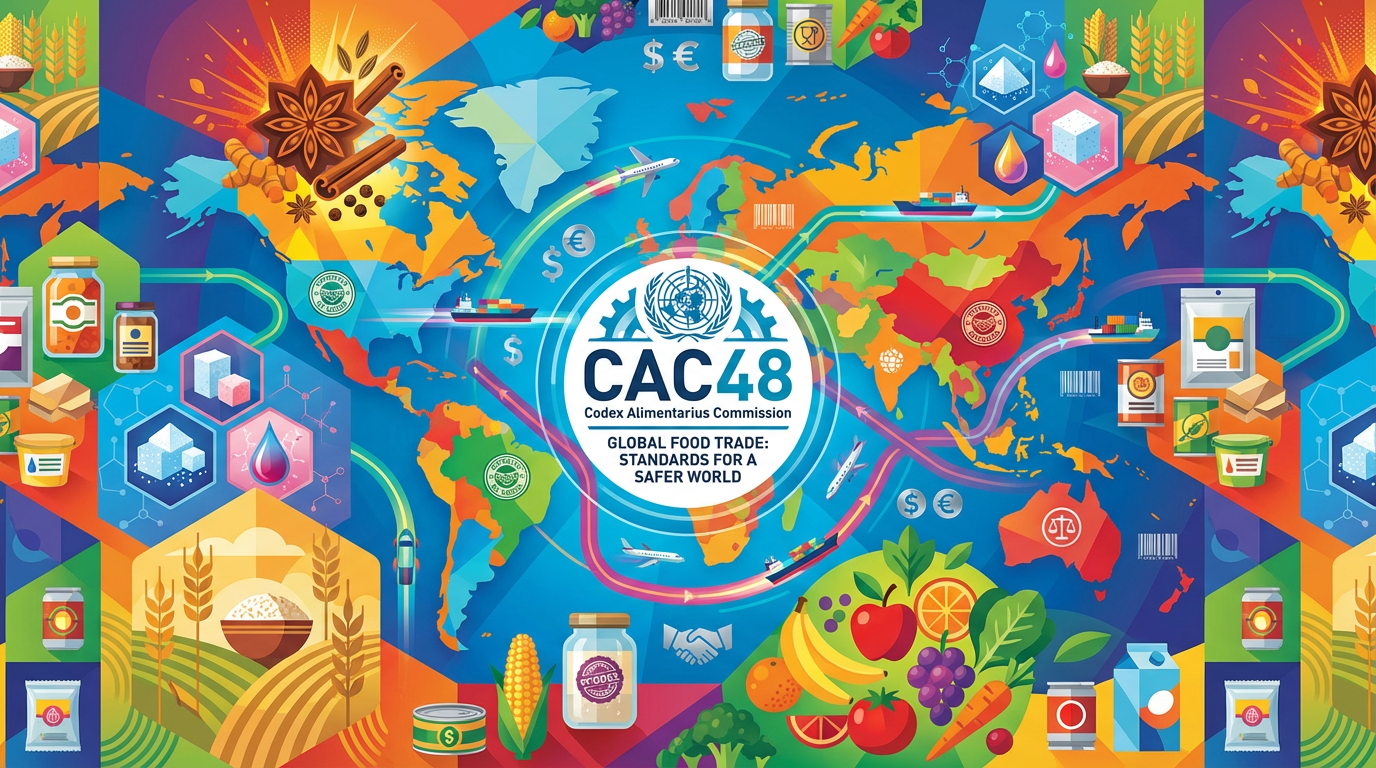
Codex and FAO officials detail how updated standards aim to protect consumers without triggering disproportionate trade disruption for export-dependent economies
In an exclusive Agrospectrum and NUFFOODS Spectrum interview with global food-standards leaders — Sarah Cahill, Codex Secretary; Lingping Zhang, Food Standards Officer, Codex Secretariat; Markus Lipp, Senior Food Safety Officer, Food and Agriculture Organization of the United Nations (FAO); Gracia Brisco, Food Standards Officer, Codex Secretariat; and Hilde Kruse, Senior Food Standards Officer, Codex Secretariat — CAC48 emerges as a decisive moment for Codex amid rising geopolitical fragmentation.
The experts reaffirm Codex’s science-based, consensus-driven mandate, which shaped major reforms including additive reviews, aflatoxin updates, pesticide-residue reference guidelines and new maximum lead levels for spices. They underline how improved Codes of Practice, surveillance support and harmonised quality parameters enable consumer protection while minimising trade disruption for export-reliant economies.
Looking ahead, they highlight the Codex Strategic Plan 2026–2031, which places digital traceability, climate-risk foresight, and advanced analytical technologies at the core of modernising global food safety governance. Edited excerpts;
Codex at a Geopolitical Crossroads
The 48th Session saw critical standards adopted across additives, contaminants, and fresh-produce quality. At a time when food systems face geopolitical fragmentation, supply-chain shocks, and rising protectionism, how does Codex ensure these standards remain science-led, globally harmonized, and insulated from political pressure?

The Codex Alimentarius Commission (CAC) is a Member-driven body with its commitment to a science-based approach to standard setting enshrined in its procedures. Its work is guided by its strategic goals, and its core values of collaboration, inclusiveness, consensus building and transparency. Codex texts are the benchmark for food safety under the World Trade Organization’s (WTO’s) Agreement on the Application of Sanitary and Phytosanitary Measures (SPS Agreement) and are relevant to the Agreement on Technical Barriers to Trade (TBT Agreement) where WTO members refer to harmonization with international standards such as the Codex Alimentarius for food-related issues such as labelling. Codex standards play an important role in addressing specific trade concerns or for dispute settlement cases.
Wherever you are, whatever you do, safe food is an everyday need. And it is a global commodity. These aspects are integral to every discussion in the Codex Alimentarius Commission. “Together” was also the theme of CAC48, which served to highlight that when it comes to food safety and quality it is only by working together that we can effectively and efficiently ensure food is safe and of good quality.
The GSFA Overhaul: Science, Safety, and Consumer Trust
More than 500 food additive provisions were reviewed, leading to revocations and new inclusions. What principles guided the reassessment—particularly for colourants like annatto extracts—and how does FAO ensure regulators and industry transition smoothly to these updated provisions without disrupting product availability or trade flows?

All Codex work is conducted following approval by CAC. Thus, the decision for reassessment was taken by Members. In the case of annatto extracts, this decision was based on:
The need to align the General standard for food additives with relevant sections of commodity standards. In this case, for example, there was a need to align with the Standard for fermented milks, which does not provide for the addition of annatto extracts in plain milk.
Codex texts are developed through consensus by all its Members in a deliberate manner that often spans a timeframe of several years. The national Codex contact points serve as a primary node to disseminate all applicable information to national stakeholders. In addition, FAO provides support when requested by Member Countries to strengthen national Codex structures, thereby enhancing national capabilities in disseminating all relevant Codex texts to national stakeholders.
Aflatoxins in Peanuts: New Science, New Responsibilities
The revised Code of Practice on aflatoxins integrates updated agronomic science, maturity-stage tables, and roasting effects. How will FAO help producing countries—especially smallholder-dependent economies—translate these best practices into field-level change? Are new surveillance, extension, or capacity-building mechanisms planned?

FAO stays ready to support its members needs and will respond to requests by its members for additional capacity building measures correspondingly. FAO and Codex furthermore have published numerous guidance documents, codes of practice and related texts that is publicly available, ready to be used by any other organization that would like to use this information in order to support producers of peanuts.
Lead Limits in Spices: Balancing Public Health and Trade facilitation
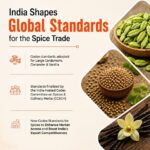
With new maximum levels now set for dried bark (cinnamon) and culinary herbs, exporting nations such as —India, Sri Lanka, Vietnam, Indonesia—face compliance pressure. How does Codex balance the dual mandate of protecting consumers health while ensuring fair practices in trade, in this case, preventing trade disruptions for economies reliant on spice exports?

The mandate to protect consumer health and ensure fair practices in the food trade is the statutory purpose of CAC. This means that, when it comes to food safety standards such as maximum levels for contaminants in foods, CAC will not establish more stringent measures than necessary to protect consumers health so that the measures themselves do not become a technical barrier to trade which may then translate in trade disruption that may impact economic growth and ultimately food security.
Although spices and culinary herbs are consumed in small amounts, as opposed to other foods, it remains important to assess the safety of lead levels in these foods due to the impact of lead toxicity on human health that may include neurodevelopmental effects such as decreases in Intelligence Quota (IQ) and attention span in children, impaired renal function, hypertension, cardiovascular disease, impaired fertility, and adverse pregnancy outcomes and therefore the ALARA continued to apply when CCCF discusses risk management considerations related to health and trade so that while ensuring the safety of the food, this does not imply high rejections rate of lot consignments, at import control point.
CCCF does provide support to Codex Members to enable them to comply with MLs, by developing codes of practice, a compendium of risk management measures and practices to assist in reducing food contamination, in this case CAC40 adopted in 2017 the Code of practice for the prevention and reduction of mycotoxins in spices (CXC 78-2017).
FAO does have a role to play in assisting countries with the implementation of the CoP, helping them to identify specific risk management measures that may not be included in the CoP, as they are usually overarching texts, that can complement the measures applicable worldwide that are described in these CoPs.
The Codex Alimentarius Commission has now adopted MLs for lead in spices and culinary herbs, specifically, dried bark (cinnamon) and dried culinary herbs. The MLs are 2.5 mg/kg for lead in spices, dried bark and 2.0 mg/kg for lead in culinary herbs, dried and will now be added to the General Standard for contaminants and toxins in food and feed (CXS 193-1995).
Pesticide Reference Materials: A Quiet but Critical Reform
The guidelines allowing extended use of pesticide reference materials beyond labelled expiry dates could significantly reduce laboratory costs and waste. What drove this reform? And how does FAO envision it strengthening residue monitoring systems in low- and middle-income countries where testing infrastructure remains limited?
Pesticide residues in food are a subject of particular concern for consumers and in the food trade. To ensure the safety of food, the regulation of pesticide use, and relevant residues, must be enforced and guaranteed. Part of the process of testing for pesticide residues relies on laboratories being able to access what are known as reference materials, or RMs. But these are costly and sold with 2-to-5-year short-term expiry dates, though there is no requirement to find maximum shelf life. This can force laboratories to buy new RMs more frequently than potentially necessary. This leads to additional work and additional costs, and that can hinder how much testing can be done.
The Codex Alimentarius Commission has now adopted guidelines that provide a scientifically sound framework to monitor the purity and stability of reference materials under defined conditions, which, if implemented correctly, may allow continued use of RMs beyond their expiry date – where purity remains within acceptable limits. This reduces recurring costs, minimizes waste, and ensures confidence in the reliability of pesticide residue analysis.
The work on the development of guidelines for monitoring the purity and stability of reference materials of pesticides during prolonged storage commenced at CCPR51 in 2019, when some delegations expressed concerns regarding the limitation of the use of reference materials beyond the expiry date, leading to significant recurring costs for laboratories.
As chair of the electronic working group (EWG), India led the work to develop these guidelines.
FAO stays ready to support its members needs and will respond to requests by its members for additional capacity building measures correspondingly.
Read more about this work in the 2025 edition of the CODEX magazine
Standard for Fresh Dates: Trade Enablement for Climate-Stressed Regions
The new standard comes after a decade of negotiations and is deeply important for date-producing regions across the Middle East and North Africa. How will harmonized quality parameters—size, colour, uniformity, defects—reshape global trade? Can such standards help climate-stressed producers secure better prices in high-value retail markets ?
By adopting the new Standard for fresh dates, Codex Members now have an international reference that provides the baseline for international trade of this commodity upon which trading partners can agree on additional quality provisions based on their consumers’ preferences.
For producing countries, this opens up trade possibilities across the globe, which, in many cases, will support the livelihoods of small producers, bolster economies and provide a safe, good quality product for consumers worldwide.
Castilla Lulo (Naranjilla): Regional Standards as a Strategic Tool
This new regional standard reflects the fruit’s cultural importance and emerging trade value in Latin America. What criteria does Codex use to decide when a product merits a regional rather than global standard? And do regional standards serve as testbeds for potential future global adoption?

When considering new work proposed by FAO/WHO regional coordinating committees, CAC considers, amongst other things, whether the new work is justified on the grounds that the product in question is significantly traded intraregionally and that there is no significant trade between or within other regions
When a commodity for which there is a regional standard, sees increased trade at a global level, the coordinating committee concerned, or a Member, can propose extension of the territorial application of the standard. This involves new work, which has to be approved by CAC. CAC48 approved, for example, new work on converting the Regional standard for laver products (Asia) to a worldwide standard, work that will be carried out by the Codex Committee on Fish and Fishery Products (CCFFP).
The Next Frontier: Modernizing Codex for a New Era of Food Risks
From AI-driven food systems to precision fermentation, novel ingredients, and climate-linked contaminants, food safety risks are evolving faster than many national regulatory systems. What are FAO’s top priorities for modernizing Codex over the next decade? How will future standards incorporate digital traceability, climate risk modelling, and new analytical technologies?
FAO is a parent organization of Codex, together with the World Health Organization (WHO). However, work prioritization in Codex is the remit of the Codex Alimentarius Commission.
CAC47 adopted the Codex strategic plan 2026–2031 and CAC48 its monitoring framework. The purpose of the Codex strategic plan and its renewal and renegotiation every five years is to ensure that Codex work is aimed at achieving the most appropriate objectives.
FAO has a very long-standing tradition to inform the Codex Alimentarius Commission and its subsidiary bodies with all relevant information to facilitate forward looking workplanning. FAO continues to offer its support to all its members and the members of the Codex Alimentarius Commission to assist in national capacity building activities to strengthen food control systems, food safety governance and all related aspects.
The new strategic plan has as its first Strategic Goal to:
Respond to Members’ needs for protecting the health of consumers and ensuring fair practices in the food trade in an evolving global landscape, by developing science-based standards and related texts
1.1 Foresight and horizon-scanning activities are used to support the identification of issues likely to impact food safety, quality and trade.
1.2 Scientific advice that addresses the needs identified by CAC and its subsidiary bodies is primarily provided by FAO and WHO and their joint scientific advisory bodies, informed by globally representative data and appropriate international expertise and methodology.
1.3 Scientific advice is used by CAC and subsidiary bodies in line with Codex risk analysis principles.
1.4 Codex standards and related texts are developed, reviewed and adopted in a timely, transparent and inclusive manner.
Thus, with reference to FAO’s foresight programme (https://www.fao.org/food-safety/scientific-advice/foresight/en/), Codex will aim to keep ahead of emerging trends
Codex work is already addressing some of the key emerging issues and adapting based on Members’ priorities:
Digital traceability is already a key topic of discussion in the Codex Committee on Food Import and Export Inspection and Certification Systems (CCFICS), and work is ongoing to develop texts for the digitalization of national food control systems.
CAC47 adopted the Codex Committee on Food Labelling’s (CCFL’s) Guidelines on the provision of food information for pre-packaged foods to be offered via e-commerce
New food sources and production systems have been discussed extensively in Codex in recent years. In this context several areas of new work are under discussion which will help define how codex addresses this emerging area moving forward.
Changing climate is also impacting food safety and this is also impacting the standard setting work of Codex. For example, the Codex Committee on Contaminants in Food (CCCF) elaborated and CAC47 adopted the Code of practice for the prevention or reduction of ciguatera poisoning, in response to the evolving nature of this issue, which is related to climate factors. The Codex Committee on Food Hygiene developed and CAC46 adopted Guidelines for the safe use and reuse of water in food production and processing in response to Members concerns about the need to ensure that in the context of water resource challenges, the safety of food was not negatively impacted.
There is a continued emphasis, particularly within CCCF, on the issue of mycotoxins, the threat of which is evolving and possibly expanding as climate factors change.
——- Suchetana Choudhury (suchetana.choudhuri@agrospectrumindia.com)