Wednesday, 10 June 2026

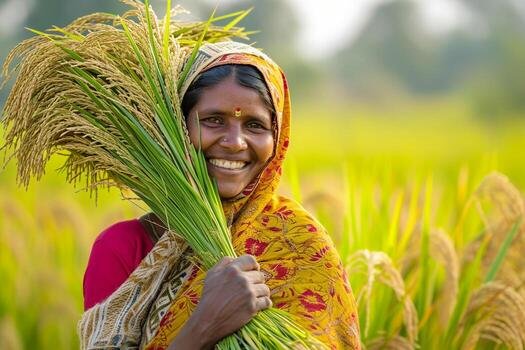
UN-designated year to spotlight women’s essential roles and mobilize global action to dismantle structural barriers
The Food and Agriculture Organization of the United Nations (FAO) has officially launched the International Year of the Woman Farmer 2026, a global initiative designed to recognize the indispensable yet often undervalued role women play across agrifood systems and to fast-track reforms that close longstanding gender gaps. The UN General Assembly designated the observance in 2024, emphasizing the urgency of acknowledging the realities faced by women in agriculture and mobilizing coordinated action across governments, development agencies, the private sector, and civil society. Throughout 2026, FAO will lead the observance in partnership with the International Fund for Agricultural Development (IFAD) and the World Food Programme (WFP).
Women represent a significant share of the global agricultural workforce and support every link in the agrifood value chain—from production and processing to distribution and trade. Their labour remains central to food security, household nutrition, and local economic resilience. In 2021, agrifood systems employed 40 percent of all working women worldwide, nearly equal to the share of working men. Yet their contributions often go unrecognized. Women continue to face systemic disadvantages, including unequal access to land, capital, technology, education, extension services, and leadership opportunities. Their work is more likely to be informal, low-paid, labour-intensive, and vulnerable to shocks.
At the launch ceremony held on the sidelines of the 179th Session of the FAO Council, FAO Chief Economist Máximo Torero warned that progress on women’s empowerment in agrifood systems has stalled over the past decade. He stressed that the cost of inaction is staggering, noting that closing gender gaps in agriculture could add one trillion dollars to global GDP and reduce food insecurity for 45 million people. Torero underscored that the International Year is not simply a symbolic observance, but a call for legal reforms, policy redesign, and programmatic action that grant women equal access to land rights, finance, technology, extension services, markets, and decision-making.
The launch was co-organized by Jordan and Ireland and featured remarks from FAO Regional Goodwill Ambassador Princess Basma bint Ali and Maria Dunne, Assistant Secretary-General at Ireland’s Department of Agriculture, Food and the Marine. In her closing statement, FAO Deputy Director-General Beth Bechdol emphasized that attention to the needs of women farmers must extend beyond 2026. She highlighted that the Year will shift from storytelling to solution-building by catalyzing policy changes, community partnerships, research investments, and sustained dialogue among farmers, cooperatives, governments, financial institutions, youth networks, and universities. The overarching goal, she said, is to convert commitments into practice and practice into measurable impact.
FAO notes that the term “woman farmer” spans a diverse group of individuals across agrifood systems. These include smallholders, agricultural labourers, pastoralists, fishers, beekeepers, processors, traders, agricultural scientists, rural entrepreneurs, Indigenous women, women in local communities, women with disabilities, and refugees or displaced women. Many of these women operate without formal land ownership or recognition, yet form the backbone of food production and rural economies.
Recent FAO reports, including The Status of Women in Agrifood Systems and The Unjust Climate, reveal deep-rooted structural inequalities and heightened climate vulnerabilities that limit women’s productivity, income, and resilience. The findings show that women typically manage smaller plots of land and, even when farm sizes are equal, their land is 24 percent less productive than men’s. Extreme heat disproportionately affects them, with every additional day of high temperatures reducing the value of women’s crop production by three percent relative to men.
A one-degree Celsius increase in long-term average temperatures leads to a 34 percent decline in incomes for female-headed households compared to their male counterparts. Women in agrifood wage employment earn only 78 cents for every dollar that men earn, and their unpaid care work contributes an estimated 10.8 trillion dollars to the global economy each year. Inequalities in employment, education, and income create a persistent food insecurity gap that affects women more severely; reducing these disparities could eliminate more than half of that gap. Evidence also shows that targeted interventions to empower rural women could raise incomes for 58 million additional people and strengthen resilience for another 235 million.
As the International Year of the Woman Farmer 2026 gets underway, FAO and its partners aim to transform political momentum into concrete results. The observance is expected to drive investments that strengthen women’s land rights, expand their access to finance and technology, elevate their leadership across agrifood systems, and embed gender-responsive approaches into national policies and global food strategies.
The message behind the Year is clear: empowering women farmers is one of the most powerful levers available for building resilient agrifood systems, accelerating economic growth, and reducing global hunger. The initiative marks a decisive moment to turn data into action and ensure that women who feed much of the world finally receive the recognition, investment, and rights they deserve.