Tuesday, 26 May 2026

India’s inland aquaculture production increased 166 per cent within a decade
With marine capture fisheries stagnating across Asia, countries are rapidly shifting towards aquaculture, reveals preliminary findings of a regional study of the Bay of Bengal Programme Inter-Governmental Organisation (BOBP-IGO).
The study showed that India recorded one of the fastest expansions in inland aquaculture, with production rising 167 per cent—from 1.5 million tonnes in 2014 to nearly 4 million tonnes in 2023. Asia continues to contribute over 70 per cent of global fish production, driven increasingly by farmed fish.
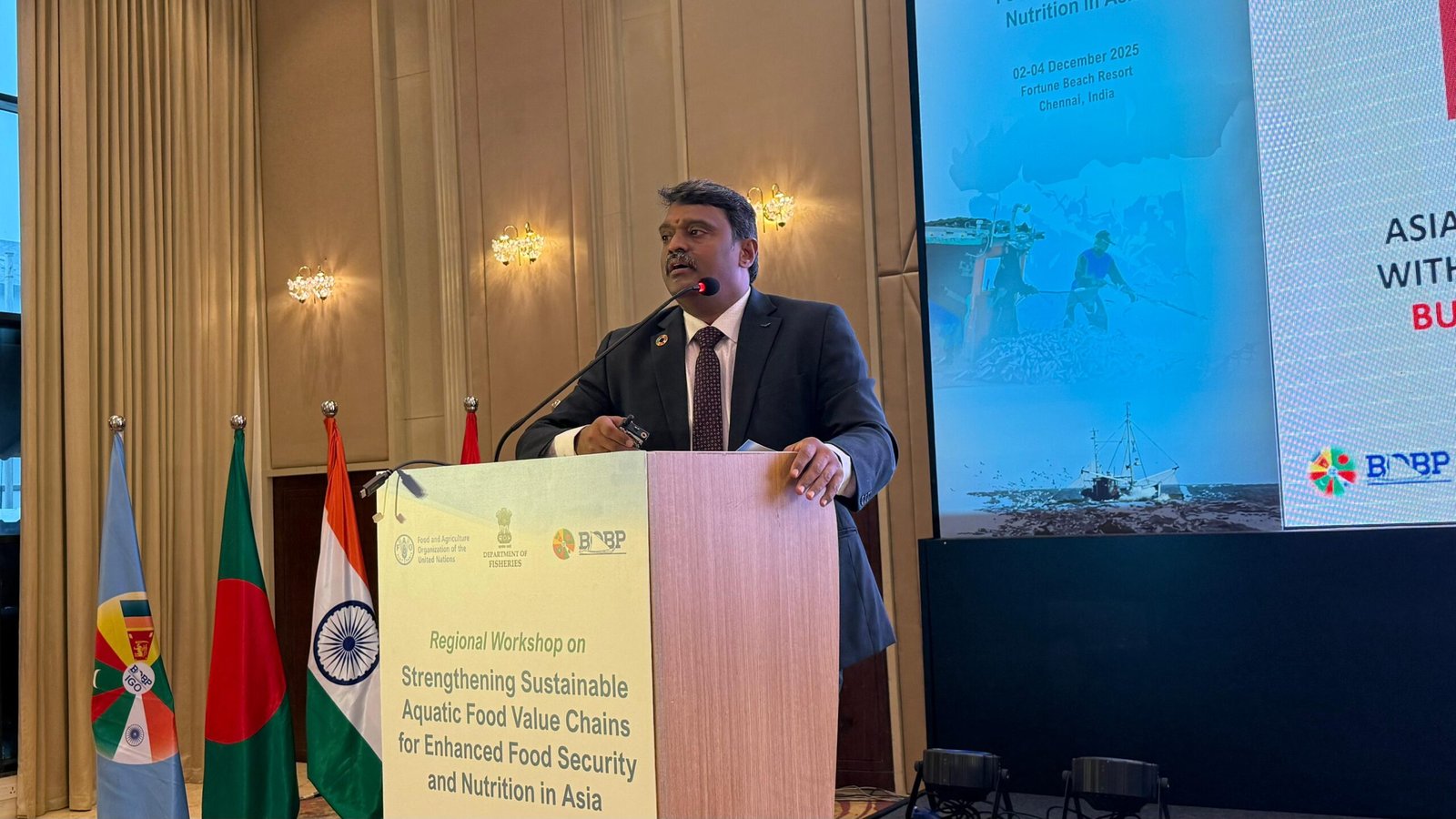
It was presented at the opening day of three-day high-level regional workshop on Tuesday in Chennai, which brought together delegations from 12 countries. The meet, focused on strengthening sustainable aquatic food value chains for enhanced food security and nutrition in Asia, is organised by the FAO and BOBP-IGO.
BOBP Director Dr. P. Krishnan, who presented the findings before policymakers and experts from 12 Asian nations, said India is “a leading driver of Asia’s shift from wild-caught to farmed fish”. Aquaculture’s share in India’s fisheries employment has risen from 17 per cent in 1995 to around 40 per cent in 2020.
The findings were presented before a high-level delegation of senior policymakers, researchers, and value-chain stakeholders from 12 Asian countries and FAO.
The report highlighted that mounting pressure on wild stocks led to a steady decline in marine capture fisheries in several countries. China’s marine landings fell by 15–20 per cent since 2015, while Sri Lanka and Malaysia also showed multi-year downturns.
Strong domestic consumption
Despite a strong export sector led by frozen shrimp, the study notes that India consumes about 82 per cent of its total fish production domestically, underlining its importance for national nutrition.
Yet, the study raises serious concerns over fish loss and waste (FLW). India’s marine fish losses have risen from 2.78 per cent to over 10 per cent, while dry fish losses are as high as 37 per cent, driven by inadequate cold-chain capacity, poor handling practices, and unhygienic landing and drying sites. The report warns that such losses translate into reduced food availability, financial setbacks for small-scale fishers and a significant drain of nutrients vital for low-income households.
Role of Women
Women remain the backbone of India’s post-harvest sector, accounting for up to 95 per cent of the workforce involved in fish marketing, curing and peeling. “However, most of this labour remains informal and undervalued, prompting calls for gender-responsive interventions”, the study highlighted.
To address current challenges, the study recommends targeted investments in decentralised cold-chain infrastructure, insulated boxes and chilled seawater systems, improved landing centres, and the scaling of modern drying and processing technologies.
During the inauguration of the workshop, Marine Products Export Development Authority (MPEDA) Chairman D V Swamy said: “While India’s $7.5 billion seafood export industry is driving unprecedented quality control, the domestic supply chain faces numerous vulnerabilities, posing significant food safety risks to local consumers”.
FAO officials including Dr Omar Penarubia, Angela Lentisco and Meeta Punjabi Mehta emphasised that strengthening aquatic food value chains is crucial for nutrition, livelihoods and climate resilience across the region.