Monday, 6 July 2026

Director-General calls for new global partnerships and sustainable funding to combat animal disease threats
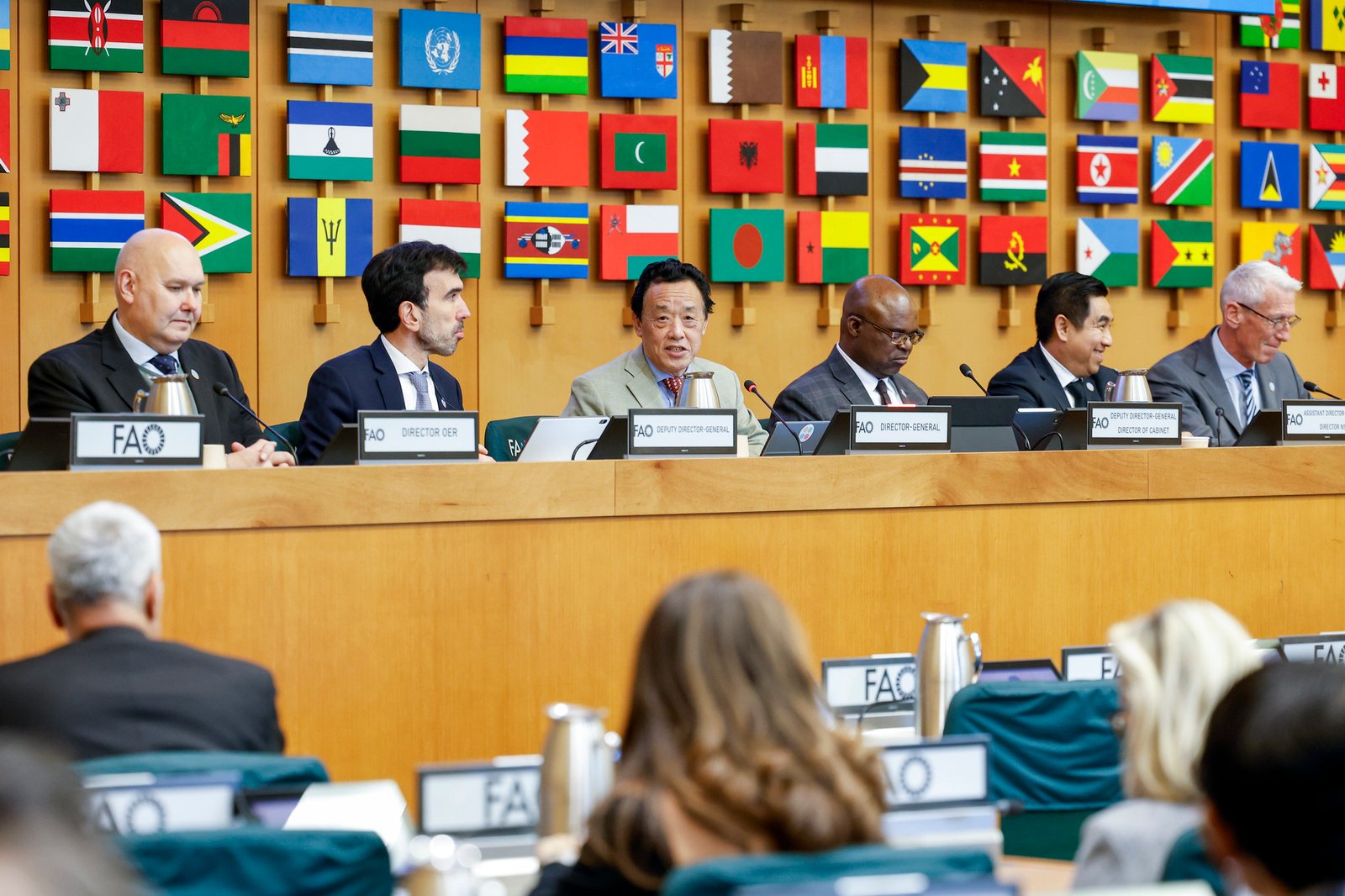
The Director-General of the Food and Agriculture Organization of the United Nations (FAO), QU Dongyu, has called on Member Countries to urgently reinforce global partnerships to prevent and control transboundary animal diseases (TADs), warning that they represent one of the most immediate threats to global food security, trade, and economic stability. Addressing Member States at an Information Session on the new Global Partnership Programme for Transboundary Animal Diseases (GPP-TAD) at FAO headquarters in Rome, Qu cautioned that recent funding cuts risk undermining decades of hard-won progress at precisely the moment when global risks are accelerating.
For more than two decades, FAO’s Emergency Centre for Transboundary Animal Diseases (ECTAD) has served as the organization’s frontline engine for animal health, supporting over 50 countries with surveillance, rapid-response capacity, and expert diagnostics. Qu warned that the momentum built by ECTAD is now at risk. “We cannot afford to destroy what has taken decades to build,” he said. “The cost of prevention is far lower than the cost of inaction.”
TADs—highly contagious diseases that cross borders rapidly—are expanding faster as global trade intensifies, climate impacts worsen, and the interface between humans and animals becomes more compressed. Recent outbreaks underscore the scale of the threat: African swine fever has spread to more than 50 countries across four continents since 2007; Foot-and-Mouth Disease (FMD) remains endemic across Africa and the Near East and triggered a major European outbreak in 2025; and Highly Pathogenic Avian Influenza continues to cause severe global disruptions.
The economic footprint of these diseases is staggering. The global farmed animal sector, valued between $1.6 trillion and $3.3 trillion, faces annual losses of $48 billion to $330 billion from TAD-related mortality, production collapse, and trade barriers. Aquaculture alone absorbs an additional $10 billion in yearly losses. In endemic regions, recurring FMD outbreaks cost the world nearly $21 billion every year in lost production and vaccination campaigns. These shocks ripple across food systems, erasing years of development gains in days, devastating smallholders, disrupting markets, and fueling antimicrobial resistance. With livestock underpinning the livelihoods of 1.9 billion people and aquaculture now supplying half of all seafood and freshwater fish, the stakes continue to rise.
Against this backdrop, Qu emphasized the need to reinforce and modernize global architecture for disease prevention. Since 2004, FAO and the World Organisation for Animal Health (WOAH) have co-led the Global Framework for the Progressive Control of Transboundary Animal Diseases (GF-TADs), aligning governments, scientists, and regional bodies to reduce risks and protect safe trade flows. ECTAD’s global network of more than 400 professionals has provided the early warning, field intelligence, and surge capacity needed to stop outbreaks at their source—often preventing local episodes from escalating into worldwide crises. At the 44th Session of the FAO Conference earlier this year, FAO Members urged the Organization to safeguard this foundational work by mobilizing new resources and strengthening long-term support to vulnerable countries.
In response, FAO has unveiled a new model designed to close critical gaps in financing and capacity: the Global Partnership Programme on Transboundary Animal Diseases (GPP-TAD). The framework introduces a sustainable, shared-responsibility approach that positions countries at the centre while expanding participation from regional institutions, the private sector, and global development finance. The programme is built on four pillars: innovative partnerships, integrated and coordinated systems, country-led mechanisms, and long-term sustainability. It aims to reduce disease outbreaks, stabilise trade, lower economic losses, and strengthen national veterinary systems while creating new opportunities for growth in livestock and aquaculture markets.
A tiered funding mechanism ensures that all countries—regardless of income level—can contribute and benefit meaningfully. High-income countries will provide base financing to sustain global operations. Middle-income nations can contribute through targeted financial support or in-kind technical assistance while gaining access to advanced diagnostics, surveillance tools, and co-financing options. Low-income countries, including Small Island Developing States (SIDS), Least Developed Countries (LDCs), and Landlocked Developing Countries (LLDCs), will participate primarily through in-kind engagement, backed by solidarity funds and tailored support calibrated to their specific vulnerabilities. This inclusive design reflects the diversity of national capacities while reaffirming the principle that collective security depends on collective action.
“No country can manage these diseases alone,” Qu said. “This programme is how we protect our livestock, our economies, and our shared future.” Through the GPP-TAD, FAO aims to unite Member States, development banks, regional alliances, private enterprise, and philanthropic partners in a coordinated global effort to reduce risks, strengthen veterinary systems, and prevent the next crisis before it begins.